
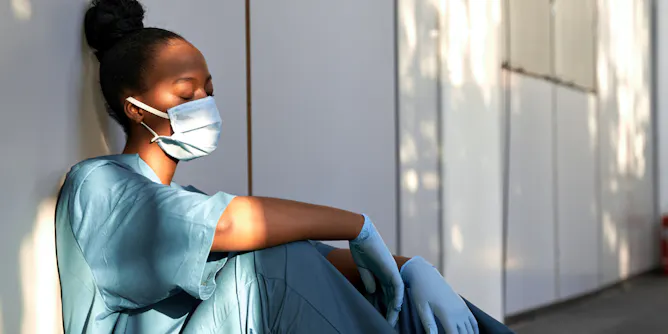
Disturbed sleep can worsen depressive symptoms of health care workers whose jobs come with high levels of emotional labor and work-family conflict.
Articles on Sleep loss
Displaying 21 - 40 of 49 articles
A few one-off late nights and sleep-ins won’t hurt, but it’s best not to fall completely off the bedtime routine wagon during the holidays.
While high-profile concussions in the NFL have brought renewed attention to the gravity of head injuries, they can also occur on the playground or during junior varsity practices – with lasting effects.

Telling new parents to do mindfulness tasks with their five minutes of free time might not be realistic – but adding mindfulness to tasks you’re already doing is just a good use of time.
Adolescent biology, early morning classes and too much evening screen time are a few of the key drivers behind teen sleep deprivation.
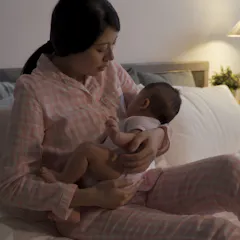
Supporting mothers’ and infants’ sleep can decrease the stressors of motherhood, improve maternal mood and mental health and promote better infant development.
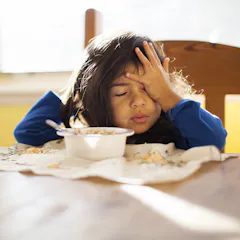
Two sleep doctors offer some survival tips to help you adjust to losing that hour of sleep as clocks spring forward into daylight saving time.

A third of the UK population have trouble sleeping, and there’s evidence that eating some foods can help.
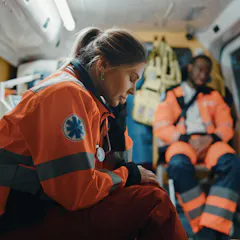
New research shows overworked, sleep-deprived health-care professionals are less empathetic to their patient’s needs compared to when they are well-rested.

Kids may not be able to communicate when they’re sleepy, or perhaps can’t even identify this. Then there’s always the fear of missing out on things going on in the waking world.
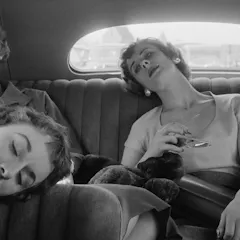
Springing forward for daylight saving time will be especially hard this year due to sleep loss from COVID-19. Why does the US keep doing this?
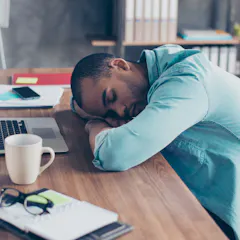
Time changes make many people feel tired, irritable, and unable to sleep.
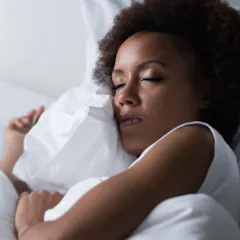
A lack of sleep increases appetite, makes us more likely to eat unhealthy foods, and even affects how body fat is lost while dieting.
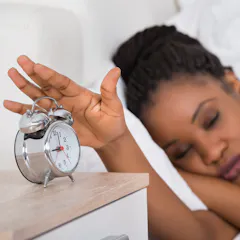
Our latest research also shows that retirement allows us to finally get as much sleep as our body needs each night.
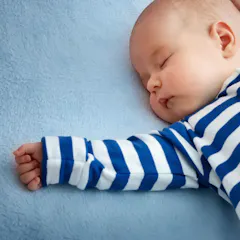
Getting a good night’s sleep during COVID-19 confinement can be challenging, but there are ways to get enough shut-eye.
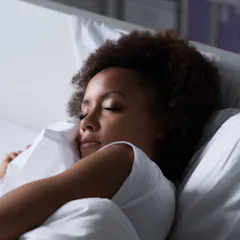
The time at home from the coronavirus crisis could be an opportunity to let our natural sleep rhythms take over.

Sleep might be a key factor in the link between greener neighbourhoods and better health. A new study shows living in an area with more tree canopy improves people’s odds of getting enough sleep.
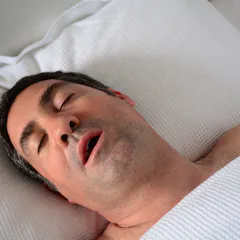
Sleep apnea affects nearly 20 million people in the US, and not all of them can be helped by CPAP machines. A surgeon explains a device he and others have been studying that shows promising results.
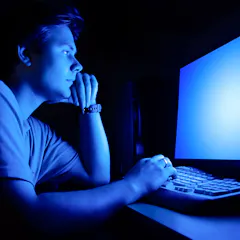
Blue light has been getting blamed for sleep interruption and eye strain. But the facts are that any bright light interferes with sleep, and computers themselves cause eye strain, an eye doctor says.
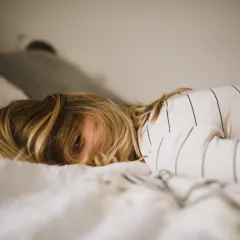
As early as the 1860s the twin diseases of modernity – overwork and sleeplessness – became the focus of cultural anxieties.
Top contributors
-

Associate Professor of Neurology, University of Pittsburgh
-
Director of the Pediatric Sleep Evaluation Center, UPMC Children’s Hospital of Pittsburgh, University of Pittsburgh
-
Co-Director Pediatric Sleep Evaluation Center and Associate Professor of Pediatrics, University of Pittsburgh
-
Professor and Head of Paediatric Sleep Research, CQUniversity Australia
-
Associate Professor at Turner Institute for Brain and Mental Health, School of Psychological Sciences, Monash University
-
Professor, School of Medicine, University of Connecticut
-
Conjoint Senior Lecturer, School of Medicine and Public Health, University of Newcastle
-
Vice Chair, Department of Neurology, University of Florida
-
Postdoctoral Research Fellow - Sports Performance, Recovery, Injury, and New Technologies, Australian Catholic University
-
Postdoctoral research fellow, RIKEN
-
Assistant Professor of Orthopedics,, University of Colorado Anschutz
-
Professor of Neurology and Pediatrics, Vanderbilt University
-
Research Professor and Director of the Behaviour-Brain-Body Research Centre, Adelaide University
-
Researcher, Pediatric Sleep Disorders, University of Pittsburgh
-
Associate Professor in Biology and Biomedical Science, Aston University