
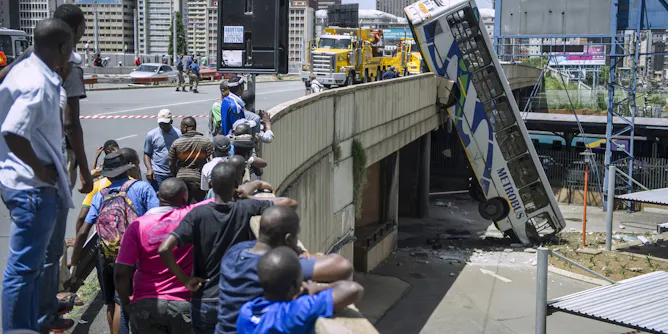
An accurate understanding of the problem is an important part of finding solutions.
Articles on Road safety
Displaying 101 - 120 of 212 articles
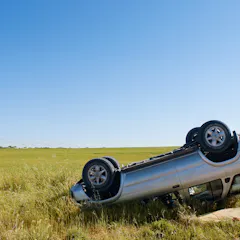
Despite a decrease in traffic during the pandemic, single-vehicle car crashes increased.

A range of factors influence the behaviour of minibus drivers in Ghana. This involves a complex web of factors, motivations and constraints.
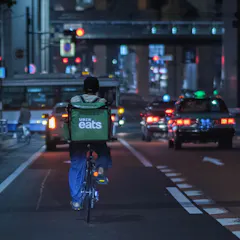
Delivery riders are paying the ultimate price for the fact that our cities, their infrastructure and the rules governing them make cycling much more dangerous than it should be.
It’s important patients taking prescribed medicinal cannabis products are not unduly penalised. But it’s equally important we minimise the chance drivers put themselves or other road users at risk.
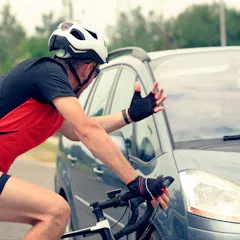
Drivers and cyclists develop distinct identities of themselves and others in ways that mirror the formation of ethnic identities. And on-road segregation runs the risk of reinforcing this process.
Our research calculates how dangerous different vehicles are to other people.

Coronavirus has necessitated a global public health response. But what does ‘public health’ actually mean? Three key examples give us an idea of what public health looks like in action.
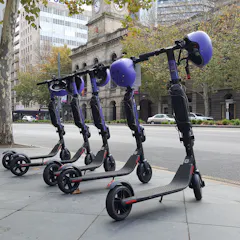
Are debates about e-scooters too narrow? Perhaps it is time to focus more on revitalising urban spaces and retrofitting road infrastructure.
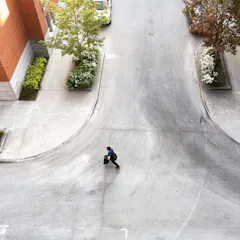
Most people do not know the right-of-way rules, but a starting point should be that pedestrian needs and safety take priority. Current road rules are biased towards driver convenience
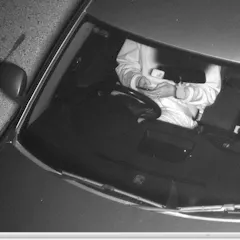
Trials of the program found about 5% of offending drivers used their mobile phone with both hands, while the vehicle was moving.

Bike helmet laws are meant to be about safety. But the hefty penalties and huge number of fines are causing resentment – made worse by some police abusing the law to stop, question and search riders.

A program aimed at getting people home safely has cost A$300 million but has had little impact, aside from increased intoxication in CBD venues. Rates of assaults and road crashes are much the same.
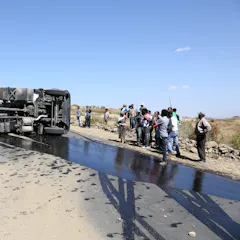
UN is seeking to halve global road deaths and injuries by 2020, but many poorer countries are moving in the wrong direction.

How will people respond once they realise they can rely on autonomous vehicles to stop whenever someone steps out in front of them? Human behaviour might stand in the way of the promised ‘autopia’.

Every day, e-scooters and helmets are put out together, but some people ride without helmets and at the end of each day helmets are missing. So what can be done to ensure safe riding behaviour?

Cars that keep your speed within the limit may seem like a good idea, but the prospect of introducing the technology raises some tricky questions.

Of course people need ethics. But the current troubles in the technology industry are not evidence of an ethics crisis; it is a public-policy crisis.

When it snows, it pours – but why do municipalities treat the roads with salt? A chemist explains how salt affects water and ice.

In the wake of Humboldt bus crash, the federal government must reassess its responsibility to protect road users.
Top contributors
-

Associate Professor and Principal Fellow in Urban Risk and Resilience, The University of Melbourne
-
Adjunct Fellow in Psychological Sciences, Macquarie University, Macquarie University
-
Senior Research Associate, University of Oxford
-
Adjunct Research Fellow, School of Human Sciences, The University of Western Australia
-
Senior Lecturer in Urban Planning, University of Auckland, Waipapa Taumata Rau
-
Associate Professor, Faculty of Medicine and Melbourne School of Design, The University of Melbourne
-
Senior Research Fellow in Road Safety Research, University of the Sunshine Coast
-
Senior Research Fellow in Human Factors & Sociotechnical Systems, University of the Sunshine Coast
-
PhD Candidate, University of the Sunshine Coast
-
Research Lead, UQ Micromobility Research Cluster, The University of Queensland
-
Senior Lecturer in Psychology, Director of Undergraduate Studies in Psychology, Macquarie University
-
Senior Researcher, Institute of Transport Studies, Monash University
-
Honorary Principal Fellow, University of Wollongong
-
Professor of Applied Cognitive Psychology, The Open University
-
Adjunct professor of mechanical engineering, Tufts University