

More than 1,300 people died on Australia’s roads in the last year. New modelling identifies the people and regions most at risk of future tragedies unless there’s a more targeted approach to road safety.
Articles on Road safety
Displaying 41 - 60 of 212 articles

Storing the sun’s energy underground could help keep Canada’s roads ice-free in the winter months as a safer and cheaper alternative to plows and salt.

Victims of road rage incidents often have children in the car with them – or else they’re watching you shout from the back seat.

Men are two and a half times more likely to die in a car crash than women. Here’s how we can make our roads safer for everyone.
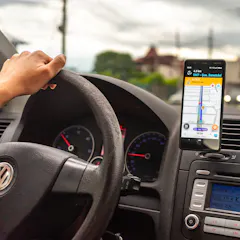
Apps such as Google Maps, Apple Maps and Waze can tell drivers when they are approaching speed cameras or random breath testing stations. So how are these apps affecting driver behaviour?
‘Driving while Black’: Researchers found that Black drivers make up 70% of police traffic stops on roads where only half the drivers are Black.

Despite loud calls for tough policing of e-scooters and even outright bans, the problems can be better managed with technology and public education.

Higher speed limits are coming. But the case against them isn’t based on road safety alone – claims of increased economic efficiency are not supported by the evidence, either.
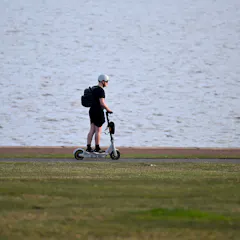
Shared e-scooters are much more regulated and monitored than privately owned e-scooters, which are likely to pose greater risks as a result.
Research shows we have a culture of thinking it’s normal to break driving laws.

The death toll on Australian roads in July was almost a third higher than the five-year average. The 12-month toll was the highest since 2012. A lower speed limit will save lives.
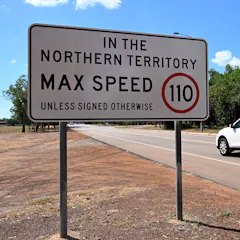
Would copying other states and dropping the default limit by just ten kilometres on country roads in WA and NT make a difference? And how might it be enforced?

Shared e-scooters have safety features that private e-scooters lack, but accident data don’t distinguish between them, nor tell us about the economic and environmental harms of other transport modes.
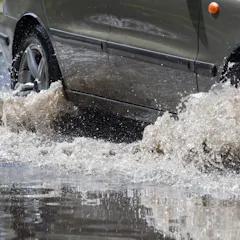
Understanding what to do when faced with flooding on the road is an important, yet often overlooked aspect of driver education, which could be the difference between life and death.
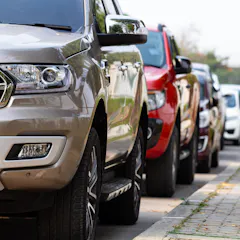
We’re seeing more big cars on the road. What does this mean for safety?
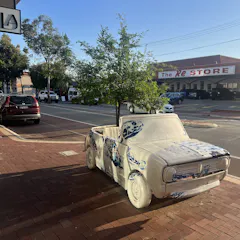
The number of deaths on Australian roads has been increasing steadily year after year. It’s unacceptable not to act on the evidence of what works to boost road safety.
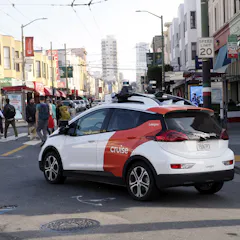
Roughly half of people surveyed support the development of autonomous vehicles. But a third were undecided about many aspects and will need to be convinced about their safety and other benefits.
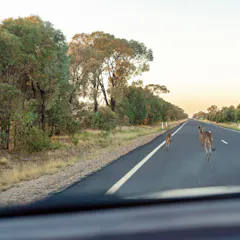
Many measures commonly thought to reduce the toll of animals injured and killed on our roads aren’t effective. But there is evidence to support other solutions.
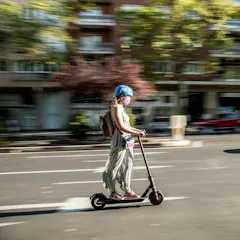
The growing popularity of e-scooters has seen a surge in related injuries. They may not be more common than cycling injuries – but they may be more serious.
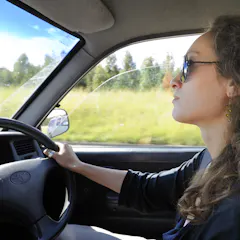
Australian road deaths have risen to levels not seen in nearly a decade. If the current trend continues, meeting the ‘Vision Zero’ target by 2050 appears impossible.
Top contributors
-

Associate Professor and Principal Fellow in Urban Risk and Resilience, The University of Melbourne
-
Adjunct Fellow in Psychological Sciences, Macquarie University, Macquarie University
-
Senior Research Associate, University of Oxford
-
Adjunct Research Fellow, School of Human Sciences, The University of Western Australia
-
Senior Lecturer in Urban Planning, University of Auckland, Waipapa Taumata Rau
-
Associate Professor, Faculty of Medicine and Melbourne School of Design, The University of Melbourne
-
Senior Research Fellow in Road Safety Research, University of the Sunshine Coast
-
Senior Research Fellow in Human Factors & Sociotechnical Systems, University of the Sunshine Coast
-
PhD Candidate, University of the Sunshine Coast
-
Research Lead, UQ Micromobility Research Cluster, The University of Queensland
-
Senior Lecturer in Psychology, Director of Undergraduate Studies in Psychology, Macquarie University
-
Senior Researcher, Institute of Transport Studies, Monash University
-
Honorary Principal Fellow, University of Wollongong
-
Professor of Applied Cognitive Psychology, The Open University
-
Adjunct professor of mechanical engineering, Tufts University