
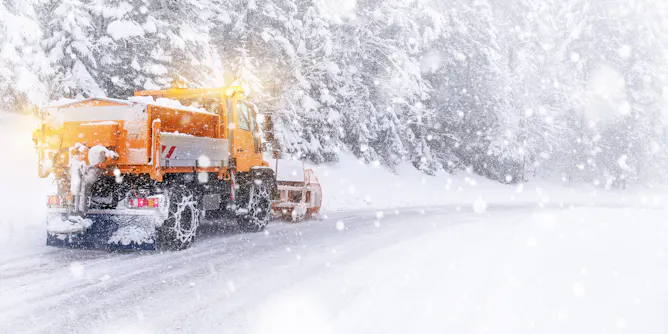
With frigid temperatures and snow in the forecast, slippery roads can’t be far behind. Salt keeps roads safe, but it’s harmful to aquatic environments.
Articles on Road safety
Displaying 141 - 160 of 212 articles
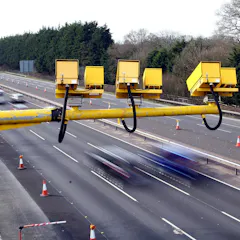
Conventional approaches to assessing the impact of cameras on collisions may be overoptimistic.

Beware unicycling clowns …
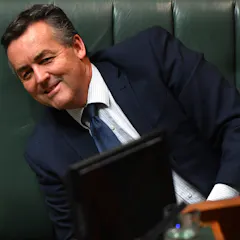
Politics Podcast: Darren Chester on the infrastructure spending spree
Darren Chester says there is too much hyper-partisanship in Australian politics.
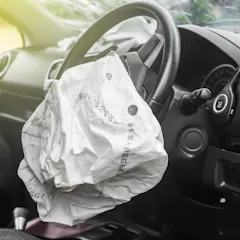
Consumers with high hopes of driverless vehicles improving safety might be looking past the boring near-term advances that could make a real difference. It happened before – more than 60 years ago.

More cyclists are suffering from serious injuries than ever before. Here’s what we can do to provide a safer environment.
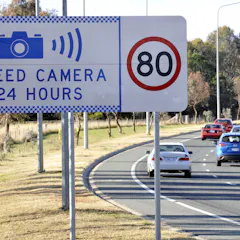
Wider societal issues are driving road user behaviour, which cannot be fixed by taking a traditional road safety approach.
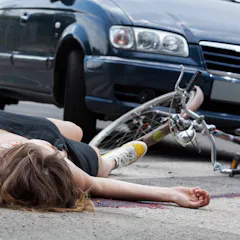
The primacy given to the car has shaped our cities, the roads that serve them and our very thinking about the place of driving in our lives. And it’s a mindset that leaves cyclists highly vulnerable.
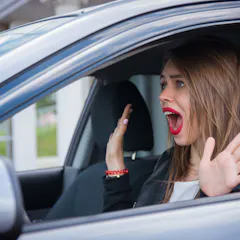
How might we, and our nation’s roads and highways, need to change as autonomous vehicles become more ubiquitous? We know a lot of the answers, but not all of them.

It’s time for Australia’s personal injury insurance schemes to start preparing for change.

A new study has reported injuries are the greatest cause of death in Australian kids.
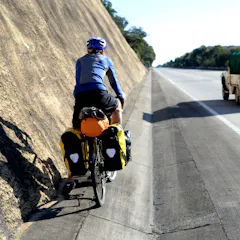
To celebrate the 200th anniversary of the bicycle, we look at new research that confirms cars cause the majority of bike collisions. It’s time to follow much of Europe and shift liability to drivers.
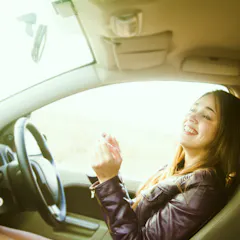
You’re four times as likely to have an accident while talking on the phone while driving – even hands free.
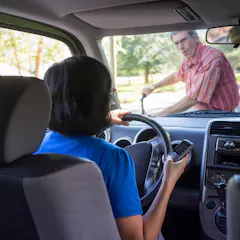
Because Australian roads were built and designed with motorists in mind, it is easy for Australian motorists to feel cyclists are using ‘their’ roads and disrespecting the natural order.
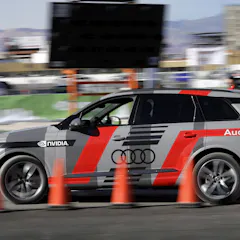
Together, three recent events mark a crucial turning point in the development of autonomous cars: They are both safer and more advanced than ever before.
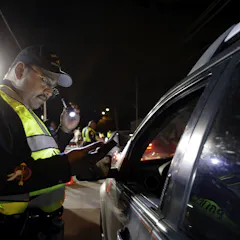
We have a reliable and easy-to-use test to measure blood alcohol concentration. But right now we don’t have a fast, reliable test to gauge whether someone is too doped up to drive.
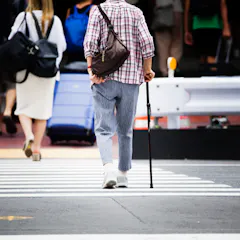
If we want older people to stay mobile, we need to look at the everday issues they encounter first.
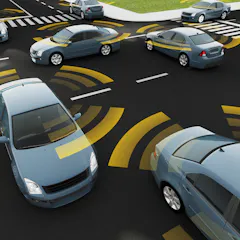
Driverless cars are the future, right? Wait. While things would be simple if our roads were 100% driverless, getting there is anything but. And planning for roads shared by robots and humans is hard.
In contrast to increases in vehicle safety over the decades, we have seen little new technology to ensure the safety of pedestrians – and current innovations are still based on a car-centric approach.
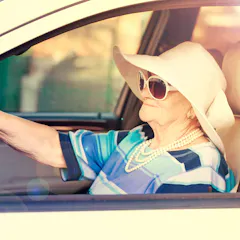
Society often assumes older drivers are bad drivers but that is not necessarily true.
Top contributors
-

Associate Professor and Principal Fellow in Urban Risk and Resilience, The University of Melbourne
-
Adjunct Fellow in Psychological Sciences, Macquarie University, Macquarie University
-
Senior Research Associate, University of Oxford
-
Adjunct Research Fellow, School of Human Sciences, The University of Western Australia
-
Senior Lecturer in Urban Planning, University of Auckland, Waipapa Taumata Rau
-
Associate Professor, Faculty of Medicine and Melbourne School of Design, The University of Melbourne
-
Senior Research Fellow in Road Safety Research, University of the Sunshine Coast
-
Senior Research Fellow in Human Factors & Sociotechnical Systems, University of the Sunshine Coast
-
PhD Candidate, University of the Sunshine Coast
-
Research Lead, UQ Micromobility Research Cluster, The University of Queensland
-
Senior Lecturer in Psychology, Director of Undergraduate Studies in Psychology, Macquarie University
-
Senior Researcher, Institute of Transport Studies, Monash University
-
Honorary Principal Fellow, University of Wollongong
-
Professor of Applied Cognitive Psychology, The Open University
-
Adjunct professor of mechanical engineering, Tufts University