
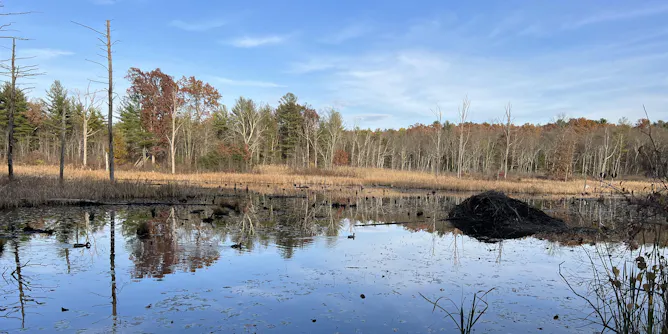
Beavers in our landscapes have great potential to provide small-scale adaptations to climate change – if humans can figure out how to live with them.
Articles on Rivers
Displaying 161 - 180 of 313 articles

Freshwater mussels are one of the most endangered groups of animals on the planet. Their demise will have dramatic consequences for freshwater environments worldwide.
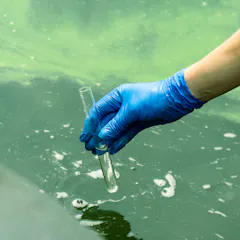
Getting involved in citizen science projects can be a great way to have a positive impact on the world.
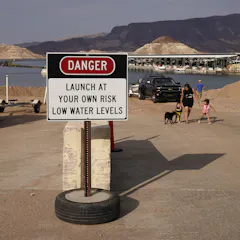
A Western scholar proposes allocating water from the Colorado River based on percentages of its actual flow instead of fixed amounts that exceed what’s there – and including tribes this time.
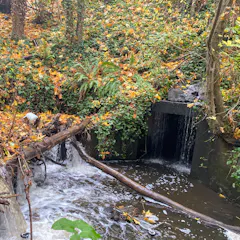
Salmon migrate thousands of miles from inland streams to the ocean and back. The newly enacted infrastructure bill includes funding to help salmon and other wild species on their way.
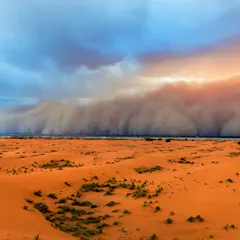
Humanity’s biggest challenges are not technical, but social, economic, political and behavioural. Effective actions are still possible to stabilise the climate and the planet, but must be taken now.

Diverting water to a hydroelectric dam might seem eco-friendly, but the devastating consequences to local ecosystems cannot be ignored.
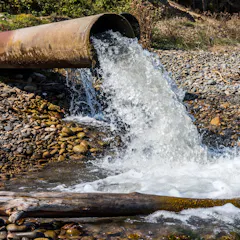
Water and sewerage companies should not be responsible for reporting pollution.
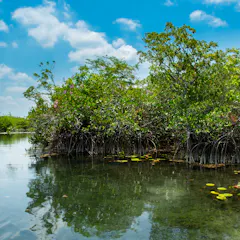
Mangroves grow in saltwater along tropical coastlines, but scientists have found them along a river in Mexico’s Yucatan, more than 100 miles from the sea. Climate change explains their shift.
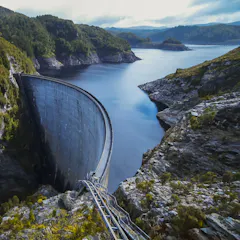
The world hydropower industry has public relations work to do, if its global expansion is to be realised. But stringent oversight is urgently needed.

Rivers are among the most embattled ecosystems on Earth. Researchers are testing a new, inexpensive way to study river health by using eDNA to count the species that rivers harbor.

Wild beaver populations have the potential to significantly alter our landscapes, affecting biodiversity, water quality and pollution.
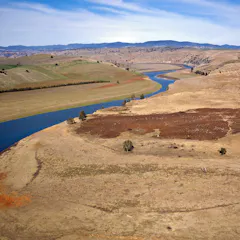
During the warmer months, the number of days when the river ceases to flow will increase. Climate change is to blame.
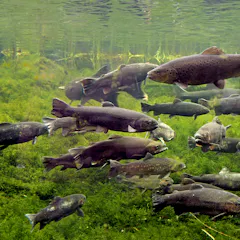
The growing frequency of climate extremes affected human health and caused wide-scale damages to the ecosystems that people depend upon, including agriculture, fisheries and freshwater.
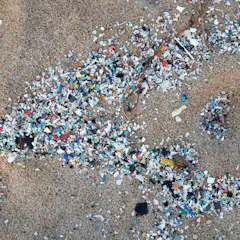
New research suggests that an effective way to locate and track large concentrations of microplastics in the ocean could be from high in the sky.
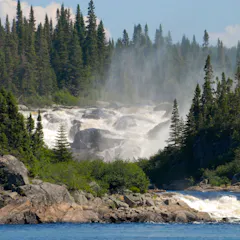
A recent declaration of a river as a legal person in Canada recognizes Indigenous laws and governance, and champions people as the guardians of nature.
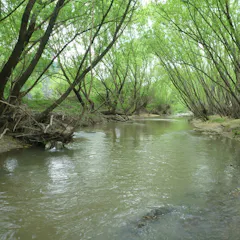
For temperature-sensitive animals, the dense, leafy canopy of willow trees may make them the lesser of two evils in a warming climate.
A greater understanding of interconnectedness created by river maps could influence people to become more engaged with conserving river systems.
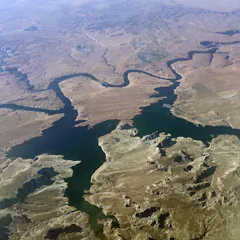
The Supreme Court recently dealt defeat to Florida in its 20-year legal battle with Georgia over river water. Other interstate water contests loom, but there are no sure winners in these lawsuits.
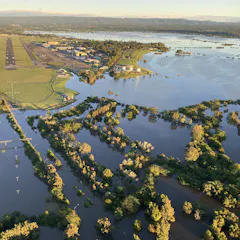
Floodplains are among the most productive ecosystems on the planet – they are biodiversity hotspots. That’s in large part due to periodic flooding between different parts of a river-floodplain system.
Top contributors
-

Professor, Fenner School of Environment & Society, Australian National University
-
Associate Professor in Environmental Science, Western Sydney University
-
Principal Research Scientist in Ecosystem Ecology, CSIRO
-
Professor, Water and Landscape Dynamics, Fenner School of Environment & Society, Australian National University
-
Associate Professor in Ecology, Charles Sturt University
-
Honorary Fellow in Environmental Sciences, Swansea University
-
Professor, School of Biological, Earth and Environmental Sciences, UNSW
-
Honorary Research Fellow in Hydromorphology, University of Salford
-
Professor, Australian Rivers Institute, Griffith University
-
Beatrix Beisner is a Friend of The Conversation.
Professor, Aquatic ecology; Groupe de recherche interuniversitaire en limnologie (GRIL), Université du Québec à Montréal (UQAM)
-
Professor Emeritus of Geography, Louisiana State University
-
Professor of River Science and Climate Resilience, University of Salford
-
Research fellow, Charles Sturt University
-
Executive Director and Professor of Fisheries and River Management, Gulbali Institute (Agriculture, Water and Environment), Charles Sturt University, Charles Sturt University
-
Professor in Environmental Hydraulics, Cardiff University