

Hot weather accelerates toxic algal blooms, but nutrient pollution provides the fuel.
Articles on Lakes
Displaying 1 - 20 of 86 articles
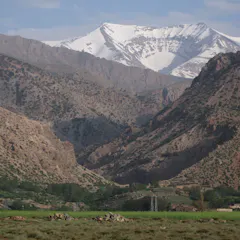
Africa has some of the world’s most important geological landscapes, yet they remain under-represented in digital geoheritage research.

The abrupt disappearance of a lake is one clear sign that the ice below is melting, and a clue to wider permafrost changes.
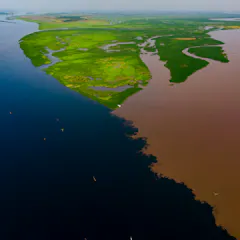
Ancient carbon is leaking from two lakes in the Congo Basin, revealing a previously unknown link between tropical peatlands and the atmosphere.

Research shows that wildfires are causing more debris, sediment and chemicals to enter waterways, harming fish and other aquatic life.

Urban waterways sit at the heart of the global nature crisis.
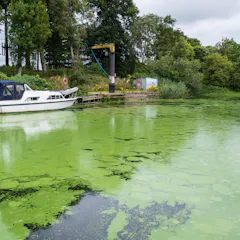
When sediment is stirred up, the effects ripple through the ecosystem.
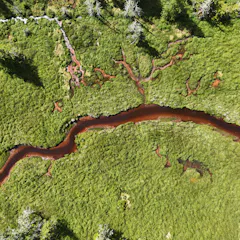
People who are trying to fish – or manage the ecosystems – in darker waters may need to adapt to different water conditions.
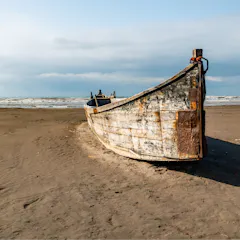
Bad news for the rivers and the lakes that we’re used to.

Recent studies have demonstrated that eRNA, previously considered too unstable for field use, can be reliably detected in freshwater ecosystems.
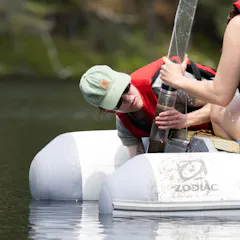
Acid rain and metals from power plants, vehicles and industries reached remote mountain lakes for years. Evidence from those lakes today shows the success of the Clean Air Act.
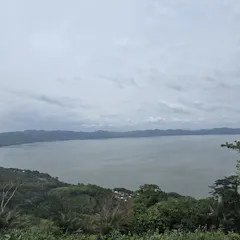
The activities of illegal miners are a threat to the sustainability of the crater.

Current science communications in Cape Town are not serving the public well.
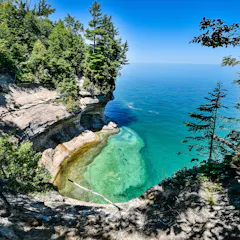
Subsurface heatwaves are becoming more frequent, longer-lasting and more intense.

Recreational boating is a multi-billion-dollar industry in Canada, but there’s increasing evidence that boat wakes cause shoreline and environmental damage.

Scientists have assessed more than 23,000 species.
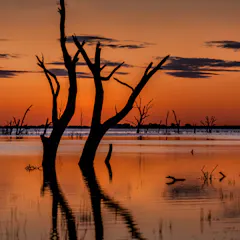
The findings are simply unacceptable for a natural asset so fundamental to Australia’s environmental, cultural and economic wellbeing.
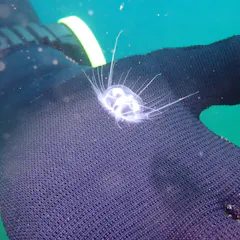
Freshwater jellyfish are growing in abundance in Canadian lakes and rivers. The reasons are complex but climate change is the primary culprit.

A lake or river is not an isolated entity but one of the most visible facets of a much larger, and more dynamic, watershed. The health of these entire systems should be an utmost priority.

The invasive spiny water flea is spreading fast across Canada. Awareness is key to curtailing its growth.
Top contributors
-
 Beatrix Beisner is a Friend of The Conversation.
Professor, Aquatic ecology; Groupe de recherche interuniversitaire en limnologie (GRIL), Université du Québec à Montréal (UQAM)
-
Reader and NERC Independent Research Fellow, Bangor University
-
Canada Research Professor, Conservation Physiology, Carleton University
-
Professeur Écologie Aquatique, Université du Québec en Abitibi-Témiscamingue (UQAT)
-
Instructor, Ecology and Evolutionary Biology, Carleton University
-
Professor of Biology, McGill University
-
Postdoctoral Research Associate, University of Wisconsin-Madison
-
Professor of Environmental Change, UCL
-
Professor and York University Research Chair in Global Change Biology; Director of the United Nations Institute for Training and Research Global Water Academy, York University, Canada
-
Chair of the Department of Science, Technology, and Society, Rochester Institute of Technology
-
Professor and Canada Research Chair, Trent University; University of Cambridge
-
Professeure agrégée, Sciences biologiques, Université du Québec à Montréal (UQAM)
-
Assistant Professor of Biological Sciences, Rensselaer Polytechnic Institute
-
Research Fellow in Freshwater Science, Edith Cowan University
-
Professor, Environmental Geochemistry, University of Waterloo