
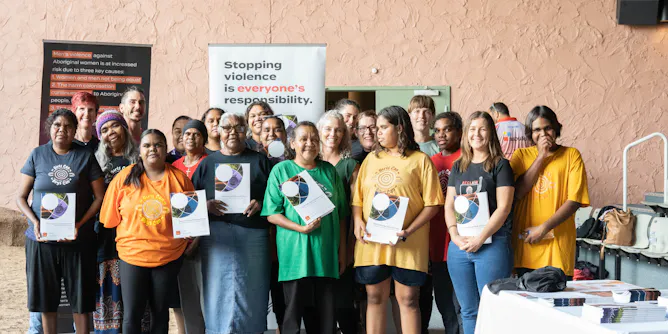
The Northern Territory has the highest rates of domestic, family, and sexual violence in Australia. The Tangentyere women’s group shows how prevention projects can address gender inequality.
Articles on Remote communities
Displaying 21 - 40 of 50 articles
Millions of dollars worth of vaccines are thrown out each year because they are not transported or stored at the right temperature. We made a video to help prevent that.

It’s time to create a special remote status for communities that struggle with connectivity challenges and lack access to high-speed internet.

A disaster is looming for remote Canadian communities after Air Canada cancelled 30 regional routes. It threatens the rights of all Canadians to be connected to the national transportation system.

The new closing the gap targets are ambitious, especially in the area of early childhood education. But this doesn’t mean they can’t be met, with the right approach.
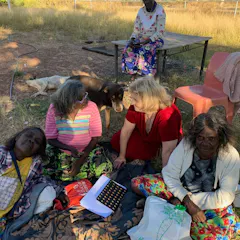
Researchers report on how COVID-19 is affecting isolated Indigenous communities. Their voices bridge the urban divide, reveal challenges and describe some unexpected bonuses.

Despite chronic housing need and persistent health and infrastructural inequities, northern communities are turning to the land and each other to prevent the spread of COVID-19.
Participants of both virtual reality-based and Skype-based therapy sessions voted greatly in favour of using VR, reporting high levels of engagement and realism.
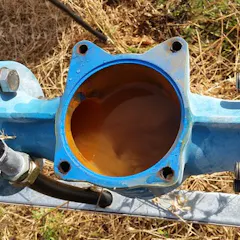
Many remote communities in Australia’s north rely on bore water. But a new microbiology analysis suggests that the chemistry of untreated water can allow disease-causing bacteria to grow unchecked.
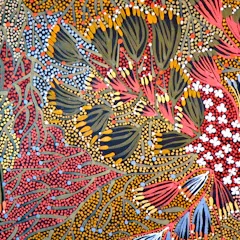
Most Indigenous art works are produced in around 90 Indigenous art centres located in very remote regions. But there are staff and management issues, which can be solved by better VET programs.
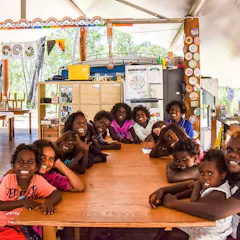
We now have a proven model for supporting self-determined building on Aboriginal homelands. The next question is how can its reach be extended?

Tasmania wasn’t the only part of Australia that burned in January. The remote interior near Alice Springs saw a huge blaze, worsened by invasive buffel grass.

Centralised policies are not meeting the needs of remote Indigenous settlements. Increasing their decision-making input and the role of local industry can overcome the challenges of building remotely.
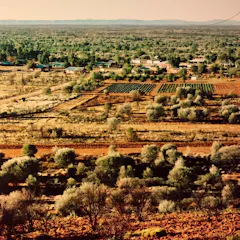
Drinking water in Australia can be contaminated by natural and manmade processes, especially in communities. Innovation is needed to ensure water is ‘fit for purpose, place and people’.

It’s the people most dependent on social services, who are least able to easily transition into the digital age.
In remote Northern Territory, most Aboriginal people have been buried in unmarked graves. Archaelogists are carrying out painstaking detective work to help communities find their loved ones’ remains.

A government review of regional, rural and remote education tells us we need to recognise the uniqueness of and understand successes in these communities to improve outcomes for these students.
Decent housing underpins the Closing the Gap goals, with a decade-long national remote housing program having made measurable progress. If the Commonwealth pulls out now, hard-won gains could be lost.

Some remote Australian communities have access to drinking water for only nine hours a day but can use ten times the average of urban households.
Much has been written about success of Indigenous players at elite levels of the game. But perhaps the more important story is one of Indigenous participation in grass roots and community football.
Top contributors
-

Associate Professor in Public Health, The University of Queensland
-
Professor of Archaeology, College of Humanities, Arts and Social Sciences, Flinders University
-
Research Associate in Archaeology, Flinders University
-
ARC DECRA Fellow & Senior Lecturer in Construction Management, Faculty of Architecture, Building and Planning, The University of Melbourne
-
Adjunct Lecturer, Archaeology, Flinders University
-
Professor, Director, Griffith University
-
Senior Research Fellow, Menzies School of Health Research
-
Postdoctoral Researcher in Food Security and Conservation, Universidade de São Paulo (USP)
-
Associate Professor, University of Sydney
-
Professor and Director, Centre for Social Responsibility in Mining, The University of Queensland
-
Chief executive officer, Grattan Institute
-
Research Fellow in food security, Museu Paraense Emílio Goeldi, Belém
-
Conjoint Senior Lecturer, School of Medicine and Public Health, University of Newcastle
-
ARC Future Fellow, School of Education, Deakin University
-
Professiorial Fellow, The University of Melbourne