

When primary school children in a disadvantaged part of Sydney were asked to map what they valued in the area, their choices were revealing and sometimes surprising.
Articles on Public space
Displaying 41 - 60 of 119 articles

Some might scoff at the free-ranging ideas sparked by a competition to design future parks for Melbourne. But the legacy of a radical idea to green a CBD street in 1985 shows why we need such thinking.

The Spanish city is remaking urban neighbourhoods by limiting through traffic in superblocks that give priority to pedestrians and street activities, not cars.
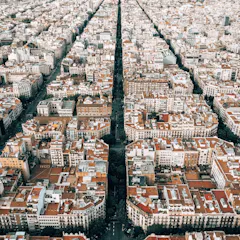
The ‘superblocks’ are expected to have massive benefits for health and well-being – but it takes good governance.
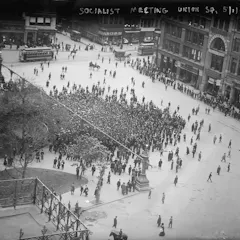
New York’s Union Square is an important site in American labor history. One scholar’s research illustrates the shifting meanings and inherent tensions of public space as an epicenter of civic life.
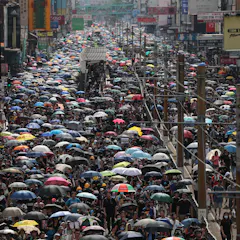
Hong Kong has few recognisable public places and none with the space for huge numbers of protesters. Instead, they have co-opted the streets and digital media as public spaces for protest.
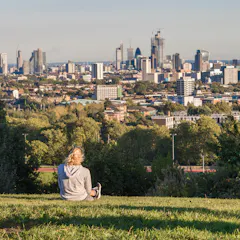
The UK’s surviving urban commons are precious green spaces, but the laws that protect them are confusing, complicated and in some cases outdated.
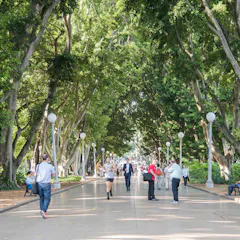
Cities around Australia have plans to increase their green space, but new research shows not all green spaces are equal. Good tree cover is better than grassed areas for residents’ mental health.
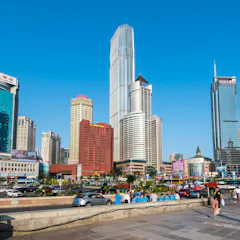
Australia has well established urban design guidelines, whereas many Chinese cities don’t have any – and it shows. But Australia can also learn from China.
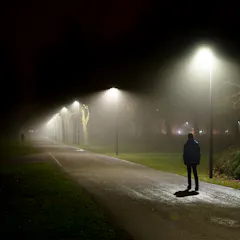
Bright lighting alone does not make a space feel safe. It can blind and disorientate and create dark shadows at the edges. Tellingly, ‘unsafe’ places had much higher illuminance than ‘safe’ places.
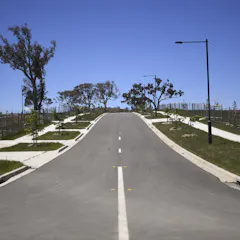
A sense of place matters for people and communities. When a suburb is created from scratch, close attention needs to be paid to the cues from the landscape and meanings people attach to the area.
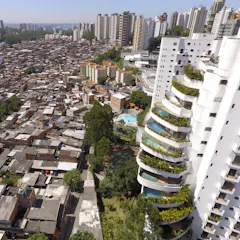
Segregation is not just a problem in London – it’s happening in cities all over the world.
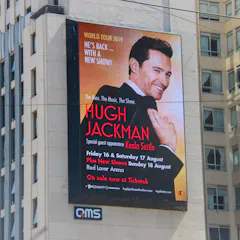
Both Melbourne and Sydney have been embroiled in controversy over advertising that dominates public space, but the debate isn’t new. In fact, it’s almost as old as our cities.
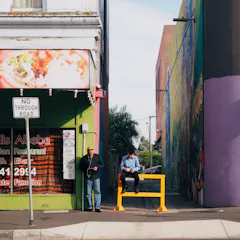
Footpaths are a valuable space for everyday social activity, but their role is often overlooked. In increasingly dense urban areas such as Footscray, footpaths are essential public spaces.
New South Wales now has a minister for public spaces, a nod to their importance to the life of a city. But not all is well with public spaces and some issues demand the minister’s attention.
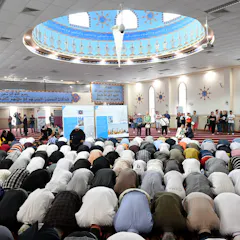
Muslims need places where they feel safe from Islamophobia. And being made to feel unwelcome has lasting impacts – Muslims still avoid Cronulla beach, the scene of anti-Muslim riots in 2005.
If the menu of potential activities that do us good is made to look uninviting or challenging, we are more likely to choose the easier but less healthy option.

Today’s urban public spaces tend to represent governments and cities rather than people and citizens. Architects and urban designers should contribute to shaping spaces for freedom and interaction.

If you disagree with the political slant of the network, it might color your views of others in the room – and change your behavior.
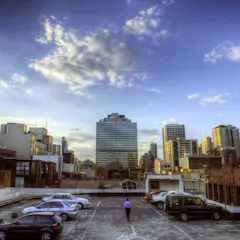
There are thousands of empty parking spots in cities. So what can we do to make better use of this space?
Top contributors
-

Senior Lecturer in Industrial Design, UNSW
-
Professor of International Planning, Centre for Urban Research, RMIT University
-
Director, XYX Lab, and Professor, Faculty of Art, Design and Architecture, Monash University
-
PhD Candidate and Sessional Tutor, The University of Melbourne
-
Professor of Urban Geography, University of Sydney
-
Professor in Law, UNSW
-
Urban Designer and Sessional Lecturer, La Trobe University
-
Professor of Planning and Associate Director, City Futures Research Centre, UNSW
-
Lecturer in Landscape Architecture, The University of Melbourne
-
Reader in Tourism and Events, University of Westminster
-
Professor of Urban Health and Environment, UNSW
-
John Rennie Short is a Friend of The Conversation.
Professor Emeritus of Public Policy, University of Maryland, Baltimore County
-
Lecturer, Australian Urban Design Research Centre, The University of Western Australia
-
Professor of Cities and Planetary Health, ARC Future Fellow in nature-based solutions for loneliness, University of Sydney
-
Associate Professor, School of Architecture and Urban Design, RMIT University