
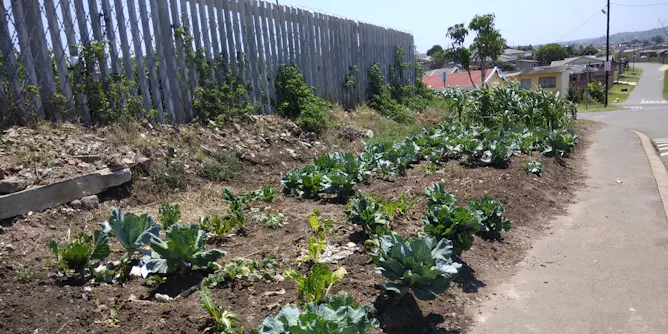
South African cities could create dedicated spaces where picking indigenous plants is safe.
Articles on Public parks
Displaying 1 - 20 of 35 articles
Why wildlife crime and environmental damage should gain higher priority in terms of public attention, law enforcement and potential sanctions.

Cities seeking to create greener, more liveable neighbourhoods can revitalise disused spaces in various ways. Encouraging and supporting communities is key.
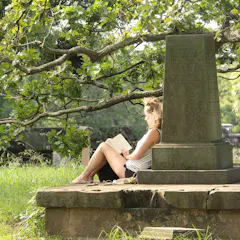
There are thousands of disused graveyards that could provide crowded cities with essential public green space.
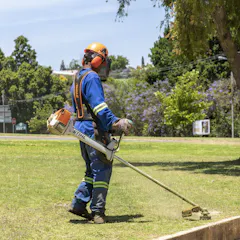
People may think that green spaces often hide criminals. On the contrary, there is evidence they contribute to reducing crime.
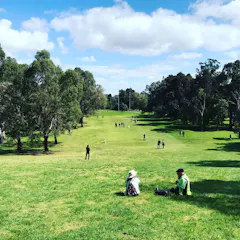
All parks are not equal. The response to the opening of golf courses to the public during the COVID pandemic shows the quality of green open space is a big issue for city residents.
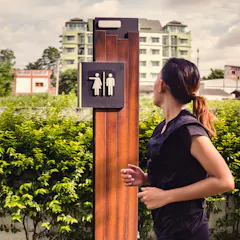
Public washrooms are an essential service and the people who maintain them are essential workers. But what happens when a pandemic closes public bathrooms and a civil rights protest breaks out?
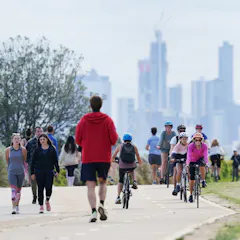
COVID-19 has upturned uses of public spaces that we took for granted. Will shifts in the regulation of these spaces lead to a change in thinking about who “owns” the city?

Working long hours and want to make the most of time with your children? Your local park is an ideal place for sharing experiences that benefit the whole family.

Residents of the ‘leafy suburbs’ will continue to fear what they might lose to increasing urban density without an explicit planning approach that enhances green space in affected neighbourhoods.
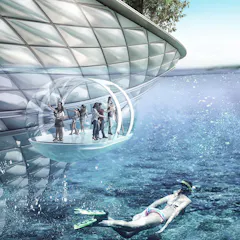
Some might scoff at the free-ranging ideas sparked by a competition to design future parks for Melbourne. But the legacy of a radical idea to green a CBD street in 1985 shows why we need such thinking.

Parents are more willing to let children do their own thing in parks. It’s a chance for children to make their own decisions, explore their abilities and imaginations, and weigh up risks.
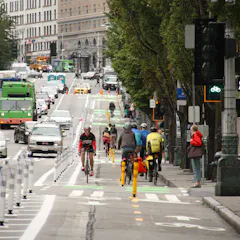
This collective fundraising technique helps defuse anti-cyclist sentiment before it dooms protected bike lanes and other new infrastructure.

An observational audit found almost all of the parks in Sydney’s inner west were substandard. But perhaps even more important was the issue of access.

The need for public cooking facilities has long been recognised, but why has the basic public barbecue failed to evolve along with Australians, their lifestyles and the foods they eat?

The positive mood of tweets varies with time of day and season, but it’s consistently higher in parks than in built-up areas, where people are more likely to express anger and fears.
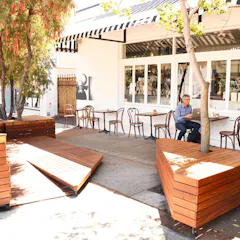
Many parklets are privately funded, but these projects often allow for more public participation than more traditional public spaces.
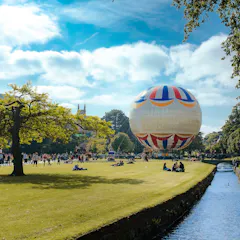
Local authorities have hit tough times, but there’s still hope for the UK’s parks.

Urban green spaces are most effective at delivering their full range of health, social and environmental benefits when physical improvement of the space is coupled with social engagement.
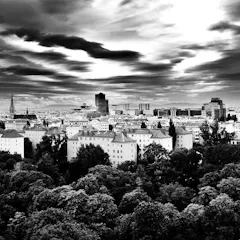
Australia’s growing cities face a shortage of urban parks. Often, the provision of parks is seen only as planning compliance or an accessory.
Top contributors
-

Professor in Law, UNSW
-
Lecturer in Landscape Architecture, The University of Melbourne
-
Research Project Officer, School of Design, Queensland University of Technology
-
Senior Lecturer of Urban Studies and Planning, Queensland University of Technology
-
Senior Lecturer in Environmental Management, University of Tasmania
-
Professor of Physical Activity and Health, Queensland University of Technology
-
Associate Professor in Landscape Architecture, Queensland University of Technology
-
Professor of Healthy Ageing, Australian Catholic University
-
Senior Research Fellow, Institute for Physical Activity and Nutrition (IPAN), Deakin University
-
Deakin Distinguished Professor, Faculty of Health, Deakin University
-
Reader in Tourism and Events, University of Westminster
-
Program Coordinator, Arthur Rylah Institute for Environmental Research
-
Senior Lecturer in Industrial Design, UNSW
-
Partnership Facilitator, Southern Cross University
-
Professor, Director Australian Urban Observatory, Centre for Urban Research, RMIT University