

It takes an entire team of electricity, calcium, energy and proteins all working together to move your muscles.
Articles on Proteins
Displaying 1 - 20 of 99 articles
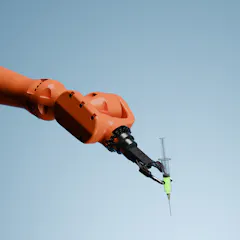
Researchers have found that even people with limited experience in biology can use AI to help them create a dangerous pathogen.

AI is reshaping biomedical research and drug discovery and delivery. But challenges still exist.
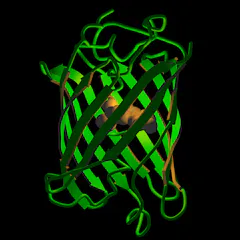
Researchers have been studying tens of thousands of proteins and even more variations without a yardstick to compare their results.

Insects are an appealing food source because they are rich in protein and require few resources. While a possible future solution, they also have risks and limitations.
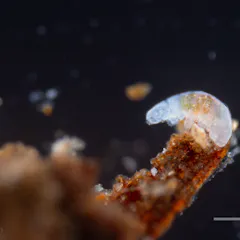
Tardigrades make a unique damage suppressor protein that researchers are working to harness for medicine, space, agriculture, data storage and more.
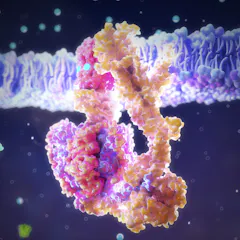
A protein historian and evolutionary biochemist found that a protein sequence present across all known life didn’t form as researchers previously thought it did.

For most of us, there is no benefit in consuming protein above the recommended level.

Master switches of cell communication, G protein-coupled receptor kinases are the target of many drugs across a range of diseases.

The gene that codes for p53 is the most frequently mutated in cancer. Researchers are targeting different parts of its complex pathway to restore its ability to stop cancer.
Enzymes significantly speed up the chemical reactions that keep you alive. Researchers are using AI to create new ones to tackle modern challenges.

People who feel lonely tend to have higher levels of five key proteins.
Membraneless organelles, also called biomolecular condensates, are changing how scientists think about protein chemistry, various diseases and even the origin of life.

Heat can do amazing things to change your hairstyle, but it comes with casualties. Many people use heat protectants, often in the form of sprays, to minimise the damage. So how do they work?
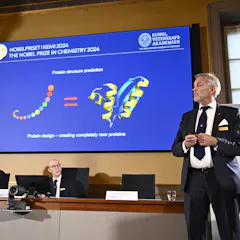
AI will feature in future Nobel prizes as scientists exploit the power of this technology for research.
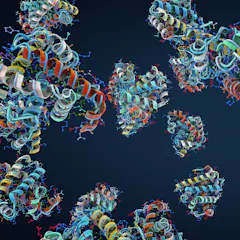
The prize honors innovation at Google DeepMind and in academia. Three researchers share the award for using machine learning to predict proteins’ 3D shapes and design the molecules from scratch.
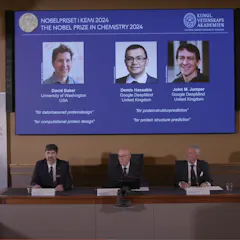
Using computers to design and predict protein structures will revolutionise biochemistry.
AI has learned the ins and outs of proteins. Gene editing gives scientists control of life’s molecular machinery. Together they could lead to a revolution in biotechnology.

Science has a need to verify results, but DeepMind’s protein prediction tool doesn’t work this way.

Researchers can create ‘single-cell radios’ using bacterial proteins to transmit the invisible activities within cells.
Top contributors
-

Doctoral Student in Biochemistry, University of Washington
-
Professor of Chemistry, Connecticut College
-
Assistant Professor of Biology, Clark University
-
Associate Professor in Biophysics, University of Pretoria
-
Professor of Science Communication and Chemistry, University of Hull
-
Professor of Microbiology, School of Medicine, University of Washington
-
Postdoctoral researcher in photosynthesis, Vrije Universiteit Amsterdam
-
PhD Candidate in Chemistry, Purdue University
-
Assistant Professor of Biological Sciences, University of California, San Diego
-
Senior Faculty Member at the Garvan Institute, Conjoint Professor at UNSW, and Senior Principal Research Scientist, CSIRO
-
PhD student in Biology, University of Rochester
-
Honorary Associate Professor, University of Leicester
-
Research Assistant Professor at U-M Life Sciences Institute and Assistant Professor of Biological Chemistry, U-M Medical School, University of Michigan
-
Professor of Tumour Immunology, University of Hull
-
Professor of Horticultural Sciences and Plant Molecular and Cellular Biology, University of Florida