
AMPK is normally a tumour suppressor. But once cancer arises, AMPK becomes a tumour promoter, enhancing the survival of cancer cells. Understanding this could help create drugs that inhibit AMPK.
Articles on Proteins
Displaying 61 - 80 of 99 articles
The glue that gives spider webs their stickiness is a form of spider silk protein. Researchers can imagine cool uses for a synthetic version – but had to wait for the tricky glue gene to be sequenced.
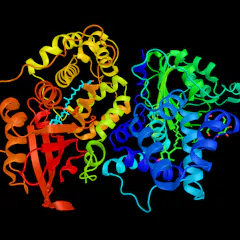
When two proteins interact with each other they behave in their own molecular lives.
The unique way that human proteins change after they are copied from our DNA gives scientists clues about what causes human disease.

Proteins guard their secrets closely, but once you get them to “sing”, there’s an enormous amount to learn.
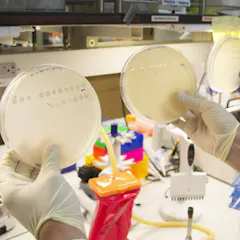
A core idea in molecular biology is that one gene codes for one protein. Now biologists have found an example of a gene that yields two forms of a protein – enabling it to evolve new functionality.
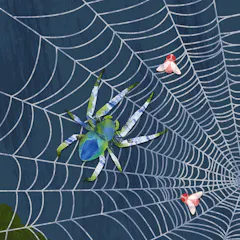
Some spiders produce silk than can actually be stronger than steel and 50 times as light.
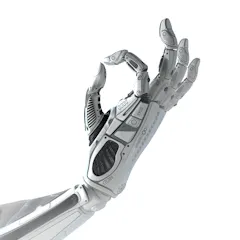
Researchers use an algorithm designed to help robots move to figure out what’s possible when designing new molecules in a promising class of pharmaceuticals.
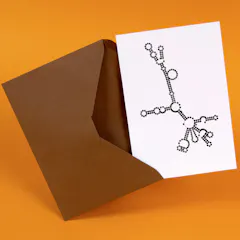
One big challenge for gene therapies is delivering DNA or RNA safely to cells inside patients’ bodies. New nanoparticles could be an improvement over the current standard – repurposed viruses.
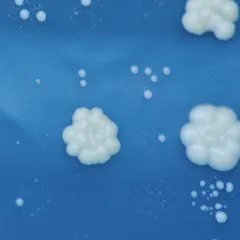
By exploiting the way yeast cells mate, researchers have figured out a quicker, easier way to identify on- and off-target drug interactions.
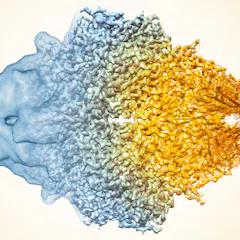
The 2017 Nobel Prize in chemistry goes to three scientists who revolutionized biochemistry by inventing a technology that can image the molecules of life without destroying them.
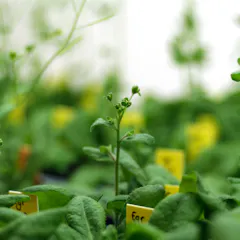
Inserting a random DNA mishmash into a plant or bacterium directs it to make a novel protein. Sifting through the resulting molecules, researchers may find ones have medical or agricultural uses.
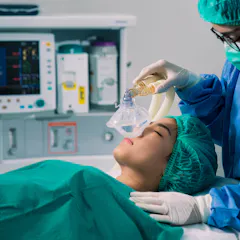
How do anesthetics work, and what makes for an ideal anesthetic? It’s not as mysterious as once believed, and there’s a gas that ticks all the boxes for a perfect anesthetic: xenon.
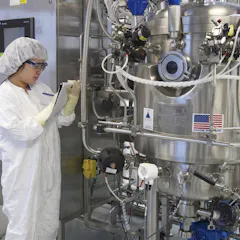
Rather than being designed by chemists, this class of pharmaceuticals is produced by living cells. Here’s where they come from and how they work.

The daunting complexity of biological data requires tailored visualisation tools to reveal buried insights.
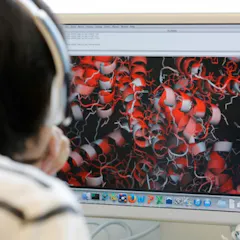
This antivirus software protects health, not computers. Researchers are beginning to combat deadly infections using computer-generated antiviral proteins – a valuable tool to fight a future pandemic.

The same chemical reaction is behind the frothing of milk in your cappuccino and the whipping of egg whites in sweet meringue.
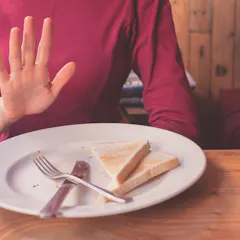
Recent headlines proclaimed an Australian-developed pill might be able to help those with coeliac disease eat wheat without becoming ill. But the fine print says it’s no treatment or cure.
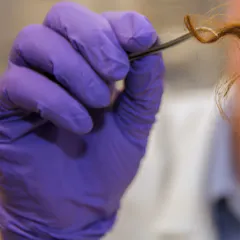
Move over, DNA profilers. Scientists are developing a potentially more powerful technique to identify criminals from their hair.
Scientists and engineers have looked to nature for their inspiration for centuries. The field of biomimetics uses ideas from nature to solve complex human challenges. Synthetic biology, a more recent concept…
Top contributors
-

Doctoral Student in Biochemistry, University of Washington
-
Professor of Chemistry, Connecticut College
-
Assistant Professor of Biology, Clark University
-
Associate Professor in Biophysics, University of Pretoria
-
Professor of Science Communication and Chemistry, University of Hull
-
Professor of Microbiology, School of Medicine, University of Washington
-
Postdoctoral researcher in photosynthesis, Vrije Universiteit Amsterdam
-
PhD Candidate in Chemistry, Purdue University
-
Assistant Professor of Biological Sciences, University of California, San Diego
-
Senior Faculty Member at the Garvan Institute, Conjoint Professor at UNSW, and Senior Principal Research Scientist, CSIRO
-
PhD student in Biology, University of Rochester
-
Honorary Associate Professor, University of Leicester
-
Research Assistant Professor at U-M Life Sciences Institute and Assistant Professor of Biological Chemistry, U-M Medical School, University of Michigan
-
Professor of Tumour Immunology, University of Hull
-
Professor of Horticultural Sciences and Plant Molecular and Cellular Biology, University of Florida