

A cornerstone of the First Step Act, passed with bipartisan support, is the PATTERN risk-assessment tool.
Articles on Prisons
Displaying 81 - 100 of 252 articles

Strip-searching prisoners has been found to breach human rights. Will the Victorian government implement changes to strip-searching policies in places of detention?

The power of the hunger strike lies in its utter simplicity. Anyone can choose to forego eating, even when living under extremely restricted conditions.

Increasing the prison population will put England and Wales out of step with their neighbours.
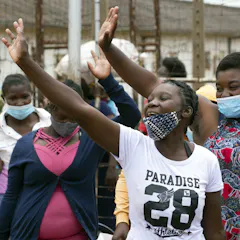
During the first wave of the COVID-19 pandemic, governments around the world released many prisoners, but this has now slowed or stopped. Here’s why those releases should continue.

The Productivity Commission is examining Australia’s incarceration rates, arguing our jails are not providing value for money.

Prisons seem an unlikely source of outstanding university students, but it is. What’s more, those who have done such study are much less likely to reoffend when they get out.

The Attica uprising marked a milestone in the prisoners’ rights movement. Many of the grievances aired in 1971 are still relevant to today’s incarcerated population.
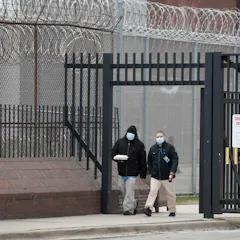
New research shows correctional officers are vectors of infection, driving COVID-19 rates both inside prisons and in their communities.
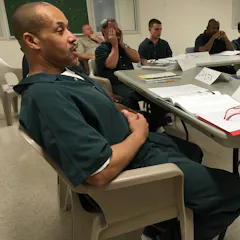
An experimental program to provide a college education in prison is about to increase its reach. Is there evidence that it will pay off?
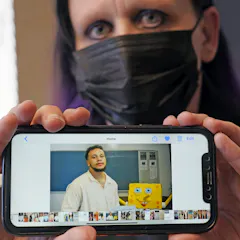
For the 6.5 million Americans who have an incarcerated family member, COVID-19 has made an already stressful situation much worse by drastically limiting communication and raising fears of death.

Deciding whether force is necessary, reasonable and proportionate is often subjective, and this can leave both inmates and staff vulnerable.

Community oversight, hard caps on days permitted in structured intervention units and penalties could save lives in Canada’s prisons.

Training restaurants housed inside prison walls and staffed by inmates are reducing recidivism rates and winning praise from diners overseas. Should we try them in New Zealand?

While seemingly an alternative to solitary confinement, Structured Intervention Units have been a catastrophic failure, especially for imprisoned people with mental illness.

The proportion of prisoners awaiting trial in Nigeria is disturbing, and prolonged imprisonment can have a damaging effect on their mental functioning .
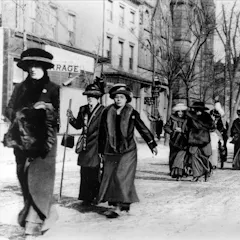
As Americans celebrate the legacy of the 19th Amendment, which granted women the right to vote, it is also a moment to acknowledge how suffragists first used hunger strike as a form of protest.

Coronavirus infections in prisons are a public health problem for everyone, not just prisoners and sfaff.

Violence in the criminal-justice system isn’t limited to police. It’s time to pay more attention to violent deaths within state prisons.

Instead of building new jails, we must focus our efforts on reshaping a post-pandemic society free of the challenges that led to an Indigenous man’s recent death.
Top contributors
-

Senior Lecturer, Political Science and International Relations, University of Canterbury
-
Professor of Law, University of Technology Sydney
-
Senior Lecturer in Social Work, University of Salford
-
Professor of Criminology, Australian National University
-
Assistant Professor, Criminology, Toronto Metropolitan University
-
Assistant Professor of Sociology, University of Houston
-
Senior Lecturer in Interior Architecture, Te Herenga Waka — Victoria University of Wellington
-
Emeritus Professor in Law and Criminal Justice, Adelaide University
-
Associate Professor of Political Science, Emerson College
-
Professor of Criminology, University of Portsmouth
-
Professor of Criminology, University of Bath
-
ARC Future Fellow and Professor of Criminology, The University of Melbourne
-
PhD Candidate, University of Technology Sydney
-
Professor, The University of Western Australia
-
Honorary Fellow, School of Humanities & Social Sciences, Deakin University. Fellow of the Australian & New Zealand Society of Criminology., Deakin University