
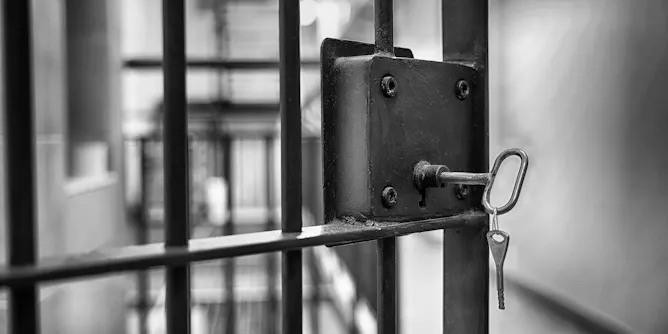
Anti-money laundering rules make it very difficult for ex-prisoners to open a bank account – meaning it’s harder to get paid or receive a benefit.
Articles on Prison reform
Displaying 1 - 20 of 44 articles

Between 2005 and 2015 the Dutch prison population was indeed reduced by 44%.

People with mental health challenges are more likely to die in custody. The coroner’s inquest into the death of Soleiman Faqiri in an Ontario jail is one such tragedy that calls out for reform.

Most people leaving prison face an uphill battle of service navigation that is too often deficit-focused, intentionally seeking out the failures of the individual and centred on punitive responses.

What does ‘justice reinvestment’ mean in practice? Who makes funding decisions? To find out more, we consulted Aboriginal communities in Bourke, Moree and Mount Druitt.

Community oversight, hard caps on days permitted in structured intervention units and penalties could save lives in Canada’s prisons.

For the first time since 1994, incarcerated individuals can get federal aid to pay for college. A prison education scholar explains how higher education helps those who have run afoul of the law.

Instead of building new jails, we must focus our efforts on reshaping a post-pandemic society free of the challenges that led to an Indigenous man’s recent death.

The COVID-19 pandemic is an opportunity to think critically about the place of prisons in society and how and why prisoners have been released in the past. COVID-19 could spark systemic change.
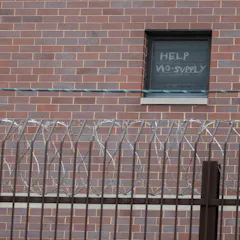
In the 1790s, penal reformers rebuilt America’s squalid jails as airy, hygienic places meant to keep residents – and by extension society – healthy. Now they’re hotbeds of COVID-19. What went wrong?
The effective response to crime has always been a matter of debate. But evidence is mounting in favour of treatment and support, rather than punishment.
Rapidly decreasing the prison population by letting people out is a public health imperative as governments for solutions to slow down the spread of the COVID-19 virus.
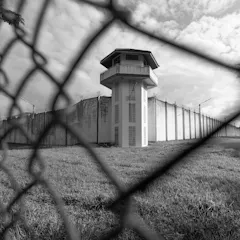
This year’s oversight report into the penitentiary system shows that long-standing problems have become entrenched in Canada’s federal prisons.

I know first-hand the need for a rehabilitative rather than punitive system.

A scholar who has taught in prison weighs in on ‘College Behind Bars,’ which airs Nov. 25 and 26 on PBS. The documentary prompts viewers to consider the importance of higher education in prison.

As of Dec. 1, inmates in Canada’s federal prisons can no longer be legally held in solitary confinement. But is it truly just an exercise in rebranding?
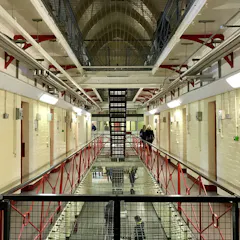
More inmates are growing old and dying in prison, and the system is not designed to cope.

Private prisons have long been a topic of controversy in the U.S. A professor of sociology explains what they are and why they matter.
What does it mean to hold a party in a place with a long history of death and suffering?

Scudder’s approach was grounded in trust and mutual respect. There would be no guards, no weapons, no walls and no uniforms.
Top contributors
-

Criminology, The Open University
-
Associate Professor of Sociology, University of Hawaii
-
Assistant Dean of Graduate Programs, Kroc School of Peace Studies, University of San Diego
-
Senior Lecturer, Political Science and International Relations, University of Canterbury
-
Research fellow, North-West University
-
Professor of Law, Swinburne University of Technology
-
Senior Lecturer in Economics, University of Sydney
-
Human Resource Management PhD Researcher, University of the West of England
-
Professor and Shapiro Chair of Public Policy and Public Administration, Trachtenberg School, George Washington University
-
Professor of Contemporary Philosophy and Literature, Brunel University of London
-
Professor, Head of the Discipline of Accounting, Governance and Regulation, University of Sydney Business School, University of Sydney
-
Associate Professor, UNSW
-
Professor and Associate Dean for International Research and Scholarly Activities, School of Nursing, University of California, Los Angeles
-
Professor of Criminal Justice and Corrections, University of California College of the Law, San Francisco
-
Assistant Professor of Epidemiolgy, University of Texas Health Science Center at Houston