
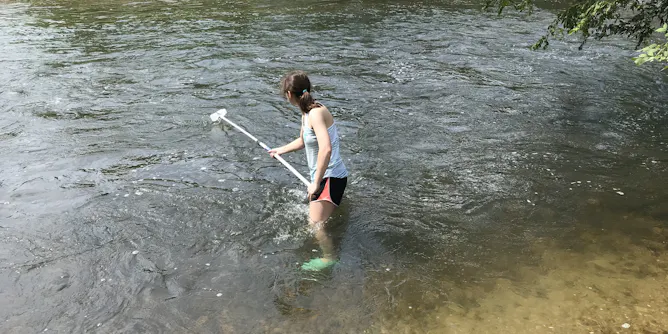
A fish-finding expedition not only detects unexpected species but also uncovers a living link to Missouri’s geological past.
Articles on Pleistocene
Displaying 1 - 20 of 27 articles

More fossil tracks of vertebrates have come to light on the South African coast, adding to the picture of an ancient plain full of wildlife.

The discovery points to a long evolutionary history in north Africa, much earlier than modern Homo sapiens.

These tracksites appear to contain the first recorded Pliocene vertebrate tracks described from southern Africa.
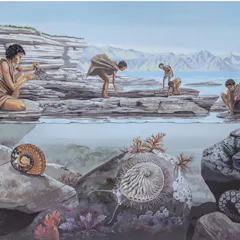
A coastal migration up and out of Africa was more likely to succeed than an overland journey.
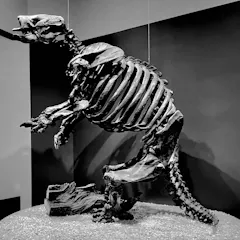
Researchers often rely on fossil teeth for clues about what extinct animals ate. Giant ground sloths’ teeth have been tricky to analyze, though – until now.
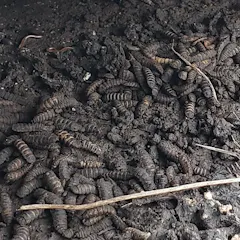
New research highlights the prevalence of maggots as an easily obtained, nutrient-rich supplement of ancient hominin diets.
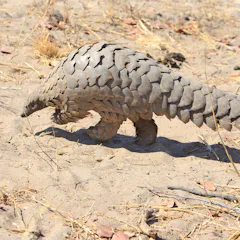
No fossilised pangolin tracks had been recorded anywhere in the world until a track was found in South Africa, dated to between 90,000 and 140,000 years ago.

Researchers reexamining fossils identified telltale marks made by human ancestors cutting meat from bones. The discovery pushes back the date hominins started living in Europe by 200,000 years.

At a global level it is rare to find fossilised hominin tracks.
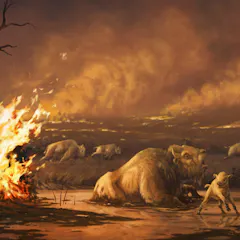
New findings from the La Brea Tar Pits in southern California suggest human-caused wildfires in the region, along with a warming climate, led to the loss of most of the area’s large mammals.

The ancestors of kangaroos once lived in the trees – but their evolutionary history is murky. Here’s everything we know so far.

Ancient microbes likely produced natural products their descendants today do not. Tapping into this lost chemical diversity could offer a potential source of new drugs.

What climate changes in the distant past can tell us about the near future.
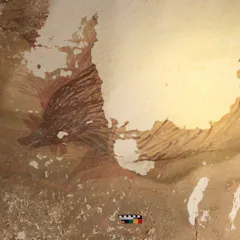
The ancient cave paintings have only begun to tell us about the lives of the earliest people who lived in Australasia. The art is disappearing just as we are beginning to understand its significance.

It appears that the South African Cape south coast’s dunes and beaches formed a vast canvas of sand on which our ancestors could leave their mark.
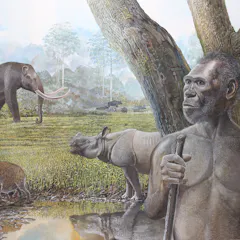
Several theories have suggested either humans, climate change or both drove megafauna extinctions in Southeast Asia. Our newest work suggests otherwise.

One avian track, probably made by a large gull or a small goose, was found in sediments that have been dated to about 400,000 years. That makes it the oldest avian track reported from southern Africa.

The historical record is full of surprises – and it could encourage conservationists to think more creatively.
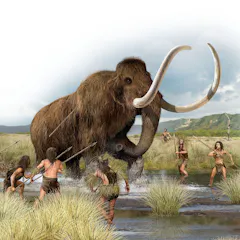
Overhunting of megafauna such as mammoths may have force us to take up farming, ultimately leading to modern society
Top contributors
-

Research Associate, African Centre for Coastal Palaeoscience, Nelson Mandela University
-
Professor, Flinders University
-
Senior Lecturer, Geography and Environmental Sciences, Northumbria University, Newcastle
-
Curator of Vertebrates, Museum of New Zealand Te Papa Tongarewa
-
Professor of Climate Science, University of Bristol
-
Researcher, Flinders University
-
Research Centre of Archeometry, Badan Riset dan Inovasi Nasional (BRIN)
-
Senior Curator, Vertebrate Palaeontology, Museums Victoria Research Institute
-
Professor of Archaeology, Griffith University
-
Postdoctoral Researcher in Archaeogenetics, Max Planck Institute for Evolutionary Anthropology
-
Professor, University of Wollongong
-
Professor of Ocean Biogeochemistry and Palaeoclimate, The Open University
-
Professor of Bioorganic Chemistry and Paleobiotechnology, Friedrich-Schiller-Universität Jena
-
Lecturer in Physical Geography, Newcastle University
-
Associate Professor in Vertebrate Palaeontology, Flinders University