
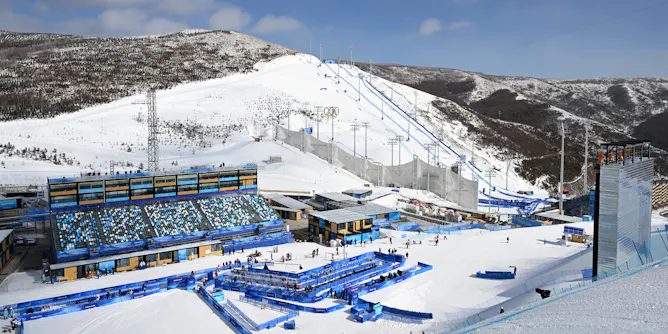
In Beijing’s climate, you could coat a Sydney apartment in a few inches of snow with the same energy the air conditioning would use in an hour.
Articles on Physics
Displaying 261 - 280 of 592 articles

Ski jumpers do everything they can to counteract the effects of gravity and fly as far as they can down hills.
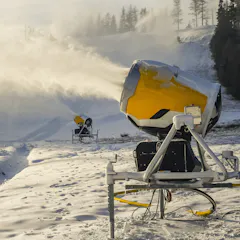
Snowmaking machines can produce enough snow to cover a run, but artificial snow is very different from natural flakes that fall from the sky.

It may look like athletes in bobsled, luge and skeleton simply grab a sled and hang on until the bottom, but high-speed physics and tiny motions mean the difference between gold and a crash.

It’s often said that the aurora, or the northern lights, is caused by ‘particles from the Sun’. But in reality things are more complicated.
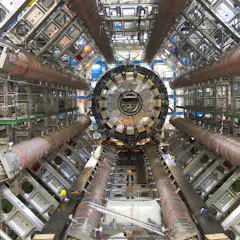
Physicists know a lot about the most fundamental properties of the universe, but they certainly don’t know everything. 2021 was a big year for physics – what was learned and what’s coming next?
The quantum nature of light can be harnessed for a variety of purposes.
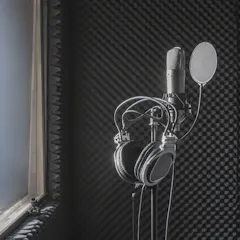
There is a lot to consider when buying a new pair of headphones. A professional musician and acoustics researcher explains how the science of sound and quirks of human hearing make for a great listening experience.
Did humans invent mathematics or does it exist independently?
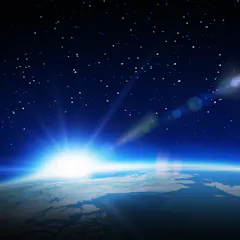
The fastest things ever made by humans are spacecraft, and the fastest spacecraft reached 330,000 mph – only 0.05% the speed of light. But there are ways to go faster.

Energy isn’t really made of anything else. It’s a kind of capacity to do things
A new result from the MicroBooNE neutrino experiment has dashed hopes for a neat resolution to several puzzles for physicists.

The sky on other planets doesn’t look the same as the sky on Earth does. And that’s because of the different gases in Earth’s atmosphere.
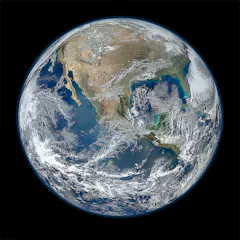
Modern climate and weather models can predict what the weather will be next week and what the climate may be in 100 years. They would not exist without Syukuro Manabe, Klaus Hasselmann and Giorgio Parisi.
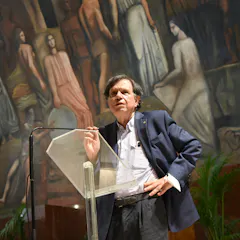
The work of Italian physicist Giorgio Parisi has helped predict the unpredictable, from changes in the climate to the movements of flocks of starlings.

The largest orbital telescope ever made will allow astronomers to study the atmospheres of alien planets, learn about how stars form in the Milky Way and peer into the farthest reaches of the universe.
Preprints are scientific papers made available before being published in a peer-reviewed journal. The Australian Research Council has banned researchers from citing them in grant applications.
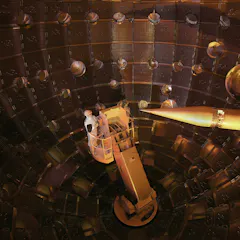
A US laboratory has announced an exciting new leap forward in nuclear fusion, but it may be several decades before we see this form of energy come to fruition.
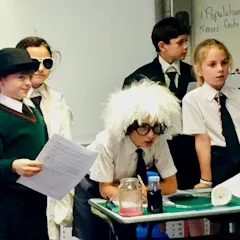
In trials teaching Einsteinian physics in schools, our most astonishing discovery was that children were not astonished: they just took the ideas in their stride.
The universe has a finite age — 13.8 billion years to be exact. So if it had a beginning, why is it so difficult to say for sure whether it will have an end?
Top contributors
-

Professor, Philosophy of Science, The University of Melbourne
-
Professor of Nuclear Physics, Michigan State University
-
University Distinguished Professor of Astronomy, University of Arizona
-
Professor of Engineering Practice, Purdue University
-
Post Doctoral Research Associate, Centre for the Subatomic Structure of Matter, Adelaide University
-
Physicien, Professeur des Universités, Université Paris-Saclay
-
Professor of Astrophysics, University of Sydney
-
Emeritus Professor, ARC Centre of Excellence for Gravitational Wave Discovery, OzGrav, The University of Western Australia
-
Principal Lecturer of Physics and Astronomy, Clemson University
-
Professor of Physics, Penn State
-
Lecturer, The University of Queensland
-
Senior Lecturer in Physics, University of New England
-
Professor, University of Sydney
-
Professor of Mechanical and Aerospace Engineering, North Carolina State University
-
Professor of Physics and Astronomy, Rochester Institute of Technology