
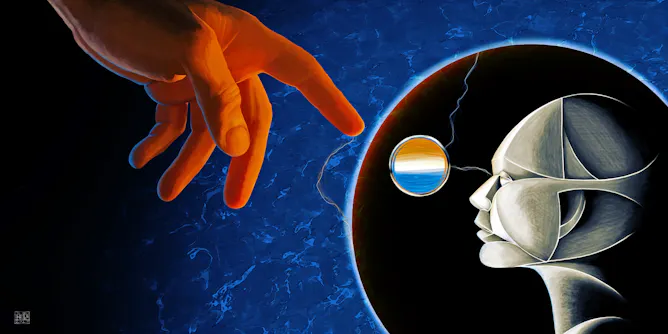
A new twist on an old experiment reveals several common-sense ideas about reality can’t all be true.
Articles on Physics
Displaying 321 - 340 of 592 articles
Fluid mechanics can be applied to the transport of respiratory diseases such as COVID-19.

Twisted sound beams suggest an advanced civilisation may be able to harness immense amounts of power from a black hole.
Physicists can use bright, hot lasers to slow atoms down so much that they measure -459 degrees Fahrenheit.
There are two types of time travel: going back in time and going forward in time. And remarkably, people can feel time at different rates - but usually don’t notice it.
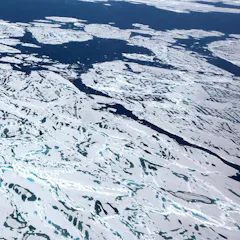
Understanding sea ice loss requires expensive and difficult expeditions. Scientists have developed a new model that predicts the growth of small ponds on sea ice more efficiently.
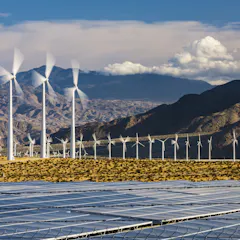
Generating energy usually means wasted heat. Semiconductors let the electrons flow with zero waste – but so far scientists only know how to get them to work at ultra-low temperatures.
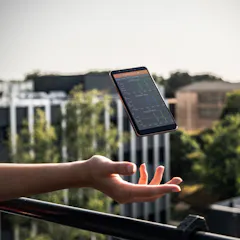
Practical work is essential for science education. But health measures compromise their traditional organization. Here are some game-changing solutions.
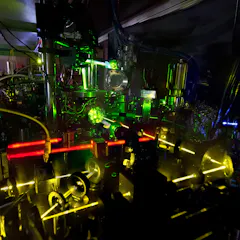
Researchers have made some of the most accurate clocks imaginable in recent years, but the trick is harnessing those clocks to electronics. Using lasers to tune microwaves bridges the gap.
A high-tech twist on an old idea – running on springs – could give human-powered movement its biggest boost in more than a century.

The movies make it seem like someday we’ll be able to make people and objects grow really big or shrink really small. Whether this will be possible comes down to the smallest of things.
The term ‘Big Bang’ might make you think of a massive explosion. Put the thought out of your head. Rather than an explosion, it was the start of everything in the universe.
Mathematical maverick Stephen Wolfram’s latest ambitious project calls on members of the public to help him find the rules that control the world.

Are molecules, chairs, genes and humans really just the sum of their physical parts? A team of philosophers are trying to find out.
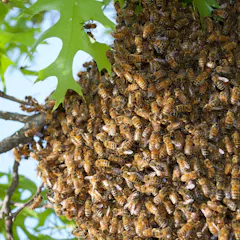
A swarm of honeybees can provide valuable lessons about how a group of many individuals can work together to accomplish a task, even with no one in charge. Roboticists are taking notes.

There is a massive black hole in the center of the Milky Way galaxy. Measurements of star orbits near this black hole suggest that there may be a second companion black hole nearby.

Nobel Prizes in science are usually given for revolutionary ideas that change our perception of the universe. But this year’s chemistry prize was awarded to inventors of a revolutionary device.
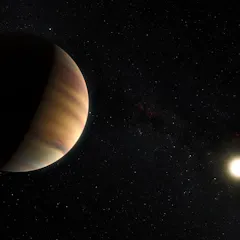
Michel Mayor and Didier Queloz thought it would take years to find a planet outside the solar system – they did it in months.
The 2019 Nobel Prize in Physics went to a cosmologist who helped unlock the secrets of the Big Bang’s aftermath, and two astronomers who found a “hot Jupiter” orbiting a nearby star.
The Princeton cosmologist helped pioneer our current model of the universe and began a whole new branch of physics.
Top contributors
-

Professor, Philosophy of Science, The University of Melbourne
-
Professor of Nuclear Physics, Michigan State University
-
University Distinguished Professor of Astronomy, University of Arizona
-
Professor of Engineering Practice, Purdue University
-
Post Doctoral Research Associate, Centre for the Subatomic Structure of Matter, Adelaide University
-
Physicien, Professeur des Universités, Université Paris-Saclay
-
Professor of Astrophysics, University of Sydney
-
Emeritus Professor, ARC Centre of Excellence for Gravitational Wave Discovery, OzGrav, The University of Western Australia
-
Principal Lecturer of Physics and Astronomy, Clemson University
-
Professor of Physics, Penn State
-
Lecturer, The University of Queensland
-
Senior Lecturer in Physics, University of New England
-
Professor, University of Sydney
-
Professor of Mechanical and Aerospace Engineering, North Carolina State University
-
Professor of Physics and Astronomy, Rochester Institute of Technology