

Thomas the Tank Engine’s movements are restricted by the tracks, but he still thinks he’s free.
Articles on Philosophy
Displaying 281 - 300 of 746 articles

Humans have long struggled to understand the nocturnal world. As environmental change becomes increasingly acute, understanding their lives has never been more critical.
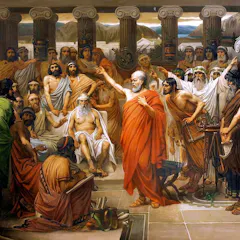
The great lesson of the ancient philosopher Socrates is that philosophical contemplation itself prepares us for the good life.

Your great grandchildren are powerless in today’s society, but the things we do now influence them, for better or worse. What happens when we consider them while we make decisions today?

Scientists aren’t always right, and new evidence can always emerge to disprove a theory. Still, philosophy helps explain why there is good reason for us to trust science regardless.
Two simple rules can help us identify future-proof science.

Augustine’s Confessions has become a modern classic because it feels so immediate and familiar to our current desire for self-understanding.

Cognition may evolve in response to increasing complexity.

Reliance on the support of others after an accident showed philosopher David Newheiser the power of solidarity. We need a similar sense of communal connection in our approach to COVID, he writes.
Pessimism, as explored by the philosopher Schopenhauer, offers tools to come to terms with the idea that refusing to relentlessly pursue happiness is perhaps the most reasonable attitude.

Stoicism can easily be misread as pessimistic because of its relentless focus on mortality and fragility. But its core message – contained in songs spanning generations – is profoundly empowering.

Does true love require self-sacrifice, as depicted in Thor: Love and Thunder? Plato’s Symposium, the most famous ancient dialogue on love, offers many perspectives.

Water companies are presenting people with an ethical dilemma.

What would moralists and realists say about the UK’s recent political turmoil?
Irony is linked to the ability to say one thing while thinking another – which means it’s also intrinsic to being human. What does new research into artificial intelligence and irony reveal?

Humanity’s remarkable powers of comprehension can be aggrandising, but ultimately they demand a sense of humility.

Fanon left a remarkable imprint, his views influencing many in the field of mental illness as well as pan-Africanist and anti-colonialism thinkers.

The answer could lie in evolution.
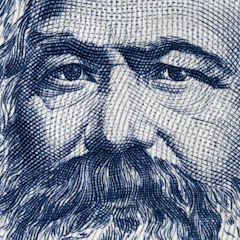
Marx’s thought was groundbreaking. His primary interest wasn’t simply capitalism. It was human existence and our potential.

People make decisions throughout their lives about their health. But when they are terminally ill they are not allowed to decide when they want to die.
Top contributors
-

Professor in Philosophy, Australian Catholic University
-
Associate Professor of Philosophy, Deakin University
-
Associate Professor of Philosophy of Education, University of Birmingham
-
Professor of Philosophy, La Trobe University
-
Senior Lecturer in Philosophy and Education; Curriculum Director, UQ Critical Thinking Project, The University of Queensland
-
Deputy Director, Institute for Ethics, Governance & Law, Griffith University
-
Associate Lecturer, University of Notre Dame Australia
-
Honorary Associate in Philosophy, University of Sydney
-
Professor, Philosophy of Science, The University of Melbourne
-
Professor of Philosophy, University of Pretoria
-
Senior Lecturer in Philosophy and Ethics, Nottingham Trent University
-
Assistant Professor in Philosophy and History, Bond University
-
Researcher, UQ Critical Thinking Project, The University of Queensland
-
Associate Professor in Philosophy, University of Nottingham
-
Lecturer in Philosophy, Queen's University Belfast