
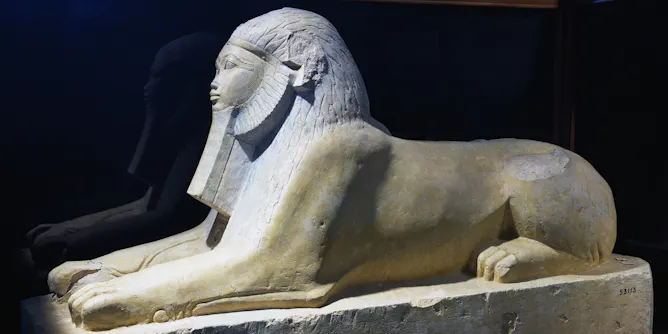
There is evidence of people who crossed gender boundaries even in ancient civilizations, though the terms naming them have evolved over time.
Articles on Aristotle
Displaying 1 - 20 of 88 articles
For the Greeks, sophrosyne was an ideal second to none. It’s just as important today, in an age of internet addiction and misinformation – but harder to come by.

It may seem like a paradox, but it takes good friends for someone to really understand themselves – and grow in virtue, as Aristotle argued.

While rationalizing deception is easy to do, developing the virtue of truthfulness is not.

For Aristotle, the true form of love wasn’t about intense passion or grand gestures on one day of the year.

Though they lived centuries apart, Aristotle and Tsunetomo both explored what it means to live virtuously, and the risks of wanting praise or recognition.
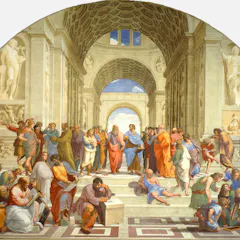
Are we all political animals? Aristotle thought so. Politics, he believed, was the art of the possible, but extremes of wealth could harm democracies.

Is time real, or an illusion? The best answer may be neither: Both physics and philosophy suggest that time is a projection of the mind onto a timeless reality.
Richard Fishacre challenged the scientific orthodoxy of his day, and contemporary astrophysics has vindicated his position.

Wealth inequality is a growing problem, with the richest 20% of Australians owning more than 60% of our wealth. But for true happiness, more money is rarely enough.

A philosopher argues that true leisure is when we can reflect on our real priorities, cultivate friendships and decide what kind of life we want to live.

Whether AI can ‘think’ is a different question than whether it is ‘intelligent.’
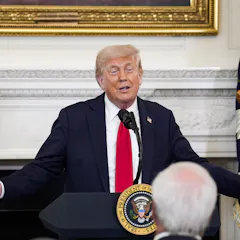
For the classical Greeks, citizenship was a binding relationship of reciprocal duties and obligations owed to all other citizens. The law, they believed, was king.
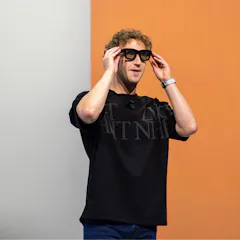
It might seem odd to look to someone who lived over 2,000 years ago for answers about AI. But Aristotle has enduring insights about friendships – and which ones are particularly valuable.
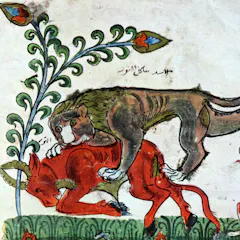
‘Pañcatantra,’ a striking collection of animal fables in which birds, lions and others speak and reason as humans do, guides leaders through 3 ethical positions.

It doesn’t matter how many rules we have if no one follows them. If they are not widely respected, then the structure becomes useless. The same goes for democracy.
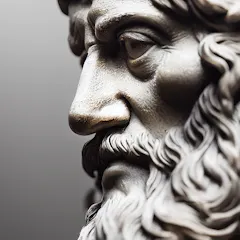
No other classic text has left such a mark on how we tell stories, create theatre, and structure film. But what does it actually say?
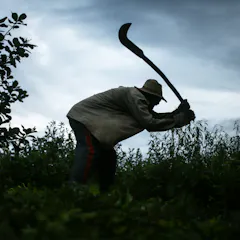
To stop a crime, it helps to understand who these criminals are and how they think.
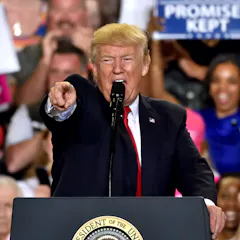
Trump’s speeches may seem rambling and incoherent, but his ‘weave’ is actually part of a carefully constructed narrative.

As the election nears, it seems everyone is afraid.
Top contributors
-

Assistant Teaching Professor of Philosophy, Missouri University of Science and Technology
-
Assistant Professor of Philosophy, University of Minnesota Duluth
-
Managing Director of the McCourtney Institute of Democracy, Associate Research Professor, Political Science, Co-host of Democracy Works Podcast, Penn State
-
Rachel Hadas is a Friend of The Conversation.
Professor of English, Rutgers University - Newark
-
Professor of Natural Philosophy in the Department of Physics, University of York
-
Assistant Professor of Writing, USC Dornsife College of Letters, Arts and Sciences
-
Research Fellow, Center for Philosophy and History of Science, Boston University
-
Professor of Communication and Journalism, Texas A&M University
-
Lecturer in Classics and Ancient History, The University of Western Australia
-
Associate Professor, School of Management and Marketing Te Kahui Kahurangi, Te Kunenga ki Pūrehuroa – Massey University
-
Distinguished Professor in the Department of Medicine and Director, The Centre for Medical Ethics & Law, Stellenbosch University
-
Head of Media and Communications, James Cook University
-
Associate Professor of Philosophy of Education, University of Birmingham
-
Senior Lecturer in Bioethics in Department of Medicine, Faculty of Health Sciences, University of Cape Town
-
Vice-Chancellor, James Cook University