

A new book follows four women philosophers through ten of the worst years in the 20th century, spanning 1933, the year Hitler was appointed Chancellor of Germany, to the thick of the second world war.
Articles on Philosophy
Displaying 201 - 220 of 746 articles

Nazi war criminal Adolf Eichmann was anything but banal. His case is an apt reminder of how evil agents can deflect accountability, denying victims even the thin consolation of the moral high ground.

Everybody thinks they know what drugs are, but a clear definition is surprisingly elusive.
Bit by bit, the philosopher Rai Gaita showed Maria Tumarkin and Juliet Rogers the morally serious worth of face-to-face conversation.
Can you be happy by simply accepting your fate? TikTok seems to think so

The Enlightenment saw science and rational thought replace the religious superstitions of the previous century, and demons became metaphors for the human struggle between good and evil.

The Slovenian philosopher is one of the world’s most famous thinkers. But what does he actually stand for?
We already have many of the tools to make this imagined world a reality.
There’s a battle over consciousness research – and whether it can be understood purely through science.

Incorporating Akan folklore in the curriculum will promote quality and lifelong education in Ghana.

Big names in consciousness research have signed an open letter attacking ‘integrated information theory’ as pseudoscience, sparking uproar.
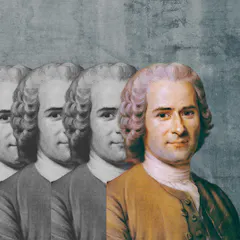
The ideas of Rousseau reflect many of our own deepest commitments and patterns of thought.

Pigs with human kidneys? Brain-powered computer chips? Science is creating new kinds of living things – and our moral understanding needs to catch up fast.

Humility doesn’t get the fanfare of virtues like courage, compassion or generosity. But without humility, those other virtues won’t get much traction in the quest to live a good life.

You can be connected across lifetimes in so many different ways, from lovers to passerbys.

The science of human consciousness offers new ways of gauging machine minds – and suggests there’s no obvious reason computers can’t develop awareness.

For Buffett, escapism was not merely some fiddling flight of fancy. It acknowledged the brutalities and indignities of everyday life.

Simone Weil is one of the 20th century’s most remarkable, paradoxical figures. The Need for Roots, published in the year she died at just 34, is a tour de force of ethics and political philosophy.

The famous French anthropologist, world-renowned for his theory of non-places and his analyses of the “overmodern” city, died during the summer.

Philosopher Markus Gabriel argues that a new enlightenment based on moral facts is necessary to overcome the darkness of our times.
Top contributors
-

Professor in Philosophy, Australian Catholic University
-
Associate Professor of Philosophy, Deakin University
-
Associate Professor of Philosophy of Education, University of Birmingham
-
Professor of Philosophy, La Trobe University
-
Senior Lecturer in Philosophy and Education; Curriculum Director, UQ Critical Thinking Project, The University of Queensland
-
Deputy Director, Institute for Ethics, Governance & Law, Griffith University
-
Associate Lecturer, University of Notre Dame Australia
-
Honorary Associate in Philosophy, University of Sydney
-
Professor, Philosophy of Science, The University of Melbourne
-
Professor of Philosophy, University of Pretoria
-
Senior Lecturer in Philosophy and Ethics, Nottingham Trent University
-
Assistant Professor in Philosophy and History, Bond University
-
Researcher, UQ Critical Thinking Project, The University of Queensland
-
Associate Professor in Philosophy, University of Nottingham
-
Lecturer in Philosophy, Queen's University Belfast