
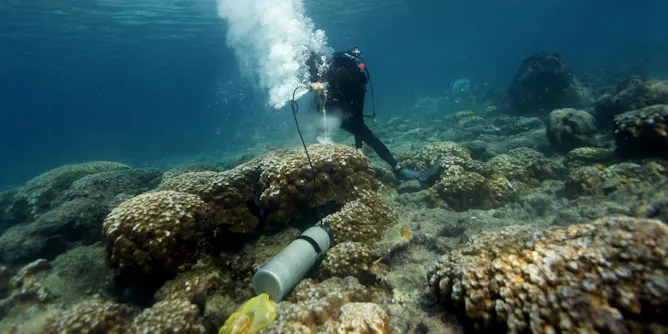
Scientists went to the heart of the El Niño pattern to learn from living and fossil corals. The results show El Niño’s intensifying coincides with global warming.
Articles on Paleoclimate
Displaying 1 - 20 of 38 articles
Changes that took millions of years can now happen in a matter of decades, and this accelerated rhythm can be destructive, with dangerous consequences for the planet

From blood to mud: medical tech that once studied viruses and tumours now analyses ancient mud and ice to look for environmental changes.
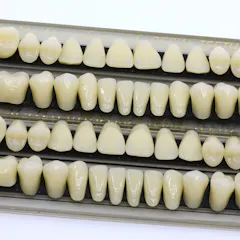
The balance of different varieties of atoms inside a person’s teeth can reveal a week-by-week record of rainfall and protein consumption during their infancy.

Not everything dies in a mass extinction. Sea life recovered in different and surprising ways after the asteroid strike 66 million years ago. Ancient fossils recorded it all.
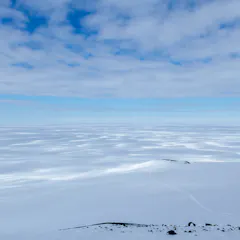
New evidence that low levels of atmospheric CO2 led to the longest ice age in Earth’s history.
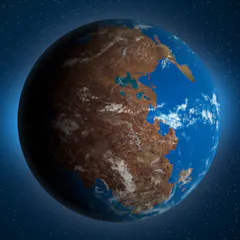
We modelled the climate during this period and discovered episodes of intense ocean heating.
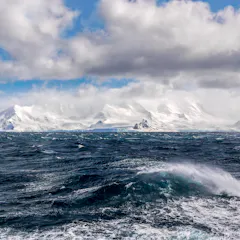
Howling winds take sea salt from the Southern Ocean and lay it down in Antarctica as snow, then ice. Hidden in these ice cores is a warning about Australian fire seasons.
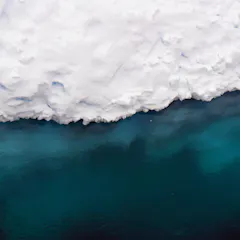
Did the enormous West Antarctic Ice Sheet collapse the last time global temperatures were 1.5°C above preindustrial levels? The answer lay in the DNA of an octopus.
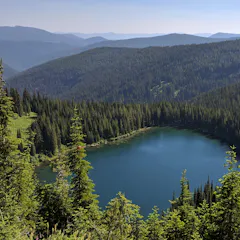
As the climate warms, devastating fires are increasingly likely. The 2020 fires pushed the Southern Rockies beyond the historical average. Is there hope for the Northern Rockies?
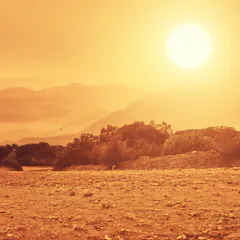
Long before thermometers, nature left its own temperature records. A climate scientist explains how ongoing global warming compares with ancient temperatures.

Evidence in Earth’s natural archives, from tree rings to seafloor sediments, points to one trend. Some climate models suggest another.
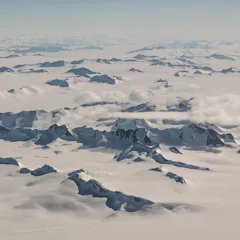
Scientists used satellites to map tens of thousands of glacial landforms in Antarctica’s highest mountains.

As water dripped in a remote cave, it left behind evidence of every monsoon season for a millennium. Scientists say it holds a warning for a country about to become the most populous on Earth.
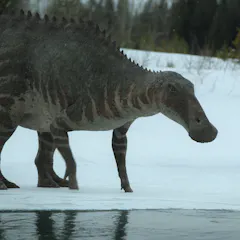
Yes, dinosaurs really did survive in snow – we simulated the Cretaceous climate to prove it.
Spoiler: lots more floods.

What climate changes in the distant past can tell us about the near future.
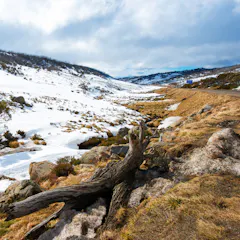
Australia’s alpine region warmed for about 600 years. What makes this climate change particularly interesting is that it bears striking similarity to today.

These giant predators are helping solve the mystery of Earth’s cooling shift some 50 million years ago.
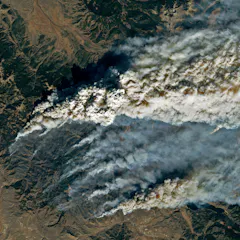
Scientists studied charcoal layers in the sediment of lake beds across the Rockies to track fires over time. They found increasing fire activity as the climate warmed.
Top contributors
-

Associate Professor in Physical Geography, University of Southampton
-
Senior Research Associate in Meteorology, University of Bristol
-
Professor of Earth and Environmental Sciences, Northern Arizona University
-
Professor of Fire Ecology, University of Montana
-
Professor of Earth and Climate Sciences, California State University, Dominguez Hills
-
Research Scientist in Ecological Transformation, University of Colorado Boulder
-
Associate Professor of Global Environmental Change, Xi'an Jiaotong University
-
Professor of Isotope Geochemistry, University of Southampton
-
Assistant Professor of Earth, Ocean and Atmospheric Science, Florida State University
-
Professor of Palaeobiology, University of Leicester
-
Harold T. Stearns Professor of Earth Science, Wesleyan University
-
Lecturer, School of Agriculture, Food and Ecosystem Sciences, The University of Melbourne
-
Senior Lecturer in Biology, University of Sussex
-
PhD Researcher, University of Leicester
-
Doctoral Researcher, University of Sussex