
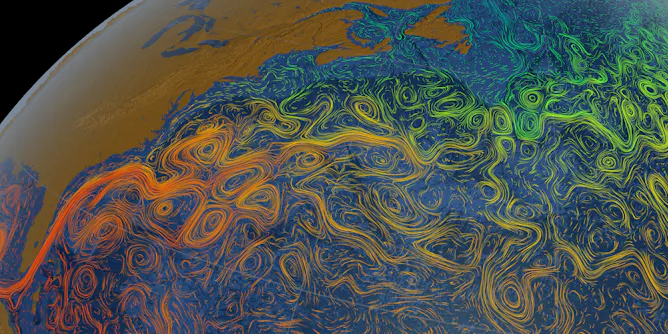
New evidence shows a major climate shift ‘within a lifetime’ 13,000 years ago.
Articles on Paleoclimatology
Displaying 1 - 20 of 28 articles

From blood to mud: medical tech that once studied viruses and tumours now analyses ancient mud and ice to look for environmental changes.
New evidence that low levels of atmospheric CO2 led to the longest ice age in Earth’s history.

Rocks, plants and ice hold valuable clues about how the planet’s climate has evolved, but deciphering them is not easy.

From ice cores extracted from the Tibetan Plateau, scientists recovered the equivalent of 1,705 virus species. Reading their genomes tells the story of 41,000 years of climate change.

New finding adds uncertainty to projections of how the climate will change in future.
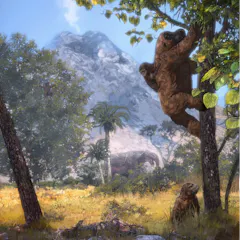
Contrary to the idea that apes evolved their upright posture to reach for fruit in the forest canopy, the earliest known ape with this stature, Morotopithecus, lived in more open grassy environments.

Evidence in Earth’s natural archives, from tree rings to seafloor sediments, points to one trend. Some climate models suggest another.

A look back at hurricane history suggests we may be significantly underestimating future risks.

We modelled the climate of the far future planet Earth in which the fantasy series is set.

What climate changes in the distant past can tell us about the near future.
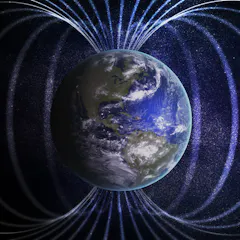
Scientists have uncovered evidence of a global paleopocalyspe.
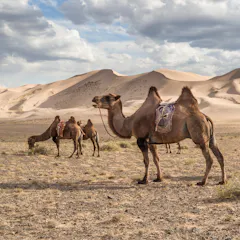
We found evidence of irreversible ecological breakdown millions of years ago – this time round, we should heed the warning signs.
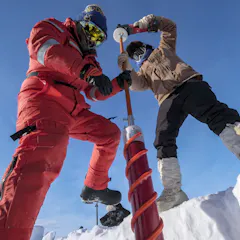
Ice cores can preserve evidence of ‘black swan’ events like pandemics and droughts, but the glaciers from which they are collected are disappearing.

Scientists have reconstructed the monsoon over 145m years – and found it predates the Himalayas.
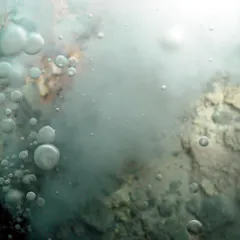
Thousands of years ago, carbon gases trapped on the seafloor escaped, causing drastic warming that helped end the last ice age. A scientist says climate change could cause this process to repeat.
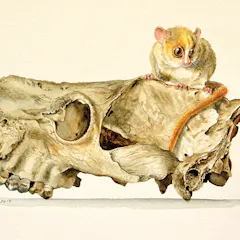
A series of new studies sheds light on the population crash and extinction of the giant birds, lemurs and more that roamed the island until around A.D. 700-1000.
What can we expect from our future climate after looking at the ‘Hothouse Earths’ of the past?
This sudden, 150,000-year long temperature spike has many parallels with modern climate change.
The sun is more powerful today than when we last had similar levels of carbon in the atmosphere.
Top contributors
-

Senior Research Associate in Meteorology, University of Bristol
-
Professor of Earth System Science, UCL
-
Professor of Geography, The Ohio State University
-
Associate Professor in Physical Geography, University of Southampton
-
Research Associate in Climatology, University of Bristol
-
Professor of Climate Science, University of Bristol
-
Postdoctoral Research Fellow in Paleoceanography, UCL
-
Professor of Earth and Environmental Sciences, Northern Arizona University
-
Professor of Isotope Geochemistry, University of Southampton
-
Distinguished University Professor, Earth Sciences, The Ohio State University
-
Professor of Public Engagement in Science, University of Birmingham
-
Postdoctoral Research Fellow, Ocean and Earth Science, University of Southampton
-
Professor of Earth and Environmental Sciences, Wesleyan University
-
Senior Scientist in the field Marine Biogeochemistry and Paleoceanography, GEOMAR Helmholtz Centre for Ocean Research Kiel
-
PhD Researcher, University of Leicester