
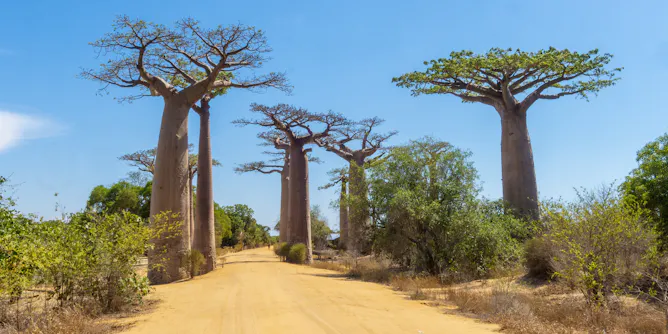
Ancient baobabs in Madagascar have unlocked a 700-year rainfall record that is set to help scientists figure out how to adapt to climate change.
Articles on Stalagmites
Displaying all articles

Sea spray content in a stalagmite sheds light on how ocean currents in the Gulf Stream have changed in the past.
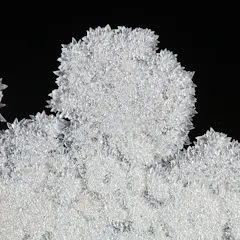
Despite cold temperatures, water was relatively abundant in much of the southern hemisphere during ice ages.
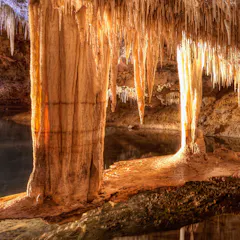
South-west Australia relies on groundwater for three-quarters of its water use. But a new study of the region’s caves has found a drying climate is having a dramatic impact on this precious resource.

Evidence in Earth’s natural archives, from tree rings to seafloor sediments, points to one trend. Some climate models suggest another.
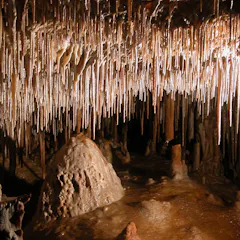
The findings will help us better understand how biodiversity responds to a changing climate over time.

As water dripped in a remote cave, it left behind evidence of every monsoon season for a millennium. Scientists say it holds a warning for a country about to become the most populous on Earth.
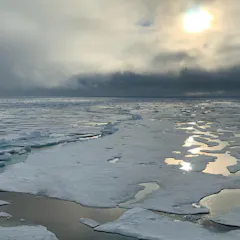
The “last glacial period” saw huge, rapid climate changes. Our new research found they happened all around the world, and each time within just a few decades.

What caused the rise and then collapse 2,600 years ago of this vast empire centered on Mesopotamia? Clues from a cave in northern Iraq point to abrupt climate change.
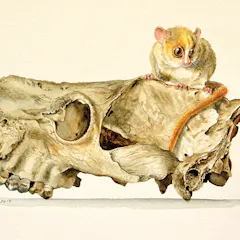
A series of new studies sheds light on the population crash and extinction of the giant birds, lemurs and more that roamed the island until around A.D. 700-1000.
The missing link in the demise of the last ice age has been uncovered in stalagmites hidden deep underground in Indonesian…
Top contributors
-

Professor emeritus, The University of Melbourne
-
Postdoctoral researcher in Geochemistry/Palaeoclimatology, University of California, Berkeley
-
Professor of Earth and Climate Sciences, California State University, Dominguez Hills
-
Senior Lecturer, School of Biological Sciences, Adelaide University
-
Associate Professor of Global Environmental Change, Xi'an Jiaotong University
-
Honorary Research Fellow, The University of Melbourne
-
Professor of Earth and Environmental Sciences, Northern Arizona University
-
Research Fellow, Palaeoclimate, Maynooth University
-
Professor, The University of Melbourne
-
Research Scientist, Environment Business Unit, CSIRO
-
Professor, School of Biological, Earth and Environmental Sciences, UNSW
-
Professor of Geosciences, UMass Amherst
-
Emeritus Professor of Anthropology, UMass Amherst
-
Professor in Earth Sciences, Durham University
-
PhD Candidate, Climate Tipping Points, University of Southampton