
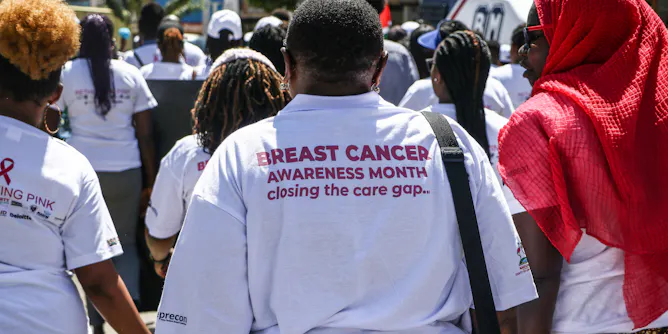
The confirmed presence of substandard or falsified anticancer medicines in sub-Saharan Africa will complicate cancer care.
Articles on Oncology
Displaying 21 - 40 of 94 articles
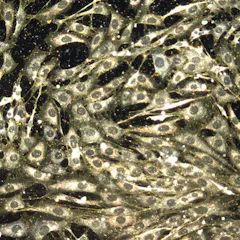
As it does with other pathogens, your immune system sees drugs as foreign invaders to be expelled from your body. But exploiting this process could reduce the side effects of chemotherapy.

Studying why heart cells are less likely to become cancerous can provide clues to improving heart regeneration and treatments for heart disease.

The factor most associated with cancer is unavoidable: aging. Older adults with cancer benefit from a geriatric assessment before making treatment decisions, but this is still not routine care.

Doctors examine a tumor in several different ways to determine whether a cancer is aggressive – and what kinds of treatments, if any, might work best.

Prostate cancer is one of the most common cancers in men. Although watchful waiting is appropriate for low-risk cases, many are diagnosed at an advanced stage because of racial health disparities.
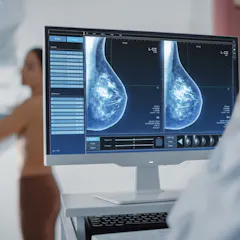
As breast cancer screening evolves, understanding personal risk factors like density is critical for improving early detection.
Since 1971, the US has led the world in funding cancer research and developing new treatments that have driven down death rates. This may soon no longer be the case.

Some patients with a terminal illness seem to be able to ‘hold on’ until after an anticipated holiday or event. This might be less about staying positive and more about being supported in your goals.
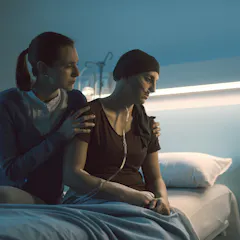
Cachexia, or wasting syndrome, causes around 80% of patients with advanced cancer to withdraw from life.

Alcohol is the third-leading preventable cause of cancer in the US, accounting for tens of thousands of cancer deaths per year.
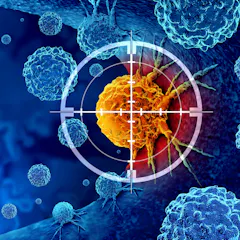
A century-old cancer therapy gains new life with modern science.

The gene that codes for p53 is the most frequently mutated in cancer. Researchers are targeting different parts of its complex pathway to restore its ability to stop cancer.

Green algae carry drug-loaded nanoparticles directly to the lungs, reducing side effects in other organs and increasing treatment efficiency.

Drinking alcohol is normalized in American society. But the ubiquity of alcohol consumption hides its serious health risks, including cancer.

Colon cancer is curable when caught early, but some insurers are either refusing to cover or significantly delaying approval for colonoscopies.

That depends on a number of factors, including the cancer you had initially, as well as your genes, environment and lifestyle.
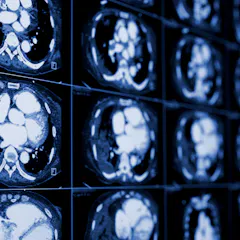
Stigma, fear and cost prevent many patients from getting screened for lung cancer. This can prove deadly for the most vulnerable.
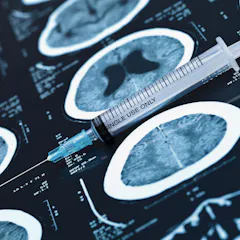
Cancer vaccines have gained much interest among scientists but face a number of hurdles. A new mRNA vaccine for glioma offers a step forward in training the immune system to fight cancer.
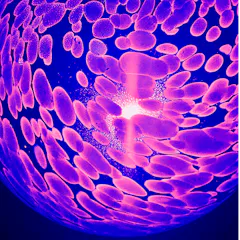
Functional precision medicine works to take the guesswork out of deciding which drug to try next for patients with cancers that don’t respond to standard treatments.
Top contributors
-

Professor of Biomedical Sciences, Anglia Ruskin University
-
Senior Lecturer in Genetics and Molecular Biology, Kingston University
-
Professor of Medical Oncology, University of Colorado Anschutz
-
Adjunct Professsor, School of Psychology, Faculty of Health and Medical Sciences, Adelaide University
-
Senior Lecturer in Cancer Biology & Clinical Biochemistry, Kingston University
-
Director of the Colorado Cancer Screening Program, University of Colorado Anschutz
-
Professor of Sociology, Ball State University
-
Senior Associate Vice President Community Health, Education and Training, Old Dominion University; Associate Professor of Pharmacy, University of Florida
-
Associate Director of Community Outreach in Thoracic Oncology, University of Miami
-
Associate Professor of Pathology, Penn State
-
Associate Professor of Hematology and Oncology, Penn State
-
Professor of Biomedical Engineering, Johns Hopkins University
-
Assistant Professor of Cancer Prevention and Control, Health Communication Researcher, West Virginia University
-
Associate Professor of Pathology, Penn State
-
Assistant Professor of Biomedical Engineering, Binghamton University, State University of New York