
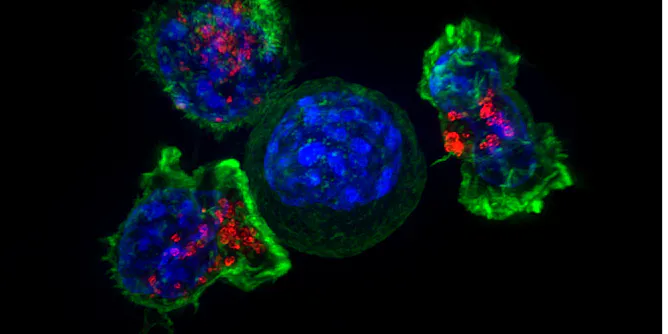
Immunotherapy has the potential to eliminate tumors, but works best for select patients. Engineering T cells to bypass cancer’s defenses could help expand treatment eligibility to more patients.
Articles on Oncology
Displaying 61 - 80 of 94 articles

One enzyme plays a key role in how tumor cells replicate and divide indefinitely. Identifying the genes that give these cells their immortality could provide new drug targets to treat cancer.

Multicancer early detection tests are among the priorities of the Biden administration’s Cancer Moonshot. The tests show promise, but questions remain about when and how to use them.

Both cancer and cancer treatment can impact someone’s ability to have biological children. It’s important to discuss fertility right after cancer diagnosis.
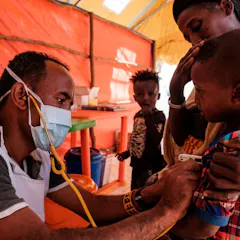
Since the war broke out, some healthcare workers have lost their jobs, others have been displaced, wounded, threatened or killed.

October is awash in seas of pink T-shirts, balloons and ribbons in honor of Breast Cancer Awareness Month. But this messaging fails to recognize people who are not cured of the disease.

The miracles of modern medicine can be life-saving. Yet as Tim Baker writes, cancer patients yearn for a little empathy from their doctors, as well as scripts.
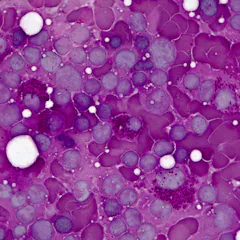
Patients with blood cancer undergoing stem cell transplantation have a high risk of complications. The bacteria in their gut, however, can help their immune system recover and fight infections.

Early detection of breast cancer is critical to improving chances of survival. But racial and ethnic minority patients systematically have delayed diagnoses that reduce the benefits of screening.
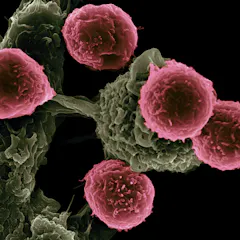
One promising cancer treatment has been in the works for decades, but severe side effects have kept it out of the clinic. A reengineered version may offer a way to safely harness its potent effects.
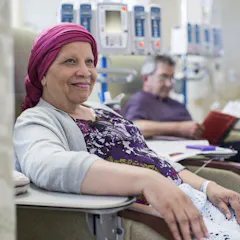
Belonging to one or more groups with long-standing social and economic disadvantages increases the risk of cancer diagnoses and death.
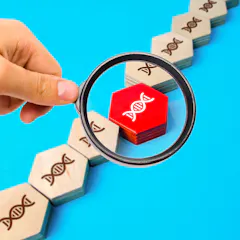
Tumors contain thousands of genetic changes, but only a few are actually cancer-causing. A quicker way to identify these driver mutations could lead to more targeted cancer treatments.
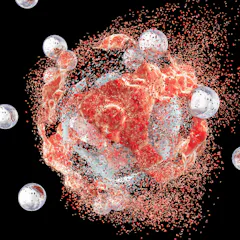
The COVID-19 mRNA vaccines put nanomedicine in the spotlight as a potential way to treat diseases like cancer and HIV. While the field isn’t there yet, better design could help fulfill its promise.

There are currently no effective tests to screen for ovarian cancer. But that doesn’t mean there aren’t ways to recognize and prevent it.
Fat cells and cancer cells talk to each other. Specialists in both systems can do the same.

Applying the principles of ecology and evolution could help oncologists anticipate cancer drug resistance and optimize their treatment plans for patients.

A diagnosis of metastatic breast cancer means having cancer for the rest of one’s life – a situation with very different needs and concerns compared to earlier stages of the disease.
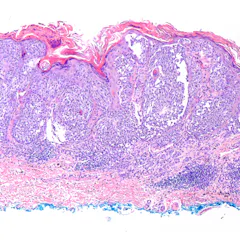
To better understand how cancer tumors grow, mathematicians use diffusion models.

Writer, broadcaster and commentator Clive James never missed an opportunity to educate his audience. That included raising awareness of leukaemia.
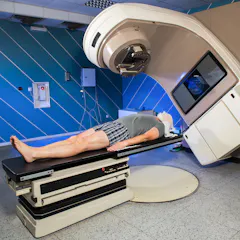
Palliative radiation therapy can improve a cancer patient’s life, by alleviating pain and other symptoms. Unfortunately, some doctors associate the term with end-of-life care and fail to refer people.
Top contributors
-

Professor of Biomedical Sciences, Anglia Ruskin University
-
Senior Lecturer in Genetics and Molecular Biology, Kingston University
-
Professor of Medical Oncology, University of Colorado Anschutz
-
Adjunct Professsor, School of Psychology, Faculty of Health and Medical Sciences, Adelaide University
-
Senior Lecturer in Cancer Biology & Clinical Biochemistry, Kingston University
-
Director of the Colorado Cancer Screening Program, University of Colorado Anschutz
-
Professor of Sociology, Ball State University
-
Senior Associate Vice President Community Health, Education and Training, Old Dominion University; Associate Professor of Pharmacy, University of Florida
-
Associate Director of Community Outreach in Thoracic Oncology, University of Miami
-
Associate Professor of Pathology, Penn State
-
Associate Professor of Hematology and Oncology, Penn State
-
Professor of Biomedical Engineering, Johns Hopkins University
-
Assistant Professor of Cancer Prevention and Control, Health Communication Researcher, West Virginia University
-
Associate Professor of Pathology, Penn State
-
Assistant Professor of Biomedical Engineering, Binghamton University, State University of New York