
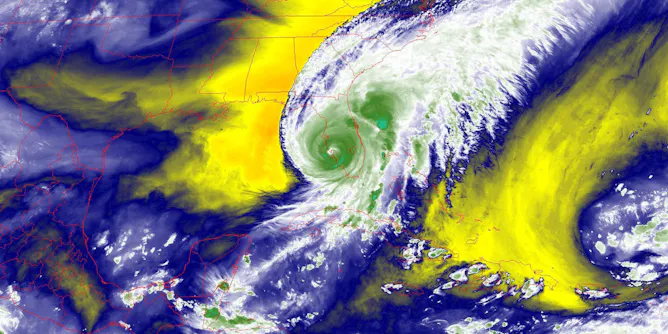
Two hurricane and climate scientists explain what’s known – and still unknown – about global warming’s influence on intensity, rainfall and much more.
Articles on Ocean Temperature
Displaying 21 - 40 of 57 articles

The meteorologist leading NOAA’s 2022 hurricane field program describes flying through eyewalls and the technology in these airborne labs for tracking rapid intensification in real time.
Forming tightly woven populations, these bush-like corals offer a refuge to a myriad of marine species.
The oceans around New Zealand are warming faster in winter than in summer. During the winter of 2021, most coastal areas were warmer than usual, and this is likely to bring more storms during summer.
New Zealand’s conservation needs to consider the long-term impact of climate change and focus not only on protecting native species but on preserving ecological richness.
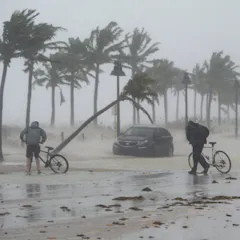
Economic recovery and carbon neutrality are linked. Both depend on the ocean’s ability to continue to regulate climate.

Abrupt losses of biodiversity from climate change represent a significant threat to human well-being.
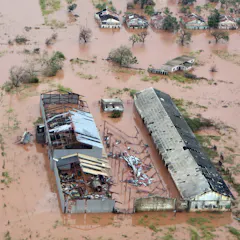
The spate of high intensity tropical cyclones making landfall in Southern Africa has been tied to very warm sea surface temperatures.
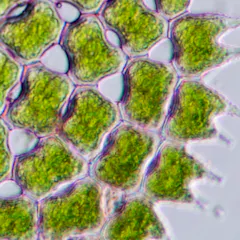
Phytoplankton are tiny, but they do important work.
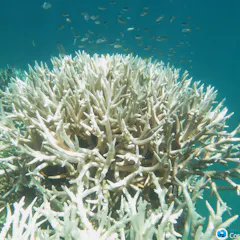
After repeated bleaching in 2016 and 2017 corals on the Great Barrier Reef are producing far fewer offspring.
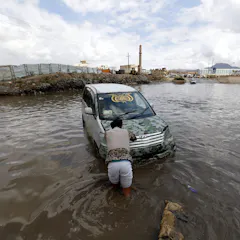
The frequency of intense tropical cyclones is increasing in the South Indian Ocean, a region that previously didn’t have these.
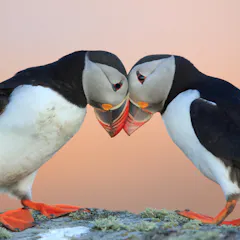
The bird faces a wave of challenges – from climate change to human hunters.
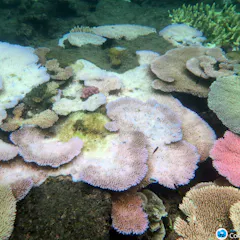
Regional variations in sea temperature can make all the difference between a coral reef suffering major bleaching or surviving as a refuge for corals, new research shows.

A new study finds that even in best-case scenarios, the fishing communities most hurt by climate change are on small island nations such as Kiribati, the Solomon Islands and the Maldives.

In early 2016 reports appeared that vast swathes of mangroves had died in the Gulf of Carpentaria. It now appears heat and drought were to blame.
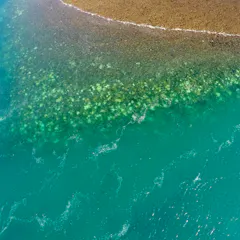
Western Australia’s super-corals are adapted to high temperatures, but even they didn’t escape the recent bleaching event unscathed.

Months after record breaking coral bleaching, research teams are taking stock of the damage on the Great Barrier Reef.
Global average sea level has risen by about 17 cm between 1900 and 2005, but we didn’t know how much of that was due to us, until now.
The summer of 2015-2016 was the hottest on record for Australia’s oceans.

The Great Barrier Reef might get all the attention, but what about our western coral reefs? Warmer waters and human impacts mean these reefs are in trouble.
Top contributors
-

Professor of Physical Geography, University of the Witwatersrand
-
Professor of Marine Botany, The University of Western Australia
-
MetOcean Solutions Science Manager of the Research and Development Team. Moana Project Science Lead, MetService — Te Ratonga Tirorangi
-
Research Lead, Carbon Dioxide Removal, CSIRO
-
UNESCO Chair on Climate Change Variability of Natural and Cultural Heritage and Professor in Physics, James Cook University
-
Chair Professor, Climate Change Research Centre, UNSW
-
Professor in sea level and flooding, University of Southampton
-
Professor of Fisheries, Ecosystem Modelling / Research Scientist, University of Tasmania
-
Oceanographer, CSIRO
-
Senior Principal Research Scientist, CSIRO
-
Associate Professor of Marine Ecology, University of Southampton
-
Professor in Marine Microbiology, University of East Anglia
-
Associate Professor, and Associate Investigator for the ARC Centre of Excellence for Climate Extremes, Monash University
-
Marine ecologist, CSIRO
-
Research Fellow in Fisheries, UNSW