
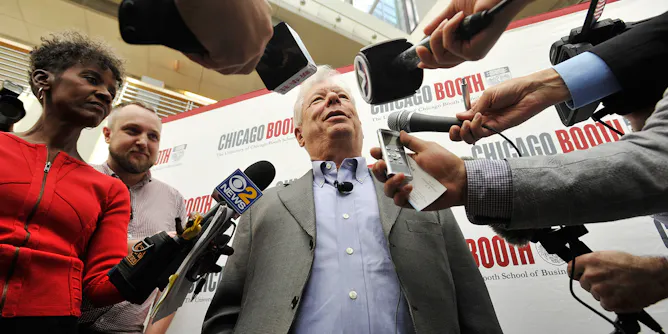
Richard Thaler won the 2017 Nobel Prize in economics for his groundbreaking work incorporating how humans actually behave into economic thinking.
Articles on Nobel Prize 2017
Displaying all articles
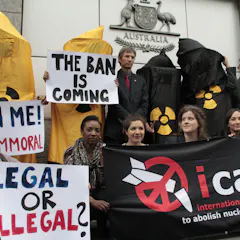
A grassroots movement with its genesis in Melbourne has won the Nobel Peace Prize.
After learning of Ishiguro’s Nobel win, a literature professor recalls her 2006 interview with the writer in a London cafe.
The prize committee has opted for a more traditional laureate this year, nominating a traditional novelist after last year’s controversial choice of Bob Dylan.

Biological clocks set the pace for nearly all living things, and Jeffrey Hall, Michael Rosbash and Michael Young – awarded the Nobel Prize in Physiology or Medicine – helped us understand how.
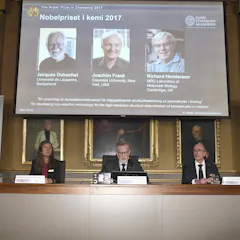
The technique is helping scientists to look for drugs against the Zika virus.
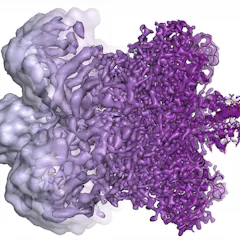
The 2017 Nobel Prize in Chemistry was awarded to scientists who developed a way to study biological molecules under an electron microscope.
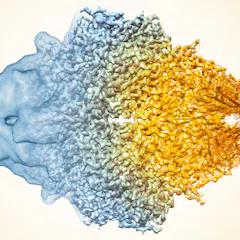
The 2017 Nobel Prize in chemistry goes to three scientists who revolutionized biochemistry by inventing a technology that can image the molecules of life without destroying them.
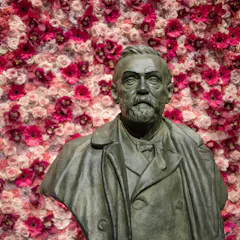
Today’s scientific research is characterized by interdisciplinary, international collaboration. Awards like the Nobel Prizes haven’t caught up.
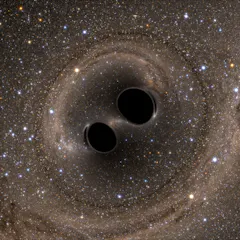
The 2017 Nobel Prize for Physics was awarded to scientists who helped pioneer the discovery of gravitational waves. Australia is playing an important role in gravitational-wave astronomy.
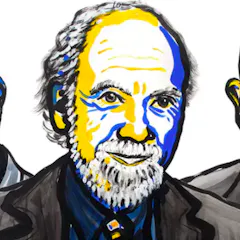
Razor-sharp, unconventional and fun on the dance floor. A colleague paints a colourful portrait of one of this year’s Nobel Laureates in physics.
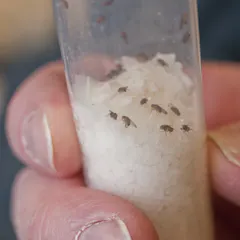
Americans Jeffrey Hall, Michael Rosbash and Michael Young share the 2017 Nobel Prize in Physiology or Medicine for work that explained how our cells keep track of time.
Top contributors
-

Professor of English, University of Colorado Denver
-
Professor, Monash University
-
Senior Lecturer and ARC Future Fellow, Monash University
-
Professor of Creative Writing and Modern Literature, University of Manchester
-
Professor at Columbia University, Group Leader at Flatiron Institute, and Adjunct Professor at Monash University, Monash University
-
Research Associate Professor, U-M Life Sciences Institute and and Associate Professor of Cell and Developmental Biology, U-M Medical School, University of Michigan
-
Senior Lecturer Forensic Chemistry, Deakin University
-
Honorary Principal Fellow, School of Population and Global Health, The University of Melbourne
-
Associate Professor of Business, Boston University
-
Professor of Public Affairs, The Ohio State University
-
Marketing, Media & Communications Manager Science, Monash University
-
Post-doctoral researcher, University of Glasgow
-
Associate Professor of Physical & Biological Sciences, University of California, Santa Cruz
-
Reader in Physics, University of Sheffield
-
Research Assistant Professor at U-M Life Sciences Institute and Assistant Professor of Biological Chemistry, U-M Medical School, University of Michigan