
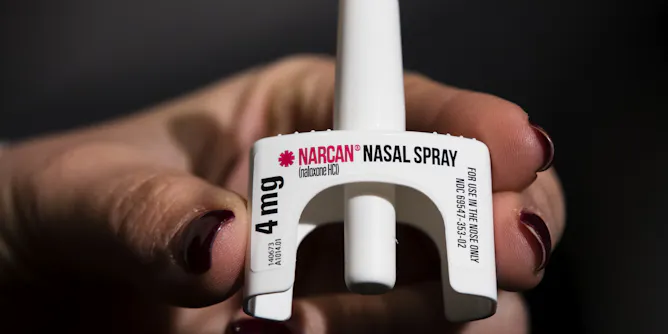
Naloxone can reverse an overdose in minutes, but exactly how it does this at the molecular level has previously been unclear.
Articles on Cryo-electron microscopy
Displaying all articles

Science has a need to verify results, but DeepMind’s protein prediction tool doesn’t work this way.

Visualization is an essential part of the scientific process. Advances in imaging have enabled eye-opening discoveries, not only for scientists and researchers but also for the general public.
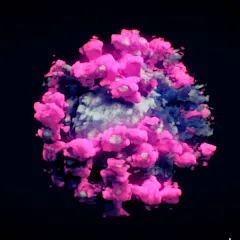
Many microscopy techniques have won Nobel Prizes over the years. Advancements like cryo-ET that allow scientists to see the individual atoms of cells can reveal their biological functions.
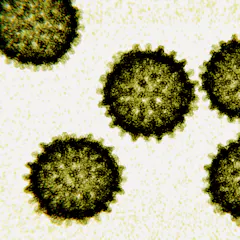
Using a Nobel Prize-winning technique called cryo-EM, researchers were able to identify potential areas on the hepatitis C virus that a vaccine could target.
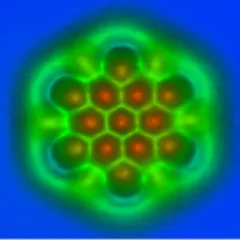
A physicist explains how atoms arrange themselves into molecules – and how scientists are able to image these tiny bits of matter that make up everything around you.
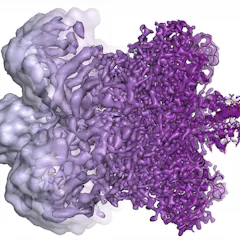
The 2017 Nobel Prize in Chemistry was awarded to scientists who developed a way to study biological molecules under an electron microscope.
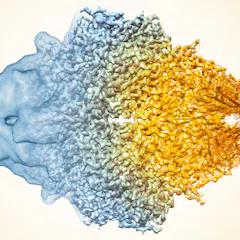
The 2017 Nobel Prize in chemistry goes to three scientists who revolutionized biochemistry by inventing a technology that can image the molecules of life without destroying them.
Top contributors
-

Professor of Computational and Systems Biology, Associate Senior Vice Chancellor for Science Strategy and Planning, University of Pittsburgh
-
Senior Lecturer Forensic Chemistry, Deakin University
-
Research Associate Professor, U-M Life Sciences Institute and and Associate Professor of Cell and Developmental Biology, U-M Medical School, University of Michigan
-
Professor and Director Neuroscience Program, Northern Kentucky University
-
Postdoctoral Scholar in Molecular and Cell Biology, The Scripps Research Institute
-
Associate Professor of Physics, University of Richmond
-
Postdoctoral Fellow in Integrative Structural and Computational Biology, The Scripps Research Institute
-
Associate Professor of Neural and Behavioral Sciences, Penn State
-
Scientific Program Leader at Gladstone Institutes, University of California, San Francisco
-
Associate Tutor and PhD Candidate in Philosophy of Science, Manchester Metropolitan University
-
Research Assistant Professor at U-M Life Sciences Institute and Assistant Professor of Biological Chemistry, U-M Medical School, University of Michigan
-
Ph.D. Candidate in Biology, USC Dornsife College of Letters, Arts and Sciences