
Attosecond science allows the extremely fast movements of electron particles to be observed. This emerging field brings both opportunity and controversy.
Articles on Electron microscopy
Displaying all articles
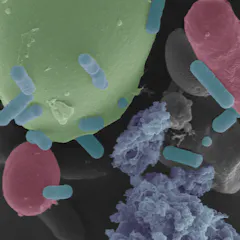
You can thank yeast and bacteria for the distinctive taste and smell of the oldest leavened bread in history.
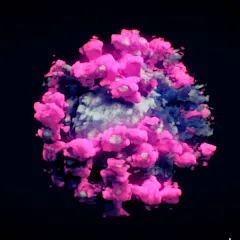
Many microscopy techniques have won Nobel Prizes over the years. Advancements like cryo-ET that allow scientists to see the individual atoms of cells can reveal their biological functions.
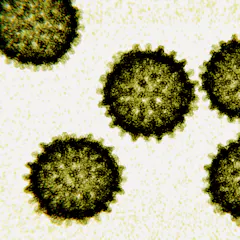
Using a Nobel Prize-winning technique called cryo-EM, researchers were able to identify potential areas on the hepatitis C virus that a vaccine could target.
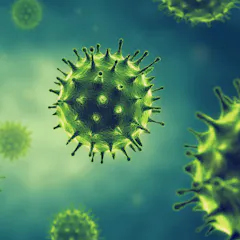
Viruses are too small to visualise with traditional microscopes.
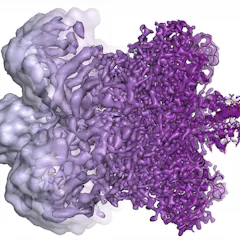
The technique is helping scientists to look for drugs against the Zika virus.
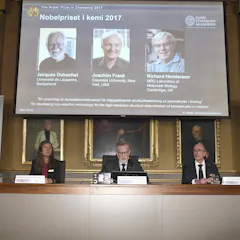
The 2017 Nobel Prize in Chemistry was awarded to scientists who developed a way to study biological molecules under an electron microscope.
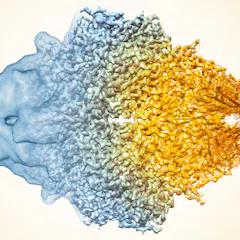
The 2017 Nobel Prize in chemistry goes to three scientists who revolutionized biochemistry by inventing a technology that can image the molecules of life without destroying them.

The advent of electron microscopy and nanobiology has moved our appreciation of the living world to unprecedentedly small scales – with entirely new benefits and potential pitfalls to consider.
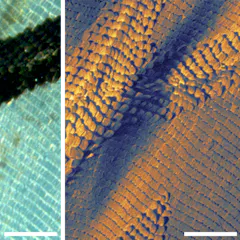
A new scanning helium microscope offers the potential for capturing images with finer resolution than optical microscopes, but without damaging samples as with electron microscopes.
Top contributors
-

Post-doctoral researcher, University of Glasgow
-
Adjunct Professor, Global, Urban and Social Studies, RMIT University
-
Research Assistant Professor at U-M Life Sciences Institute and Assistant Professor of Biological Chemistry, U-M Medical School, University of Michigan
-
Senior Lecturer Forensic Chemistry, Deakin University
-
Research Associate Professor, U-M Life Sciences Institute and and Associate Professor of Cell and Developmental Biology, U-M Medical School, University of Michigan
-
Scientific Officer in Biomedical Sciences, University of Leeds
-
Professor of Computational and Systems Biology, Associate Senior Vice Chancellor for Science Strategy and Planning, University of Pittsburgh
-
Senior Research Associate Engineer, The Ohio State University
-
Postdoctoral Fellow in Integrative Structural and Computational Biology, The Scripps Research Institute
-
Postdoctoral Scholar in Molecular and Cell Biology, The Scripps Research Institute
-
Professor of Physics, UCL