
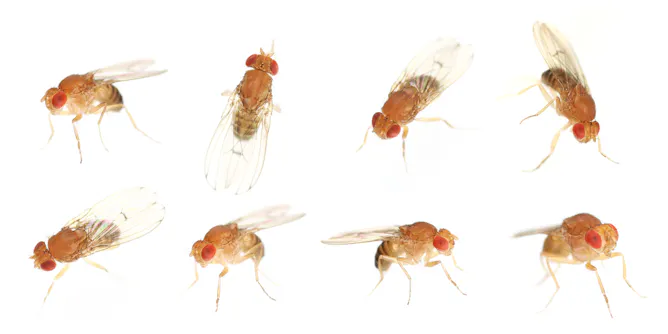
Variability in traits and increased individuality in behaviors is something that can evolve in response to selection, definitely in the lab and potentially also in nature.
Articles on Fruit flies
Displaying 1 - 20 of 38 articles
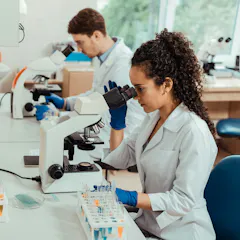
Genetics research reveals how diverse complex biological systems are. Diversity and collaboration make for more thorough and innovative scientific research.
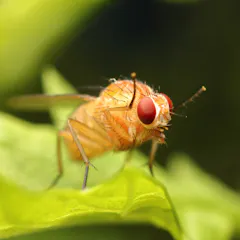
Fruit flies have contributed to some of the most important scientific discoveries over the last century. They should be celebrated – not sprayed.

Fruit flies wreak havoc on crops in Hawaii, but a type of parasitoid wasp armed with a biological weapon has helped keep the pests at bay.

New research highlights the flaws of pesticide regulation.

Studying the human brain is difficult because of its vast and intricate network of neural connections. The fruit fly offers a simpler but similar model that researchers can more easily map.
A microbiologist explains the risks to your health of a fly landing in your chilled glass of sauvignon blanc.

Our bodies are able to perceive time thanks to our internal clocks, which are also used by the other living beings with which we interact.
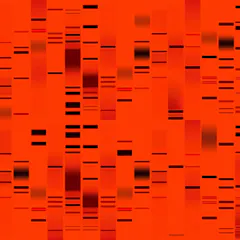
A failed experiment led the researchers to question their assumptions and realize that, contrary to popular belief, chromosomes interact with and affect genetic expression.

When fruit flies see other dead fruit flies, their life spans are cut short. Other species also undergo analogous physiological changes when seeing their dead.
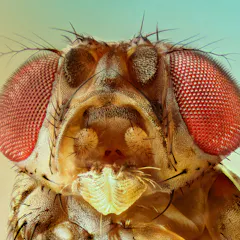
Hox genes make sure all your body parts grow in the right place. Understanding how they work can reveal the process of evolution and lead to potential treatments for congenital birth defects.
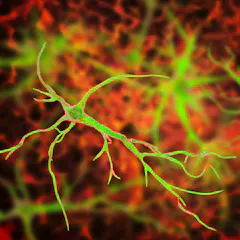
From the archive: new research helps unpick clues about the brain’s ability to change its structure. Listen to The Conversation Weekly podcast.
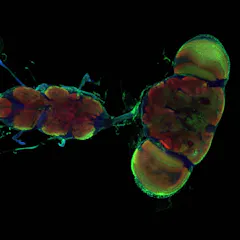
Adaptable neurons are tied to learning and memory but also to neurological disorders. By studying fruit flies, researchers found a mechanism that controls neuroplasticity.
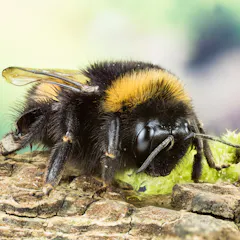
Chemicals banned in the EU were recently granted an exemption for limited use in the UK.
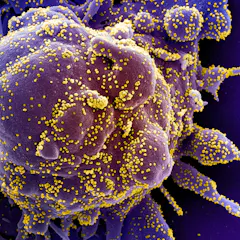
Fundamental research has informed what we know about coronaviruses up until the pandemic. With possible future outbreaks, continuing and developing this type of work is crucial.
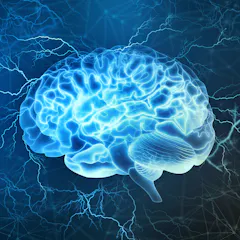
With the right investment, the next few years could be extremely exciting for Nigerian neuroscience.
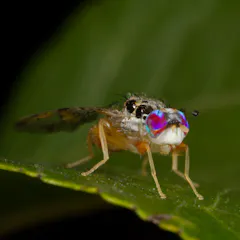
The Mediterranean fruit fly can evolve rapidly to different environmental conditions, this suggests it will be well suited to cope with climate change.
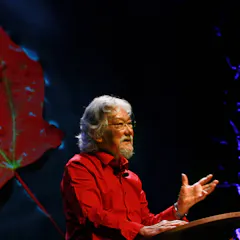
David Suzuki may be best known as an environmental activist and the face of CBC’s ‘The Nature of Things,’ but he’s also a globally recognized scientist.

A new study suggests that high blood-sugar levels are an effect rather than a cause of type 2 diabetes.

Biological clocks set the pace for nearly all living things, and Jeffrey Hall, Michael Rosbash and Michael Young – awarded the Nobel Prize in Physiology or Medicine – helped us understand how.
Top contributors
-

Professor, Chemistry and Biochemistry, Laurentian University
-
Postdoctoral Fellow, UO Institute of Neuroscience and Howard Hughes Medical Institute, University of Oregon
-
PhD student in Biology, University of Rochester
-
Professor of Neurobiology, Northwestern University
-
Professor of Cell and Developmental Biology, University of California, San Diego
-
Lecturer in Biology & Biochemistry; Developmental Biology Theme, University of Bath
-
Associate Professor, Nottingham Trent University
-
Postdoctoral research associate, The Gurdon Institute, University of Cambridge
-
Lecturer, Department of Zoology, University of Cambridge
-
Graduate Student in Cancer Systems Biology, Rice University
-
Senior Lecturer of Biology, Lund University
-
Professor of Genetics, University of Wisconsin-Madison
-
Associate Professor of Physical & Biological Sciences, University of California, Santa Cruz
-
Professor of Circadian Neuroscience, University of Oxford
-
Emeritus Robert Reford Professor and Professor of Medicine, McGill University