
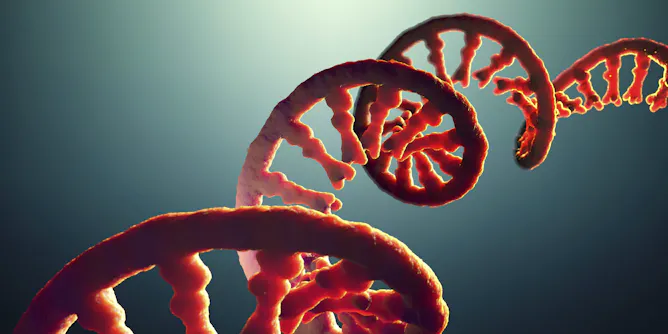
Victor Ambros and Gary Ruvkun won the 2024 Nobel Prize in physiology or medicine for their discovery of microRNAs, molecules that turn genes on and off – and cause disease when they go awry.
Articles on Nobel Prize for Medicine
Displaying all articles
Thousands of ancient genomes have been sequenced to date. A Nobel Prize highlights tremendous opportunities for aDNA, as well as challenges related to rapid growth, equity and misinformation.
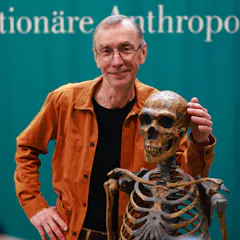
The Nobel Prize in physiology or medicine for 2022 has been awarded to Svante Pääbo, whose discoveries have been pivotal to the way we understand our evolutionary history.
Unlocking the genetic cause of cystic fibrosis, and identifying treatments, has moved the prognosis from near certain death in infancy, to a median survival in Canada of 52 years.
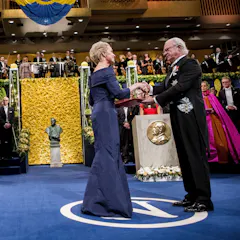
Science fields are improving at being more inclusive. But explicit and implicit barriers still hold women back from advancing in the same numbers as men to the upper reaches of STEM academia.

These discoveries could help us treat a variety of conditions in the future – including chronic pain.
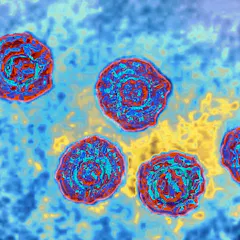
The 2020 Nobel Prize for Physiology or Medicine goes to the discoverers of the hepatitis C virus. There’s an effective cure but homelessness and the opioid epidemic are driving a surge in infections.
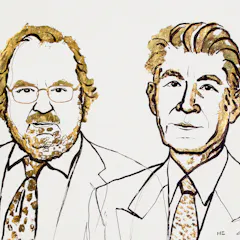
Allison and Honjo discovered how inhibiting the brakes in our immune systems can be used to treat cancer.
Maude Abbott’s discoveries on pediatric heart defects were groundbreaking, saved countless lives and have stood the test of time for more than 80 years. It’s time she received her due credit.

Only one Canadian has ever received the Nobel Prize for medicine, in 1923. But Canadian discoveries have been essential to stem cell research, gene sequencing and treatments for cancer.
Biological clocks set the pace for nearly all living things, and Jeffrey Hall, Michael Rosbash and Michael Young – awarded the Nobel Prize in Physiology or Medicine – helped us understand how.
Americans Jeffrey Hall, Michael Rosbash and Michael Young share the 2017 Nobel Prize in Physiology or Medicine for work that explained how our cells keep track of time.
The winners of the Nobel Prize in Physiology or Medicine discovered how our internal body clock works.
Scientists William C Campbell, Satoshi Ōmura and Tu Youyou have been rewarded for their unglamorous but vital work on parasites that has improved the lives of millions.
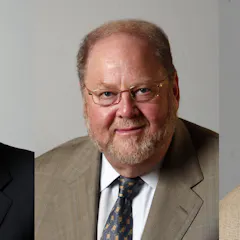
The 2013 Nobel Prize in Medicine has been awarded to Thomas Südhof, James Rothman and Randy Schekman for their discoveries of how the transport mechanism in cells works. Cells are the basic units of life…
Top contributors
-

Emeritus Robert Reford Professor and Professor of Medicine, McGill University
-
Director, Appleton Institute, CQUniversity Australia
-
Professor of Protozoology, University of Bristol
-
Chair of Neuronal Cell Biology, University of Edinburgh
-
Professor in Immunology, University of Manchester
-
Associate Professor of Physical & Biological Sciences, University of California, Santa Cruz
-
Professor of Molecular Cell Biology, University of Sheffield
-
Professor in Molecular Archaeology, Department of Archaeology and Classical Studies, Stockholm University
-
Professor and Lincoln Professor of Ethics in Public Affairs, Arizona State University
-
Professor in Neuroscience, Liverpool John Moores University
-
Associate Professor of Anthropology, Rice University
-
Professor of Internal Medicine, University of Michigan
-
Professor in Evolutionary Genetics, Centre for Palaeogenetics, Stockholm University
-
Professor of Circadian Neuroscience, University of Oxford
-
Associate Professor of Biological Sciences, Purdue University