

Mitochondria, which are found in every cell in the body, play an important role in brain function.
Articles on Neurodegenerative disease
Displaying 41 - 60 of 85 articles
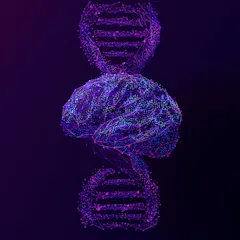
FTD leads to changes in personality and behavior. Understanding its genetic and molecular causes could lead to new ways to treat neurodegenerative diseases.
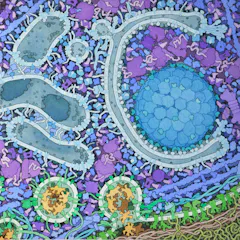
Cells degrade and recycle damaged parts of themselves through a process called autophagy. When this “self-devouring” goes awry, it may promote cancer and neurodegenerative disease.
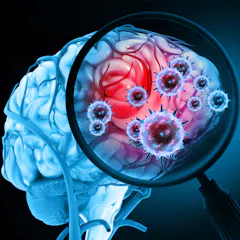
Inflammation and damage to the olfactory system from shingles, COVID-19 and herpes infections may contribute to Alzheimer’s disease.
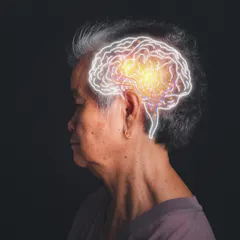
Impaired insulin receptors in the blood vessels between the blood and the brain may contribute to the insulin resistance observed in Alzheimer’s disease.

Food allergies have been linked to behavioral and mood disorders, including depression, anxiety and ADHD.
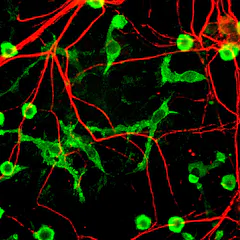
Microglia, immune cells disguised as brain cells, are known as the janitors of the brain. Dialing up their usual duties just enough could provide an avenue to treat neurodegenerative disease.
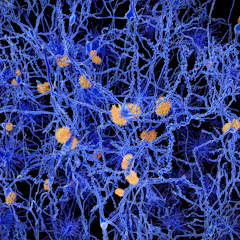
Too much amyloid-beta in the brain has long been considered the cause of Alzheimer’s. New research suggests it might be the opposite.

Nonhuman primates like rhesus monkeys share certain characteristics with people that may make them better study subjects than mice for research on neurodegenerative diseases.

From figuring out where memories are stored to how sensory information translates to behavior, new technologies are helping neuroscientists better understand how the brain works.

From thalidomide to resveratrol, molecules with the exact same chemical properties can have drastically different effects in the body depending on how they’re arranged in space.

People reported having frequent bad dreams at the beginning of the study were twice as likely to develop Parkinson’s compared with those who had them less than once a week.

Our new research with mice visualised how differently aged brains pump out toxic protein waste during sleep.

Across Canada and the United States, more than two million people are living with aphasia and its language and communication challenges.
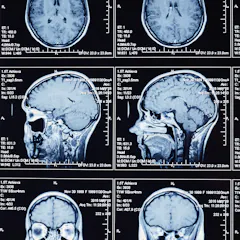
Brain changes including shrinkage, weakened connections and poorer performance on thinking and memory tests could explain ‘brain fog’ after COVID – even after ‘mild’ cases.

Tay-Sachs is a rare and fatal neurodegerative disorder that most commonly affects children. Researchers have developed the first Tay-Sachs treatment to reach clinical trials.
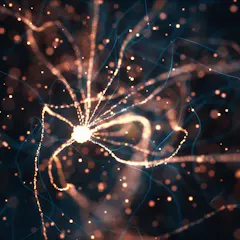
Understanding when and how neurons die is an important part of research on neurodegenerative diseases like Lou Gehrig’s, Alzheimer’s and Parkinson’s diseases.
Our research suggests the multiplication of protein aggregates in individual regions of the brain, rather than their spread between regions, is key to the progression of Alzheimer’s disease.
An extract of a plant’s fruit in Nigeria could protect against seizure and prevent brain degeneration. It could therefore be studied further for the development of a new antiepileptic drug.

Better awareness of the disease has led to more testing, but there is also an ancestral element to explaining its proliferation in the UK’s far north.
Top contributors
-

Associate Professor, School of Biomedicine, Adelaide University
-
Lecturer, School of Psychology, UNSW ; Neuroscience Research Australia
-
Associate Professor of Pharmaceutical Sciences, University of Maryland Eastern Shore
-
Professor of Neurology, Neurobiology, and Cell Biology, Duke University
-
Professor of Neurology and Neurotherapeutics, UT Southwestern Medical Center
-
Graduate Student in Cancer Systems Biology, Rice University
-
PhD Candidate, University of Technology Sydney
-
Research Assistant Professor in Neuroscience, The University of Western Australia
-
Professor of Neuroscience, University of California, Santa Barbara
-
Assistant Professor of Mechanical Engineering, Binghamton University, State University of New York
-
Assistant Professor of Biomedical Sciences, University of North Dakota
-
Senior Lecturer, University of Uyo
-
Associate Research Scientist, Yale University
-
Associate Professor of Neurology, UMass Chan Medical School
-
Assistant Professor of Neurology, Georgetown University