
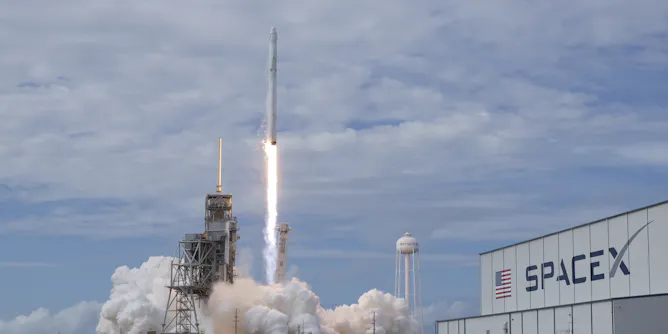
What does it mean for national security if access to Earth’s orbit depends largely on one company?
Articles on NASA
Displaying 61 - 80 of 670 articles
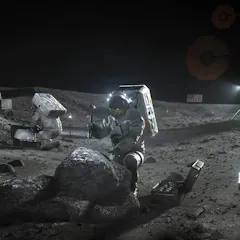
NASA’s new plans for its Artemis moon exploration program reduces risks and increases the likelihood of a successful human mission to the moon’s surface in 2028.
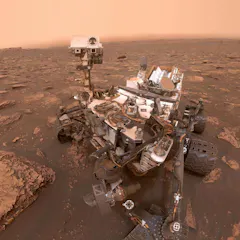
Analysis of a rock examined by the Curiosity rover reveals an abundance of organic matter.
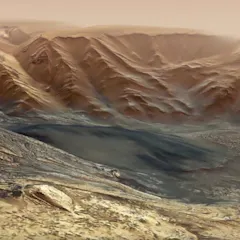
The results come from the Perseverance rover’s investigation of an ancient crater lake.

These changes aren’t permanent – the brain goes gradually back to normal after coming back to Earth. Understanding the physical effects of spaceflight helps plan space missions.

The first in a new series dedicated to little-known but highly influential scientists.

Several robotic spacecraft orbiting the Moon can take detailed pictures of its surface, so why send people around the Moon? A planetary geologist explains the benefits.
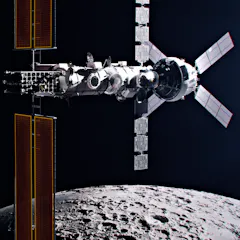
Gateway is a planned outpost in lunar orbit, but can it survive a current re-think of the Nasa-led Artemis programme?
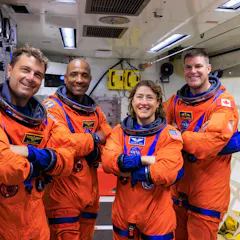
Jeremy Hansen will be the first non-American to fly to the moon — and will make Canada only the second country in the world to send an astronaut into deep space.
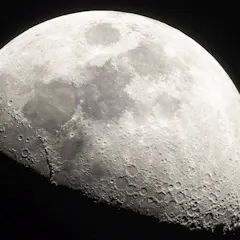
Today, there aren’t just two countries competing to get to the Moon. More countries have space programs, and private industry plays a larger role.
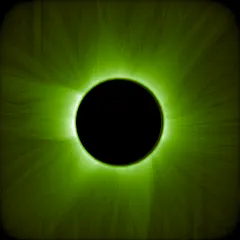
There’s a pressing need to understand and respond to what’s known as “space weather”.
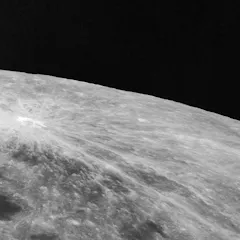
The US, China, India, Europe and Japan all have exciting missions on the horizon in 2026. Many of them are collaborative feats.

The findings from Pandora will complement data from the James Webb Space Telescope to give astronomers more insight into stars and planets outside our solar system.
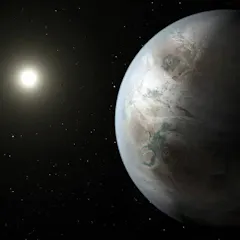
Observatories could identify gases potentially associated with life in the atmospheres of other worlds.
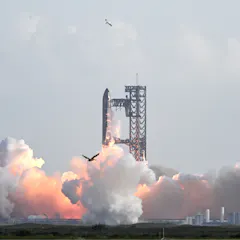
NASA, SpaceX and Blue Origin have all successfully launched superheavy-lift rockets. These massive vehicles are designed to carry a much heavier load.
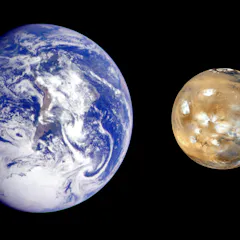
Mars may have been hospitable to life early in its history.
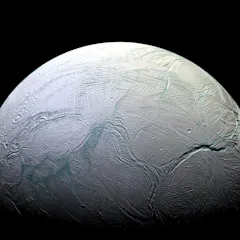
The icy moon appears to have an ocean of liquid water hidden under its outer shell.
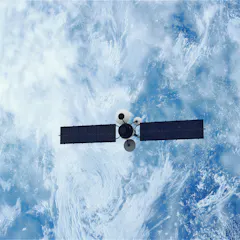
The closer to Earth a satellite flies, the clearer a picture it can take of the surface. But low-flying satellites also have to deal with atmospheric drag.
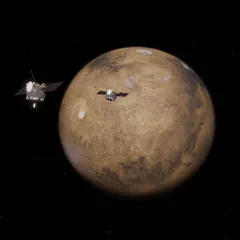
What’s better – many small space missions, or a few large, sweeping ones? Space scientists are asking this question as they face budget uncertainties.
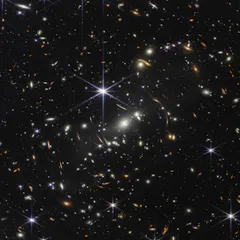
Some unique ‘stars’ might be fueled by dark matter annihilation.
Top contributors
-

Postdoctoral research associate, University of Oxford
-
Professor of Strategy and Security Studies, Air University
-
Senior Lecturer in Physics, Nottingham Trent University
-
Associate Professor in Archaeology and Space Studies, Flinders University
-
Professor of Planetary and Space Sciences, The Open University
-
University Distinguished Professor of Astronomy, University of Arizona
-
Professor (Astrophysics), University of Southern Queensland
-
Kevin Orrman-Rossiter is a Friend of The Conversation.
Sterrenkenner, History & Philosophy of Science, The University of Melbourne
-
Professor in Earth and Planetary Science, Western University
-
Associate Professor of International Affairs, Georgia Institute of Technology
-
Lecturer in Astronomy, Nottingham Trent University
-
Professor of Air and Space Law, University of Mississippi
-
Assistant Professor of Space and International Relations, Johns Hopkins University
-
Professor of Planetary Geosciences, The Open University
-
Senior Instrument Scientist, Australian Nuclear Science and Technology Organisation