
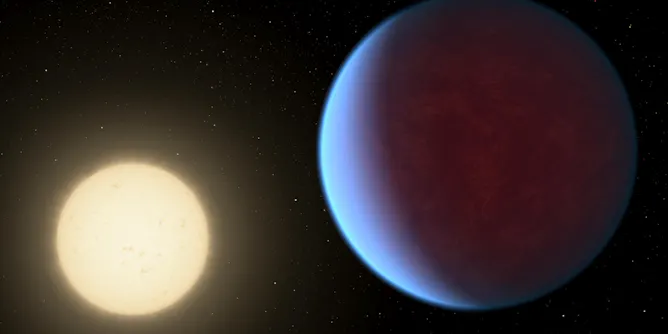
Searching for life on other planets requires more than just measuring their distances from their stars. A future NASA telescope may help search for potentially habitable worlds.
Articles on NASA
Displaying 81 - 100 of 670 articles
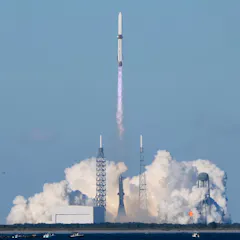
Jeff Bezos’s aerospace company Blue Origin is now the second, after SpaceX, to land a rocket booster for reuse.

The twin spacecraft Blue and Gold could open a new era in space exploration and planetary science, powered by commercial partnerships and innovations.
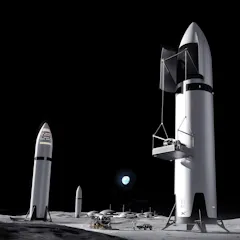
Nasa has reopened a SpaceX lunar landing contract to competitors.
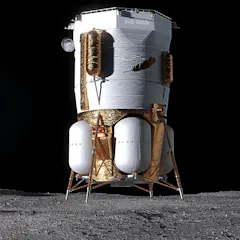
The US space agency has opened up a lunar lander contract held by Space X to competition.
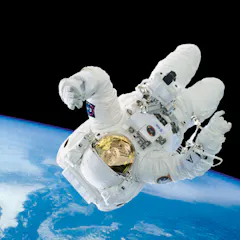
Spaceflight rewires the human body. Muscles shrink, bones thin and fluids shift towards the brain – but these changes may help improve life on Earth.
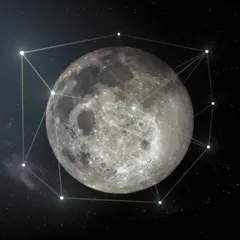
The US doesn’t currently have much ability to monitor what’s going on in the space around the Moon. An effort by the Air Force Research Laboratory could help.

As soon as the 2018-2019 shutdown began, coal-fired power plants started emitting more particulate matter pollution. And when the inspections resumed, the levels dropped back to normal.
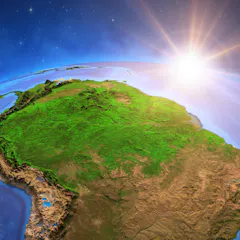
The US is set to shut down a crucial satellite that monitors how much carbon is in the atmosphere.

A planetary scientist who has participated in analog missions describes their value for planning space exploration – and learning about extreme environments on Earth.

Acute malnutrition weakens a child’s immune system, which can lead to severe illness and an increased risk of death.

The mission should launch on a flyby of the Moon in February 2026.
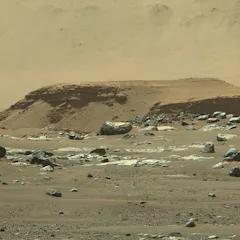
Microbial life might survive today underground, in caves or under ice sheets.
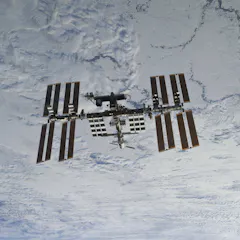
The International Space Station has hosted astronauts and spacefarers continually for 25 years.
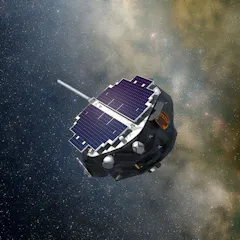
Studying the Sun helps researchers understand how space weather can affect technology back on Earth.

How we talk about outer space shapes the futures we imagine and build. Indigenous perspectives offer a better way forward.
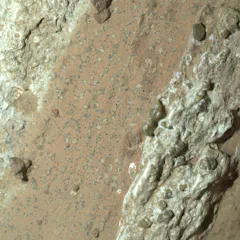
The rock is peppered with spots that could have been formed by microbes four billion years ago.
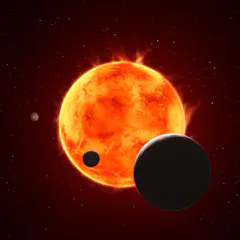
The largest telescope in space has been trained on a rocky exoplanet.

It turns out that Mars has a similar interior structure to Earth.
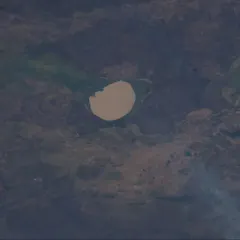
Lake Iro was recently photographed from space as it looked like a sunglint, but there is more to the lake that makes it unique.
Top contributors
-

Postdoctoral research associate, University of Oxford
-
Professor of Strategy and Security Studies, Air University
-
Senior Lecturer in Physics, Nottingham Trent University
-
Associate Professor in Archaeology and Space Studies, Flinders University
-
Professor of Planetary and Space Sciences, The Open University
-
University Distinguished Professor of Astronomy, University of Arizona
-
Professor (Astrophysics), University of Southern Queensland
-
Kevin Orrman-Rossiter is a Friend of The Conversation.
Sterrenkenner, History & Philosophy of Science, The University of Melbourne
-
Professor in Earth and Planetary Science, Western University
-
Associate Professor of International Affairs, Georgia Institute of Technology
-
Lecturer in Astronomy, Nottingham Trent University
-
Professor of Air and Space Law, University of Mississippi
-
Assistant Professor of Space and International Relations, Johns Hopkins University
-
Professor of Planetary Geosciences, The Open University
-
Senior Instrument Scientist, Australian Nuclear Science and Technology Organisation