
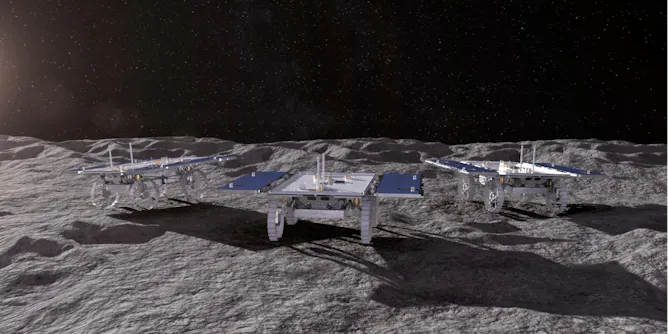
NASA’s CADRE mission will test a small team of autonomous rovers that can function without constant communication with Earth.
Articles on Lunar exploration
Displaying 1 - 20 of 60 articles
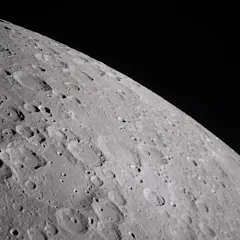
The rocket section struck the lunar surface near Einstein crater on the Moon’s near side.
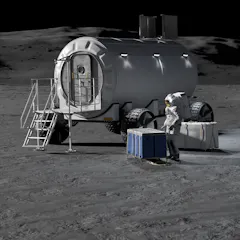
Suitable spots for establishing human outposts at the south pole are finite.

The successful mission marks the beginning of a new chapter in lunar exploration.
Viewers on Earth have experienced the Moon’s awe-inspiring beauty through the eyes of the Artemis II astronauts.
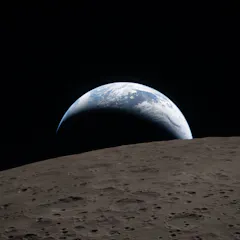
Artemis II astronauts updated the iconic 1968 image during their 2026 loop around the Moon.
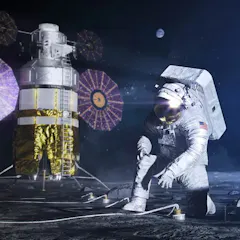
When nations establish moon bases, the conditions will be difficult to adjust to.
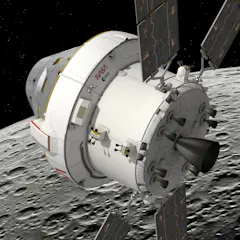
Sustained lunar exploration remains a challenge for modern democracies.
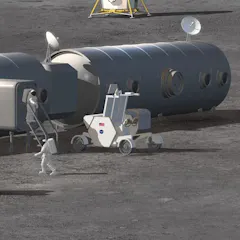
Changes to Nasa’s Moon exploration programme may include a base on the lunar surface.
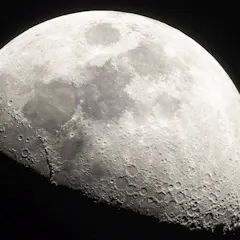
Today, there aren’t just two countries competing to get to the Moon. More countries have space programs, and private industry plays a larger role.
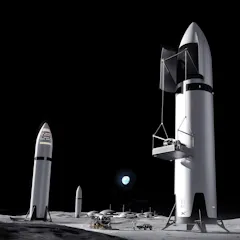
Nasa has reopened a SpaceX lunar landing contract to competitors.
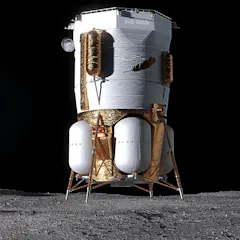
The US space agency has opened up a lunar lander contract held by Space X to competition.
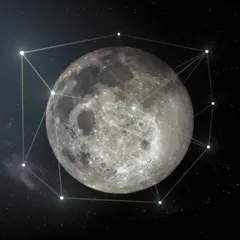
The US doesn’t currently have much ability to monitor what’s going on in the space around the Moon. An effort by the Air Force Research Laboratory could help.
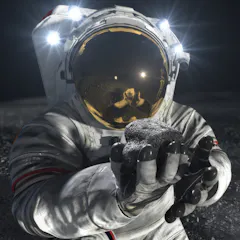
Valuable lunar resources like water ice are finite and some treaties don’t address the problem.

Nuclear reactors in space may sound like something out of science fiction, but they are likely to prove important for powering long-term space missions.

Nations will need to tread carefully on the Moon in order to avoid conflict.
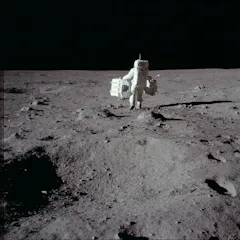
Imagine you’ve worked 12 hours in hot and dirty conditions. Some of your co-workers have collapsed or been injured. You wish you could just get another job. But you can’t. You’re stuck in space.
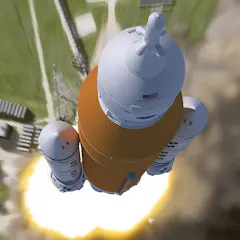
The Space Launch System is a crucial part of America’s plans to return to the Moon.

Nasa’s Moon programme has been hit by delays, while China aims to land by 2030.
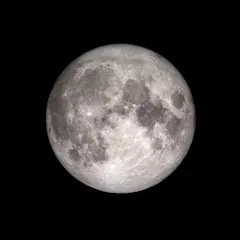
Lunar volcanism was thought to have stopped two billion years ago.
Top contributors
-

Senior Lecturer in Physics, Nottingham Trent University
-
UKSA Mars Science Fellow, Department of Physics, University of Oxford
-
Professor of History, University of Lancashire
-
Reader in Astrophysics, Keele University
-
Associate Professor of Health Promotion, Swinburne University of Technology
-
Postdoctoral research associate, University of Oxford
-
Professor of Strategy and Security Studies, Air University
-
Professor of Planetary Science and Astrobiology, Birkbeck, University of London; Honorary Associate Professor, UCL
-
Professor of Air and Space Law, University of Mississippi
-
Professor of Astrophysics, Macquarie University
-
Andrew Dempster is a Friend of The Conversation.
Director, Australian Centre for Space Engineering Research; Professor, School of Electrical Engineering and Telecommunications, UNSW
-
Professor of Robotics, Head of Centre for Robotics Research, King's College London
-
PhD Candidate, School of Earth and Planetary Sciences, Curtin University
-
Chief Executive Officer, Australasian Centre for Space Governance; Associate Expert, National Security College, Australian National University
-
Podcast host, The Conversation
