
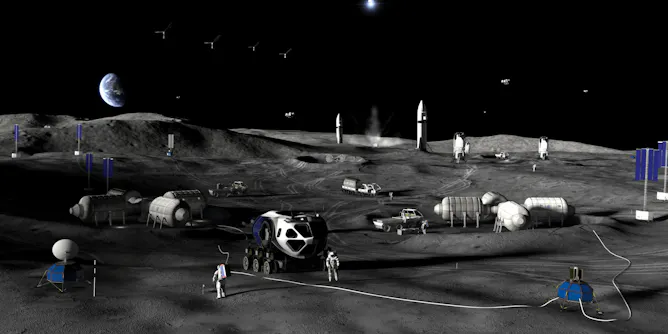
A lunar base could allow for research, economic activities and lunar mining. Such an operation has potential benefits, but lots of challenges await NASA.
Articles on Moon landings
Displaying 1 - 20 of 86 articles
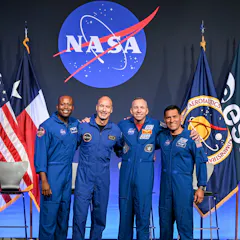
The Artemis program’s timeline and architecture has changed over the past year, so Artemis III will not land on the lunar surface.
Landing on the Moon can disturb its environment – people are discussing how to balance those concerns with political and economic goals.
NASA’s learned a lot about the Moon since Apollo. But a perfect landing still requires incredible planning and scientific precision.
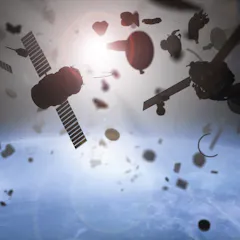
Treaties meant to ensure sustainability in space don’t currently regulate private companies, and not every country has signed on to an agreement for sustainable space exploration.

India became the first country to land near the south pole of the Moon, a notoriously difficult achievement that also marks them as the fourth country to land on the Moon.
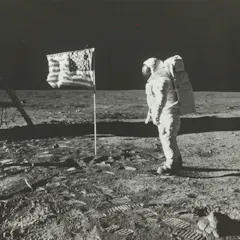
Some people incorrectly say the Moon landings didn’t happen. But the evidence – and logic – isn’t on their side.

Despite opening to mixed reviews, the final instalment is a classic Indiana Jones caper that doesn’t disappoint.
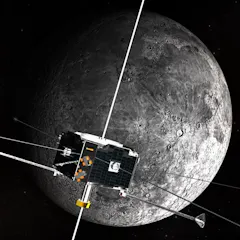
Canadian Jeremy Hansen will be one of the next astronauts on the Artemis II mission. This announcement signals a new era in Canada’s role in space exploration.
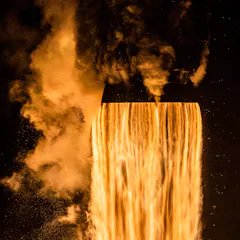
Everyone celebrates the feats of engineering that go into space exploration – but without chemistry, astronauts wouldn’t even be able to breathe.

In 1970, Gil Scott-Heron penned a spoken word song called ‘Whitey on the Moon’ that criticized the 1969 Moon landing. A hip-hop scholar explains why the song still reverberates today.
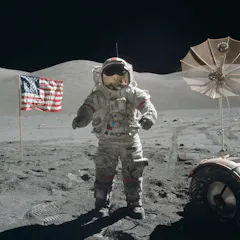
Several current programs aim at sending humans back to the Moon. What would be the purpose, and what are the real prospects?

Flying the Ingenuity helicopter on Mars is the equivalent of flying one at about 100,000 feet on Earth. Tricky, considering the highest helicopter flight ever recorded maxed out at 42,000 feet.

The effects of the pandemic and recent engineering concerns with the new and still unflown Space Launch System may delay the Artemis programme.
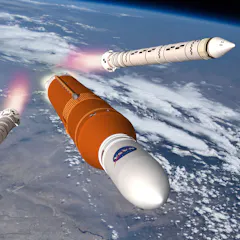
SpaceX is due to test fly its Starship in the coming days.
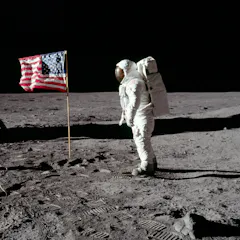
Who cares what happens to bootprints on the Moon? All humans should. And thankfully the US Congress and president agree.
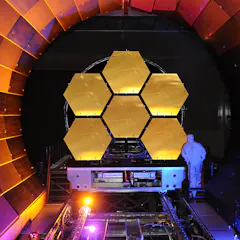
India may land on the Moon this coming year, while Nasa will launch its new, powerful rocket farther into space than any other human rated spacecraft.
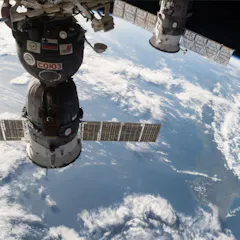
Over the coming decade, the arrival of constellations of small satellites will reshape the space industry. It constitutes a paradigm shift, particularly in terms of data gathering and processing.

Companies and space agencies alike will have to compete for very few useful sites on the Moon.
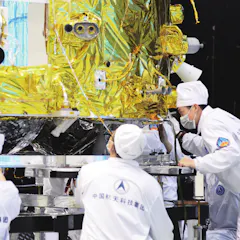
Some people are nervous about China’s growing capabilities when it comes to space exploration.
Top contributors
-

Postdoctoral research associate, University of Oxford
-
Podcast host, The Conversation
-
Space Plasma Physicist, Imperial College London
-
Senior Lecturer in Physics, Nottingham Trent University
-
Associate Professor in Archaeology and Space Studies, Flinders University
-
Professor Emeritus of Political Science and International Affairs, George Washington University
-
Professor of Planetary and Space Sciences, The Open University
-
Professor of Robotics, Head of Centre for Robotics Research, King's College London
-
Professor of Mechanical and Aerospace Engineering, The Ohio State University
-
Professor of Business Studies, Trinity College Dublin
-
NASA astronaut (Ret) and TEES Distinguished Research Professor, Aerospace Engineering, Texas A&M University
-
Professor of American Studies, University of Manchester
-
Professor of Planetary Sciences and Geosciences, University of Arizona
-
Lecturer in Astronomy, Nottingham Trent University
-
Professor of Air and Space Law, University of Mississippi
