

Different types of thoughts are meaningfully tied to our emotional well-being. By understanding these connections, we can identify new ways to support and improve our mental health.
Articles on Mindfulness
Displaying 1 - 20 of 179 articles

You can build resilience that will work with the changing rhythms in your life.

Mindfulness can change how we experience time, making it easier to wait for future rewards without relying on greater willpower.
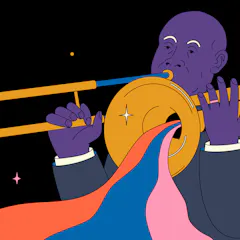
Playing improv music activates the reward system of the brain.
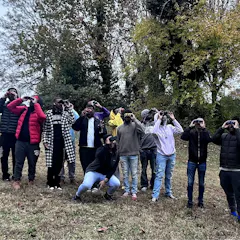
With social media communities and naturalist apps, birding is easier to get into than ever. A psychologist explains why it may also be just what the doctor ordered.

When runners ‘hit the wall,’ they experience sudden debilitating fatigue, difficulty keeping pace, and often, a shift away from their goal pace towards surviving until the finish line.
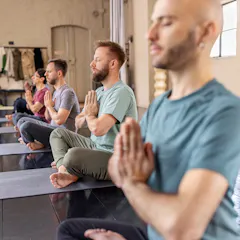
In a polarized world, the greeting may be an acknowledgment of our interconnectedness.
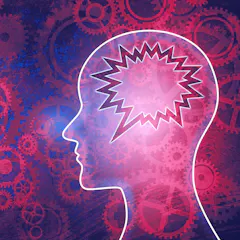
A high-pressure work environment can exacerbate headaches, but taking steps to manage stress throughout the day can help.

Facing your own thoughts and sensations, without trying to suppress them, is harder than it may seem. But learning to do it can boost your mental health.

Feeling part of something larger than yourself may make it easier to cope with stress and uncertainty.

Events where people sit down and watch the sun go down are becoming popular in the Netherlands.

The Burmese meditation master Sayagyi U Ba Khin played a key role in shaping the meditation retreats that are popular today.

Mindfulness is usually taught through stillness and silence. But for some, full presence is easier to achieve in movement, and even in risk.

Mindfulness is taught everywhere, from schools to workplaces. But scientists define and measure it in very different ways. Here’s why that matters.

New Year’s resolutions typically fade so quickly that there is a ‘Quitter’s Day’ named after them, for the second Friday in January. But small actions and shifts in mindset can have much longer-lasting beneficial effects.

Martin Luther King Jr. and Thich Nhat Hanh shared a vision of ‘beloved community’ that shows how democracy begins not with power, but with how we live together.
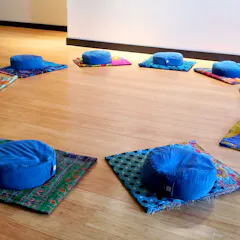
The practice of this meditation often involves quietly reciting to oneself several phrases that evoke and visualize the beings who will receive loving-kindness.

The perfect gift probably isn’t what you think it is.
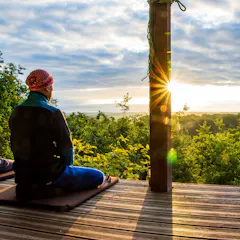
Meditation can change our perceptions about things we encounter in our daily lives − revealing the interconnectedness of reality.

Resilience is often presented as feats of bravery and endurance. But everyday practices like journaling, drafting a text or even writing a to-do list are manifestations of a capacity to adapt.
Top contributors
-

Liberal Arts Endowed Professor of Communication, Penn State
-
Associate Professor, School of Psychological Sciences, The University of Melbourne
-
Associate Professor of Religious Studies, Rhodes College
-
Senior Research Fellow in Mental Health, Victoria University
-
Assistant Professor of Psychiatry and Behavioral Neurosciences, Wayne State University
-
Associate Professor, Centre for Positive Health Sciences, RCSI University of Medicine and Health Sciences
-
Professor of Asian History & Health Humanities, Penn State
-
Associate Professor in Psychology in Education, Department of Education, University of York
-
NIHR Postdoctoral Fellow at the Department of Psychiatry, University of Cambridge
-
Senior Lecturer, Brunel University of London
-
PhD Candidate, Developmental Psychology, Simon Fraser University
-
Assistant Professor, Psychology, Simon Fraser University
-
Associate Professor in Experimental Psychology, Coventry University
-
Assistant Professor, HR Management & Organizational Behaviour, Toronto Metropolitan University
-
Professor, Psychology Department, Bishop's University