

Psychologists know babies can form memories soon after birth. So why can’t people remember anything that happened to them before around age 2? A child development expert describes possible reasons.
Articles on Memory
Displaying 141 - 160 of 416 articles

Go easy on your friend next time they forget about the plans you made or the favour they promised.

Remembrance for post-veteran generations involves learning about history, trying to comprehend the what, how and why and its relevance today.

Walking roots us in new places. It also unlocks memories of those we’ve moved away from.

Cannabis use is linked to poorer memory, attention and mental health.
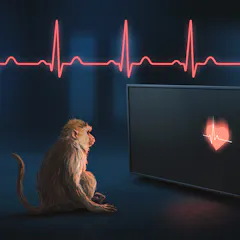
Researchers used a test designed for babies to show that rhesus monkeys can sense their own heartbeats. The finding opens up important paths of research into consciousness and mental health issues.

While only about 20% of people would qualify for a formal diagnosis of a mental disorder, more than 60% express symptoms of those disorders – and those symptoms can lead to cognitive difficulties.

Across Canada and the United States, more than two million people are living with aphasia and its language and communication challenges.

Binaural beats are said to have a range of effects, but how does the evidence stack up?
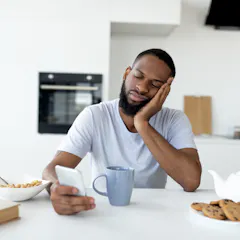
What use are we in helping to solve difficult global challenges if we’re so depressed and cognitively depleted that we can’t think of the best actions to take?

Forgetfulness is often regarded as a sign of old age. But what exactly is going on in the brain that makes it more difficult for older people to remember things?

People often try to seem confident and certain in their message so it will be trusted and acted upon. But when information is in flux, research suggests you should be open about what you don’t know.

Many people with epilepsy are unable to remember what happened immediately before they have a seizure. This may be because seizures and memory use the same pathways of the brain.

Milestone anniversaries mark the point when events move from living memory to more symbolic.
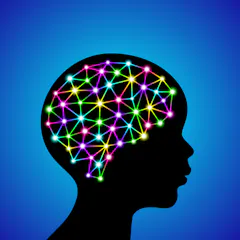
Understanding where and how memories are formed could lead to more ways to treat conditions like PTSD and addiction.

Cues from people and events around us plus memories of past holidays shape our sense of time over summer. No wonder one day blends into the next.

Errors don’t necessarily mean your mind is faulty. They may actually be a sign of a cognitive system with limited capacity working efficiently.

We found the more headers former professional footballers made over their careers, the lower they tended to score on a memory test.

It can feel like your computer slows down after it updates, here’s why.

Each new technology raises concerns about how they will negatively affect our ability to think, retain and process information. But these technologies don’t detract from our cognitive abilities.
Top contributors
-

Senior Lecturer (Adjunct), Nutritional neuroscientist, Adelaide University
-
Head of Developmental Psychobiology Lab, Deakin University
-
Professor of Educational Psychology, University of Wollongong
-
Associate Professor in Cognitive Science, Western Sydney University
-
Professor of Psychology, Lafayette College
-
Associate professor, University of Sydney
-
Professor of Music Psychology, Durham University
-
Pro Vice-Chancellor (Research Performance and Development) and Professor of Cognitive Science, Macquarie University
-
Professor of Clinical Neuropsychology, University of Cambridge
-
Professor of Anatomy, University of Bristol
-
Reader in Psychology, Aston University
-
Senior Lecturer, The University of Melbourne
-
Professor of Cognitive Psychology, City St George's, University of London
-
Senior Lecturer in Psychology, City St George's, University of London
-
Professor, Neuropsychology, University of Westminster