

That feeling of ‘I-know-it-but-can’t-quite-remember-it’ has been studied for decades, but there’s a new twist: It’s more common in groups.
Articles on Memory
Displaying 161 - 180 of 416 articles

Memories are easier to recall if they happen in unusual contexts, and our sense of time depends on how much things change. And being in lockdown is not conducive to either of these things.

A playground is a great place for kids to exercise their bodies. But it’s also important to give kids opportunities to exercise their mind. Here’s how to do that.

People with aphantasia, when asked to form an image in their minds, will report they cannot “see” anything.

Analysis of 46 studies indicates that there’s still a lot of uncertainty about the long-term impacts of digital device use on cognition.

5 ways to use use what you know to bring new challenges within reach.

When teachers use memories to examine how schools unequally affect children’s life choices and chances on the basis of social identity, they’re able to imagine more equitable education.
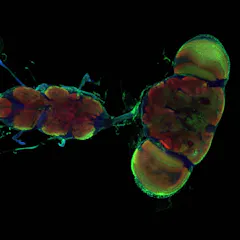
Adaptable neurons are tied to learning and memory but also to neurological disorders. By studying fruit flies, researchers found a mechanism that controls neuroplasticity.

You share the same drug habits, the same age-related memory problems and are similarly impatient when forced to wait for food.

The low levels of familiarity with key historical events indicate that there are serious shortcomings in the development of national collective memory in South Africa.

We’ve all been there: walked into a room and can’t remember what we came for. But how much is the actual doorway to blame for our forgetfulness?

A year into the pandemic, sleep scientists are beginning to understand how our sleep has changed.

Napping in the afternoon can benefits both motor skills and your ability to recall facts.

Memories are closely linked with music.

Depression can cause widespread changes in our brain – including to the regions responsible for memory.

Adolescents who had more and more blackouts each year had a much higher risk of developing severe alcohol problems.

Because of context and history, some words and phrases carry a heavy burden with them. Their mere mention can bring back painful memories and problematic situations.

Issues like a lack of focus and heightened anxiety when learning at home could be due to students lacking the autobiographical memory they need to learn in an alternative context.
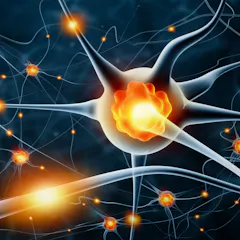
Knowing what cells are more vulnerable could some day help researchers know why these cells are more vulnerable than others.

Research shows short bouts of physical activity can boost your concentration for up to one hour.
Top contributors
-

Senior Lecturer (Adjunct), Nutritional neuroscientist, Adelaide University
-
Head of Developmental Psychobiology Lab, Deakin University
-
Professor of Educational Psychology, University of Wollongong
-
Associate Professor in Cognitive Science, Western Sydney University
-
Professor of Psychology, Lafayette College
-
Associate professor, University of Sydney
-
Professor of Music Psychology, Durham University
-
Pro Vice-Chancellor (Research Performance and Development) and Professor of Cognitive Science, Macquarie University
-
Professor of Clinical Neuropsychology, University of Cambridge
-
Professor of Anatomy, University of Bristol
-
Reader in Psychology, Aston University
-
Senior Lecturer, The University of Melbourne
-
Professor of Cognitive Psychology, City St George's, University of London
-
Senior Lecturer in Psychology, City St George's, University of London
-
Professor, Neuropsychology, University of Westminster