
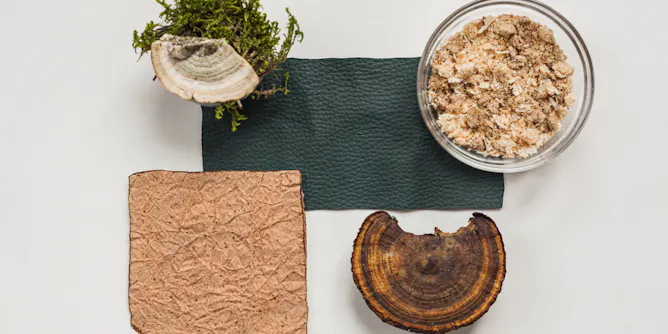
Developing a new material is only the first step. Convincing an industry built around traditional textiles to adopt it is a very different challenge.
Articles on Materials
Displaying 1 - 20 of 74 articles
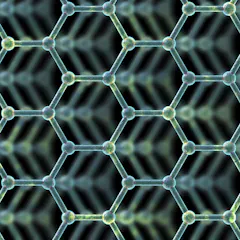
Turns out, changing the way atoms and molecules are arranged in a substance can give it new and fascinating properties.
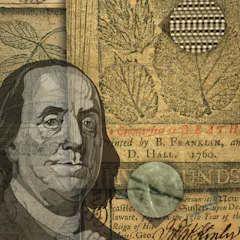
Ben Franklin led an effort to print paper bills in the American colonies, after a coin shortage constrained the economy.

Some engineers are prioritizing ‘design for demise’ and planning satellites that are more likely to completely burn up in Earth’s atmosphere at the end of their lifespan.

Fashion made out of recycled polyester mostly uses plastic bottles. That’s not a good thing.
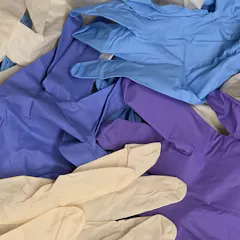
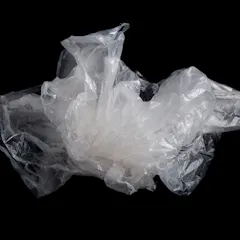
Tiny particles from certain lab gloves look like microplastics, and they can contaminate samples, new study finds.

Originally invented for billiard balls, this new material revolutionised photography – and paved the way for cinema.

Fiber optics allow you to search the internet, text your friends and check your social media feeds. They also have geological, security and manufacturing applications.
From beetles to sustainable packaging – one failure in the lab led to a new line of promising research.

AI models are designing new metal alloys that have been 3D-printed and tested in the lab. The results are then fed back into the AI to accelerate alloy discovery.

Tiny particles bounce light around in a unique way, a property that researchers are using to detect pollutants in water and soil samples.

A research team has paved plastic-infused roads in Texas and Bangladesh, with promising results.

While physical exertion helps athletes stay warm, sweating can lead to dehydration.
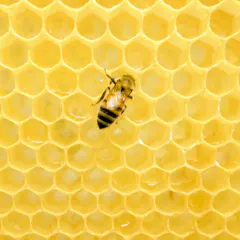
3D printing makes it easier for engineers to design cheap, lightweight materials that reflect patterns found in nature.

A new study investigated the source of a leak in a ‘miracle measurement’ from 2010 – and engineers found a potential solution.
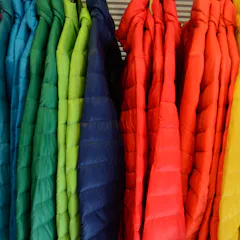
Winter jackets may seem simple, but sophisticated engineering allows them to keep body heat locked in, while staying breathable enough to let out sweat.

Breweries nationwide create waste at several stages of the beer-making process. Repurposing parts of this waste could improve antibacterial drugs.
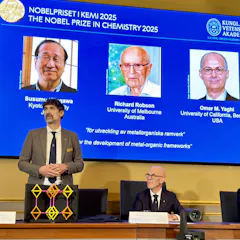
Just a gram of these tiny crystals can have an internal surface area as big as a soccer field. A materials expert explains the almost magical chemistry of MOFs.

Glass seems simple − it’s just sand and a few more ingredients. Yet mining and production are rarely local, raising questions about sustainability.

Researchers compared the environmental footprints of several techniques used to make magnetic nanoparticles.
Top contributors
-

Executive Director of the ARC Centre of Excellence for Electromaterials Science and Director of the Intelligent Polymer Research Institute, University of Wollongong
-
CO2Chem Network Manager, University of Sheffield
-
Postdoctoral research assistant, University of Sheffield
-
PhD candidate in Electronic Devices, King's College London
-
Ph.D. Candidate in Chemical Engineering, University of California, Riverside
-
Reader in Theoretical and Computational Condensed Matter Physics, University of Edinburgh
-
Senior Lecturer, University of Surrey
-
Professor of Management, Rochester Institute of Technology
-
Director of the School of Packaging, Michigan State University
-
Professor of Smart Materials & Structures, University of Bristol
-
Emeritus Professor in Applied Physics, University of Technology Sydney
-
Senior Instrument Scientist, Australian Nuclear Science and Technology Organisation
-
PhD student in mechanical engineering, Karlsruhe Institute of Technology
-
Lecturer, University of Bristol
-
Senior Professor, Australian Institute for Innovative Materials, University of Wollongong, University of Wollongong