

Studying the evolution of the plastic chair provides unique insights into society’s shifting attitudes to plastic.
Articles on Materials
Displaying 21 - 40 of 74 articles
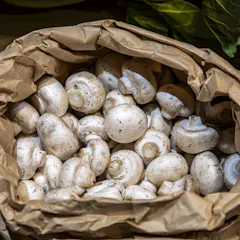
Some mushrooms are sturdier than others, but it isn’t necessarily because of their chemistry – it’s how the filaments that make them up are arranged.
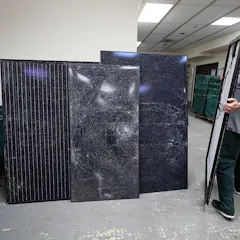
Recycling solar panels seems like a smart idea, but it’s complicated. Built to withstand years of wind and weather, solar panels are designed for strength, not easy breakdown.

Engineers came up with a set of tests to make sure reclaimed asphalt pavement resists skidding and sliding when wet.

It’s extremely difficult to see how forces in a pile of sand are distributed between individual grains – a new experimental approach fixes that.

A physicist explains that the short answer is both … and neither.

René Descartes said the only thing we can be certain about is that we think. But what is the nature of thoughts? Philosophers have pondered this for centuries.
Discovering new materials could drive forward areas such as green technology and advanced electronics.

As roads have evolved, so too have bikes and bike helmets.
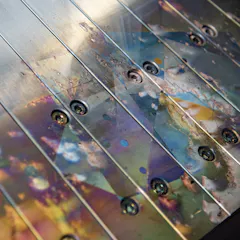
Fusion reactors get hot − scientists need materials that can take the heat without deforming and deteriorating.

Some materials react and generate potentially helpful particles when exposed to light. Analytical AI can help scientists sort through materials to find ones with this property.
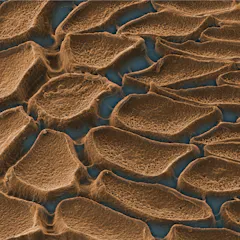
Researchers can use powerful microscopes to capture the tiny teeth in squid suckers.

Kids love digging and may not realize the dangers a hole in the sand can pose.

The Met Gala explored fashion’s complex relationship with nature and the passing of time.
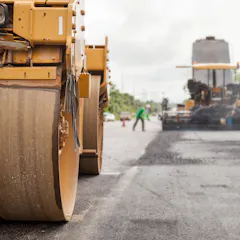
Summer means road construction − but what kind of engineering goes into laying down pavement?

Your skin heals from cuts and scrapes on its own − what if concrete could do that too?
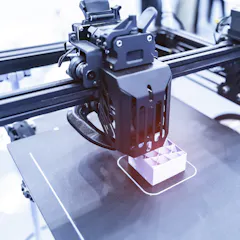
‘Energetic’ materials are ones that readily ignite or detonate. The shapes of those materials have a big effect on how they burn or blow up.
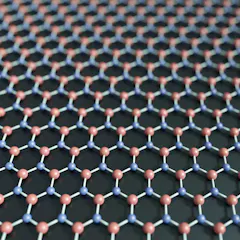
Two forms of the same boron nitride molecules couldn’t look and act more different – but combining them could lead to applications that have the best of both worlds.

Using fingerprints to catch criminals isn’t 100% accurate, but analyzing fingerprints in 3D, rather than 2D, could improve the process.
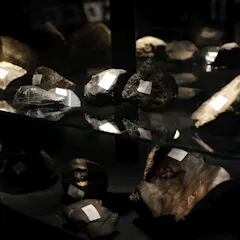
Some space rocks you can get for free – if you know how to identify them. Rarer materials cost more, and the asteroid sample NASA just brought back has a high price tag.
Top contributors
-

Executive Director of the ARC Centre of Excellence for Electromaterials Science and Director of the Intelligent Polymer Research Institute, University of Wollongong
-
CO2Chem Network Manager, University of Sheffield
-
Postdoctoral research assistant, University of Sheffield
-
PhD candidate in Electronic Devices, King's College London
-
Ph.D. Candidate in Chemical Engineering, University of California, Riverside
-
Reader in Theoretical and Computational Condensed Matter Physics, University of Edinburgh
-
Senior Lecturer, University of Surrey
-
Professor of Management, Rochester Institute of Technology
-
Director of the School of Packaging, Michigan State University
-
Professor of Smart Materials & Structures, University of Bristol
-
Emeritus Professor in Applied Physics, University of Technology Sydney
-
Senior Instrument Scientist, Australian Nuclear Science and Technology Organisation
-
PhD student in mechanical engineering, Karlsruhe Institute of Technology
-
Lecturer, University of Bristol
-
Senior Professor, Australian Institute for Innovative Materials, University of Wollongong, University of Wollongong