

Computer-based neural networks can learn to do tasks. A new type of material, called a mechanical neural network, applies similar ideas to a physical structure.
Articles on Materials
Displaying 41 - 60 of 74 articles
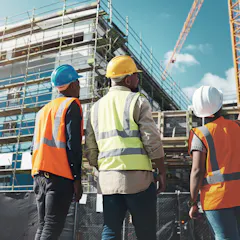
The complexity of construction projects has driven an increase in building waste, which is difficult to recycle and reuse. But there are ways to minimise the problem.

Twisted laser light may help launch a revolution in technology.

Kéré shows how architecture can build better futures by embracing communities to help catalyse progress.

After Fidel Castro took power, government plans to build new housing, schools and factories were hindered by sanctions and supply chain issues, forcing architects to come up with creative solutions.
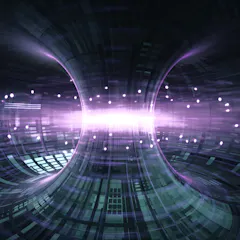
Building a mini star on Earth, and holding it together inside a reactor, is not an easy task.

Treating wood with bleach can make it transparent.
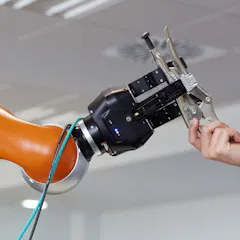
Engineers predict a time when people and robots physically interact all day long. For that to happen safely will require new soft materials that can do things like sense touch and change shape.

There is no solution to the unethical, unsustainable fashion industry – yet

Trump’s plan to slap $200 billion more in tariffs on Chinese goods is premised on yesterday’s waste-fueled economy. Tomorrow’s economy is ‘circular.’

Have you ever been told not to put metal in the microwave? Edie, age 8, wants to know why.

Advanced materials that seem like they come from Star Trek are becoming reality today.
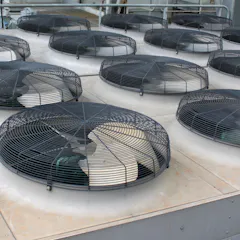
The invention of silver and plastic-clad roof panels that can cool themselves down even under the Sun’s full glare promise to make air conditioning much more energy-efficient.
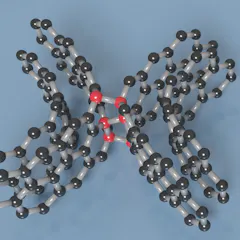
Compressed glassy carbon could be used to make better bulletproof vests or new types of electronics.

This special dampening material could also protect buildings from earthquakes.

Plan to develop long-lasting supercapacitors would provide a faster, safer alternative to lithium batteries.
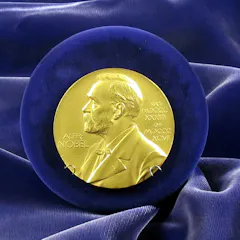
There’s no Nobel Prize in mathematics, but math undergirds much high-level science. The 2016 Nobel in Physics rewards work in topology, a branch of math with multiple real world applications.
Molybdenum disulphide, hexagonal boron nitride and other materials yet to be discovered will be used to build the electronics of the future.

The military is interested – but the rest of us could also get from Paris to Tokyo in three hours.
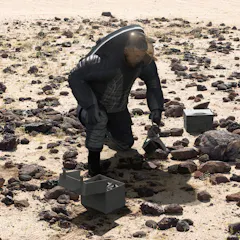
New materials and new designs could help astronauts withstand longer periods of time in space and deal with the hazards of exploring other planets.
Top contributors
-

Executive Director of the ARC Centre of Excellence for Electromaterials Science and Director of the Intelligent Polymer Research Institute, University of Wollongong
-
CO2Chem Network Manager, University of Sheffield
-
Postdoctoral research assistant, University of Sheffield
-
PhD candidate in Electronic Devices, King's College London
-
Ph.D. Candidate in Chemical Engineering, University of California, Riverside
-
Reader in Theoretical and Computational Condensed Matter Physics, University of Edinburgh
-
Senior Lecturer, University of Surrey
-
Professor of Management, Rochester Institute of Technology
-
Director of the School of Packaging, Michigan State University
-
Professor of Smart Materials & Structures, University of Bristol
-
Emeritus Professor in Applied Physics, University of Technology Sydney
-
Senior Instrument Scientist, Australian Nuclear Science and Technology Organisation
-
PhD student in mechanical engineering, Karlsruhe Institute of Technology
-
Lecturer, University of Bristol
-
Senior Professor, Australian Institute for Innovative Materials, University of Wollongong, University of Wollongong