
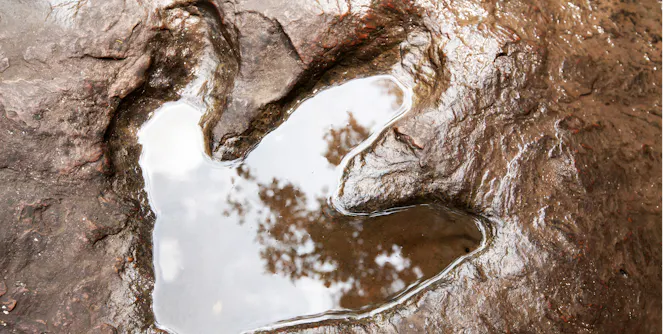
66 million years ago, birds survived the calamity that wiped out all prehistoric dinosaurs. But could birds once again evolve into their long lost ancestors?
Articles on Mass extinctions
Displaying 21 - 40 of 83 articles
The end-Triassic mass extinction was a cataclysm for the world’s prehistoric species, killed off by volcanoes that altered Earth’s seas and skies. But new research shows it didn’t happen when we thought.
Our new research has discovered how a series of volcanic eruptions 233 million years ago fundamentally changed life on Earth.
When the dinosaurs went extinct, some species took over the world. Adaptability, not survivability, explains why.

New research on the Late Devonian extinction suggests the ozone layer could be naturally depleted as the temperature rises.
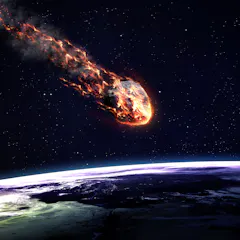
The trajectory of the Chicxulub asteroid led to the most efficient release of gas and projectile rocks – which was disastrous for life on Earth.
Large numbers, huge ranges, and adaptibility make the human species very difficult to eradicate
The historical record is full of surprises – and it could encourage conservationists to think more creatively.
The risks to nature from man-made global warming – and the imperative to act – are clear.
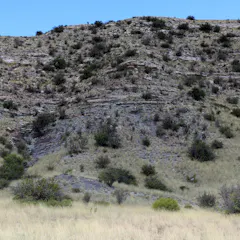
The analysis suggests that there was a mass extinction event at the time of the end-Permian, on land - and that it happened at the same time as the marine end-Permian extinction.
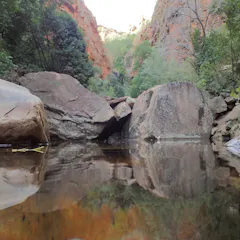
A drying climate and the arrival of people together finished off Australia’s megafauna.

300,000 years ago, there were lots of different species of human. Now it’s only us – and we’re probably the reason why.
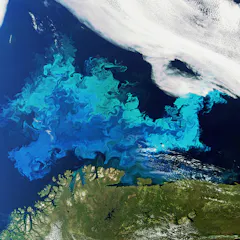
Populations of plankton are in decline. If we push this critical foundation of the marine food chain to extinction, we could cripple ecosystems for millions of years.
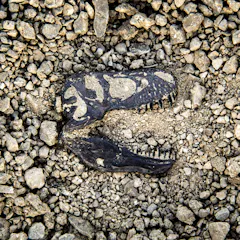
Every cloud has a silver lining – even the debris cloud from an asteroid impact

The more we know about the animals that lived during this time, the more we can start to comprehend how species react and recover after an extinction event.

The island of New Guinea is home to 6% of the world’s frogs, but if the deadly chytrid fungus invades it could cause a mass extinction.
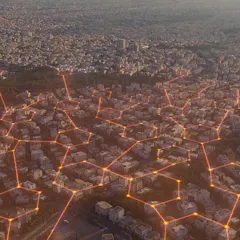
A new movie highlights the importance of radical hope and courageous action in responding to the climate crisis
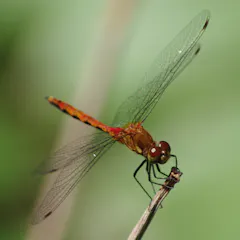
Alarm bells went off when several recent studies reported mass insect die-offs in different parts of the world. But reports of an ‘insect apocalypse’ have been greatly exaggerated.
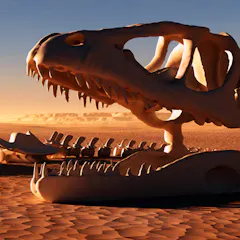
Growing evidence suggests that the extinction of the dinosaurs involved profound, complex and interconnected changes to the global systems that support life. Much like we are facing today.
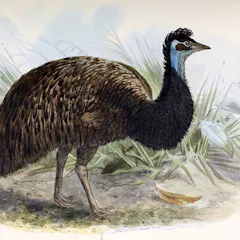
Australia is losing mammals faster than any other country, as well as plenty more plants and animals besides. Extinction is theft from future generations – it’s time to treat it as such.
Top contributors
-

Adjunct professor, UNSW
-
Senior Lecturer in Paleontology and Evolutionary Biology, Life Sciences at the University of Bath, University of Bath
-
Professor of Evolutionary Palaeobiology at the Milner Centre for Evolution, University of Bath
-
Distinguished Research Professor and Australian Laureate, James Cook University
-
Palaeoenvironmental Scientist, University of Hull
-
Assistant Professor in Palaeontology, Trinity College Dublin
-
Matthew Flinders Professor of Global Ecology and Node Leader in the ARC Centre of Excellence for Indigenous and Environmental Histories and Futures, Flinders University
-
President, Center for Conservation Biology, Bing Professor of Population Studies, Stanford University
-
Assistant Director of the Global Systems Institute, University of Exeter
-
Professor in Particle Cosmology, Lancaster University
-
Professor of Biology, New York University
-
Associate Professor in Animal Ecology, University of Gothenburg
-
Adjunct Associate Lecturer, School of Biological Sciences, The University of Queensland
-
ARC Laureate Professor, The University of Melbourne and James Cook University, The University of Melbourne
-
Distinguished Professor of Geology, University of Tasmania