
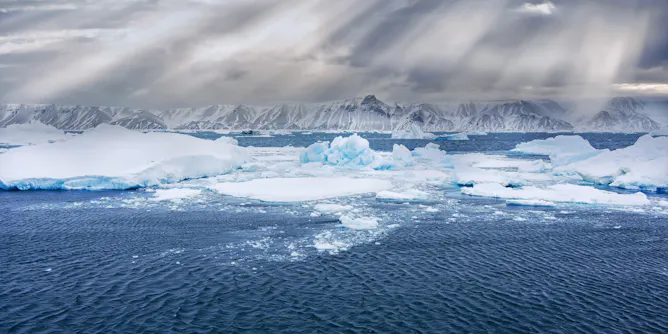
The Southern (Antarctic) Ocean is our planet’s primary storage of heat and carbon, and it’s home to extraordinary life forms, from tiny algae and spineless creatures to penguins, seals and whales.
Articles on Marine protected areas
Displaying 41 - 60 of 80 articles
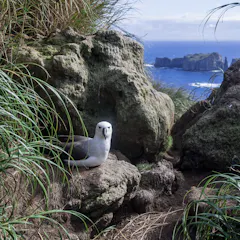
The Blue Belt is a network of marine protected areas 17 times larger than the UK.
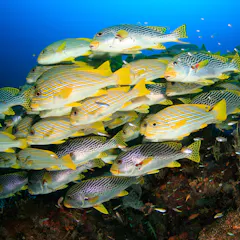
Most existing MPAs are in distant and largely empty waters. Expanding them where it counts will meet a lot of resistance.
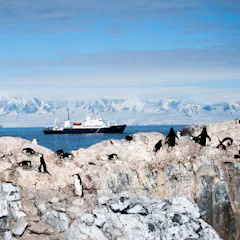
More than 280 women in STEMM call for a marine protected area to be established in the waters of the Western Antarctic Peninsula.

Multiple ocean industries are rapidly growing, but efforts to protect vulnerable habitats are stalling.
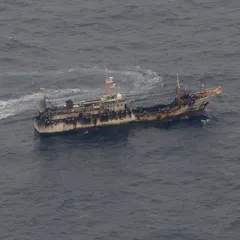
The latest incident highlights a mismatch between ocean law and marine ecosystems.
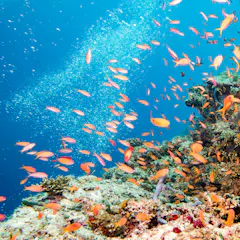
Biodiversity is often highest in places with human activity. The fishing industry has shown we can often have it both ways: maintain important livelihoods while protecting precious marine life.
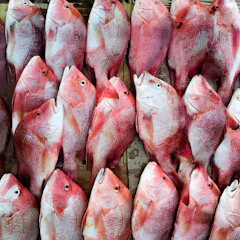
Without understanding which fish species and habitats local fishers rely on, export bans can do more harm than good.
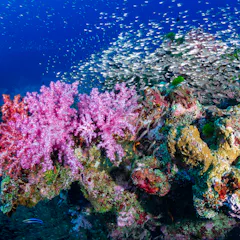
Fish larvae will swim towards the sounds of a desirable reef, but degraded reefs cannot be rebuilt on sound alone.

Although less well known than its cousins, coral reefs and mangroves, seagrass plays a crucial role in climate change mitigation.

Fish can’t read maps, and their eggs and larvae drift across national boundaries. Recent research shows that local problems in one fishery can affect others across wide areas.
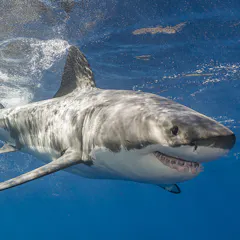
Even the remote open ocean offers no escape from industrial fishing for sharks.
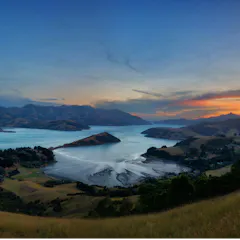
New Zealand has one of the world’s largest ocean territories, but the marine environment is at risk from climate change, pollution and fishing.
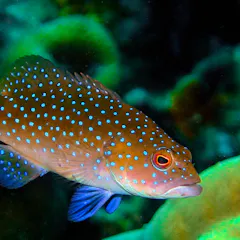
Strictly enforced no-take marine areas benefit everyone, from the fish to fishers.
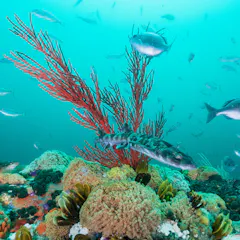
A new network of 20 sites have been declared as marine protected areas in South Africa.
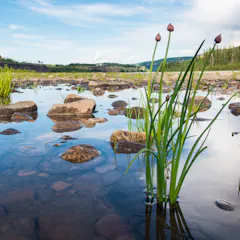
Countries can protect biodiversity and recognize Indigenous peoples as conservation partners.

An effort to increase such areas can pose a particular threat to island overseas territories.
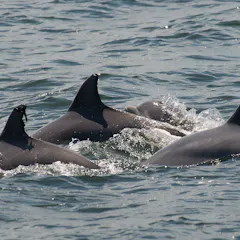
How can marine preserves best protect sea creatures that move in and out of them? Two ocean scientists describe new thinking about designing marine protected areas.
Governments around the world have vowed to halt the loss of global biodiversity by 2020, but without more investment, we’ll miss some of the targets.
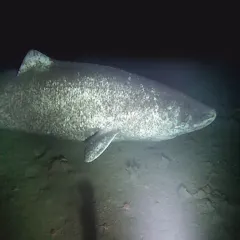
Using baited cameras scientists have captured some of the first underwater video footage of the elusive Greenland shark.
Top contributors
-

Associate Professor of Integrative Biology, Oregon State University
-
Emeritus Professor of Environmental Governance, UCL
-
Professor of Marine Conservation, University of Exeter
-
PhD Candidate, School of Biological Sciences, Queen's University Belfast
-
Professor of Complex Systems and Environmental Policy, Bournemouth University
-
Associate Professor in Ocean Stewardship, Stockholm University
-
Professor in Wildlife Ecology and Conservation, School of Life & Environmental Sciences, Deakin University
-
Professor, Conservation Planning, ARC Centre of Excellence for Coral Reef Studies, James Cook University
-
Distinguished University Professor and Adviser in Marine Studies, Oregon State University
-
Assistant Professor - Geography and Development, Northumbria University, Newcastle
-
Assistant Professor Environmental Studies, University of Colorado Boulder
-
PhD Student, Department of Geography, University of Guelph
-
Researcher in Ecosystem Dynamics, University of California, Santa Cruz
-
Director & Professor, Fisheries Economics Research Unit, University of British Columbia
-
Coral Reef Ecologist, National Oceanic and Atmospheric Administration