
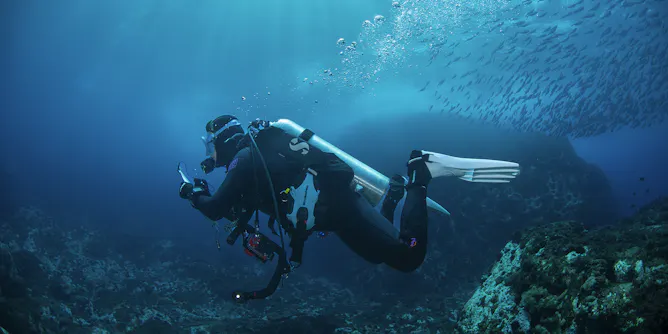
Overfishing and poor enforcement are just two reasons marine ecosystems are struggling to recover.
Articles on Marine protected areas
Displaying 1 - 20 of 80 articles
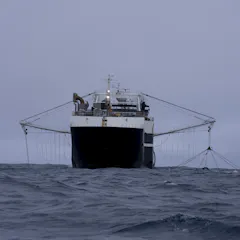
With location regulations no longer in force, fishing boats are harvesting thousands of tons of krill from very few areas, increasing competition with penguins, seals, whales and other marine life.
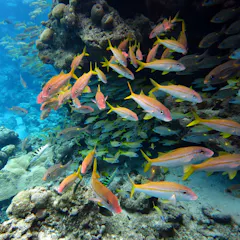
So far, about 10% of the ocean has formal protection as countries work toward the 30x30 goal, but many areas are still protected on paper only.
If we are serious about ocean recovery, we need to tackle root causes.

Marine protected areas can’t stop pollution flowing in from the land and Northern Ireland’s seagrass meadows are paying the price.
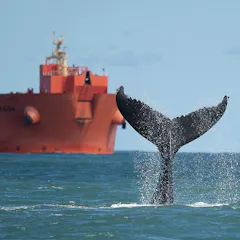
Despite Brazil’s recent expansions of protected areas, research shows that the favorite habitats of whales and dolphins are still threatened by human activities.

The recovery of kelp forests brought many fish species back. But fish stocks in the reserve remain far below those present before commercial fishing took off.
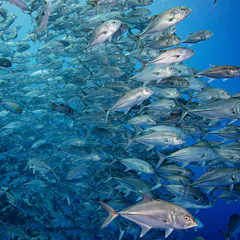
Satellite technology that can track ships even when they ‘go dark’ finds that those protected areas that fully ban industrial fishing are succeeding, even if others aren’t.
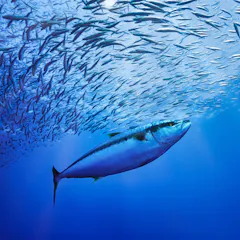
After 20 years of intense debate, the world looks set to have a treaty protecting marine life out beyond national waters.
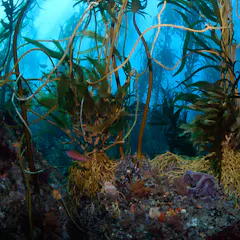
Half of Australia’s seas are protected. So why are marine species and ecosystems in freefall?
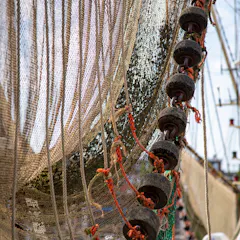
Industrial fishing has caused immense damage to ocean life, but given the right protection, the sea has miraculous powers of recovery.
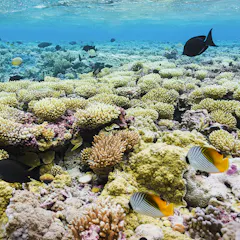
America’s marine protected areas help fish populations thrive. Trump’s plan to open them to industrial fishing may ultimately harm the fishing industry itself.

A widely held view in ocean conservation asserts that parrotfish are key to healthy coral reefs. But evidence suggests that the relationship is more complicated.

New Zealand’s track record in domestic marine protection is woeful and its proposal to resume oil and gas licensing offshore has been criticised by Pacific island states.
Since 2022, the network of global ocean-protected areas has grown by only 0.5% to 8.3%.
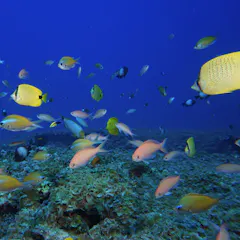
What have global efforts to protect oceans actually achieved? Our study of nearly 2,600 tropical coral reefs around the world is the first to answer that question.
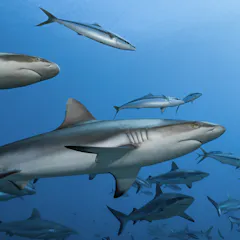
A broad review of shark research shows that sharks play critical roles in keeping ocean ecosystems such as coral reefs and seagrass beds healthy.
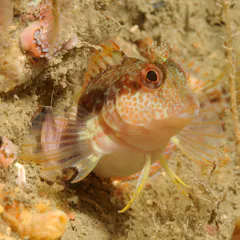
Although marine conservation around Britain has shown some success, many of the tools that are in use today are irrelevant, or missing entirely.
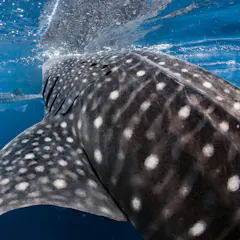
Experts have interviewed fishers, tourism operators and recreational sea users in 50 marine protected areas to see how well any negative human impacts are being reduced.
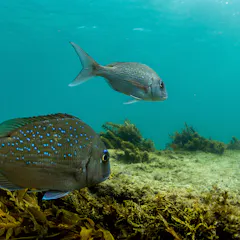
Marine protection represents our best strategy to reverse declining biodiversity. But protected areas also provide a low-tech and cost-effective way for the fishing industry to safeguard stocks.
Top contributors
-

Associate Professor of Integrative Biology, Oregon State University
-
Emeritus Professor of Environmental Governance, UCL
-
Professor of Marine Conservation, University of Exeter
-
PhD Candidate, School of Biological Sciences, Queen's University Belfast
-
Professor of Complex Systems and Environmental Policy, Bournemouth University
-
Associate Professor in Ocean Stewardship, Stockholm University
-
Professor in Wildlife Ecology and Conservation, School of Life & Environmental Sciences, Deakin University
-
Professor, Conservation Planning, ARC Centre of Excellence for Coral Reef Studies, James Cook University
-
Distinguished University Professor and Adviser in Marine Studies, Oregon State University
-
Assistant Professor - Geography and Development, Northumbria University, Newcastle
-
Assistant Professor Environmental Studies, University of Colorado Boulder
-
PhD Student, Department of Geography, University of Guelph
-
Researcher in Ecosystem Dynamics, University of California, Santa Cruz
-
Director & Professor, Fisheries Economics Research Unit, University of British Columbia
-
Coral Reef Ecologist, National Oceanic and Atmospheric Administration