
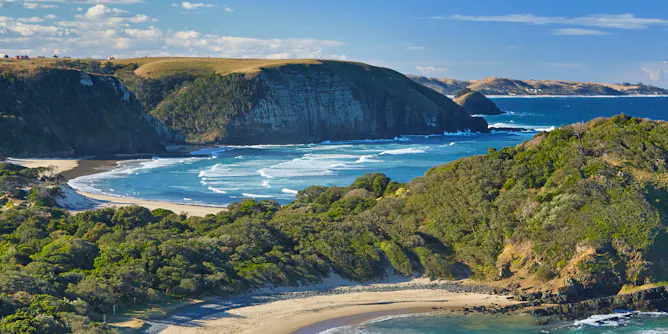
Researchers share their insights on seismic surveys in South Africa.
Articles on Marine conservation
Displaying 41 - 60 of 175 articles
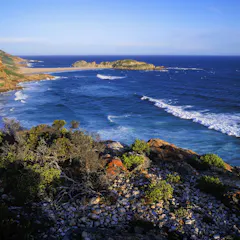
If the local context and priorities of those who most directly rely on natural resources for their survival isn’t considered, conservation efforts will continue to fail.

The WTO is set to wrap up negotiations on harmful fisheries subsidies This could help rebuild the oceans’ fish stocks, and support the communities that rely on them.
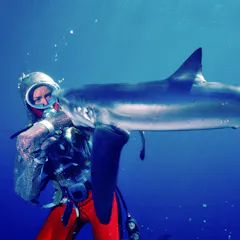
From working on Jaws to putting herself in danger, Valerie Taylor vowed to change public attitudes to sharks. A new film dives deeply into her underwater life.

In the design of marine protected areas, new research suggests that it might be better to start small in order to gain local trust and support that leads to larger long-term benefits.
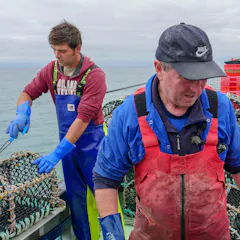
Around 75% of fishermen in the Outer Hebrides speak Gaelic. Their daily use of the language at work helps keep it alive.
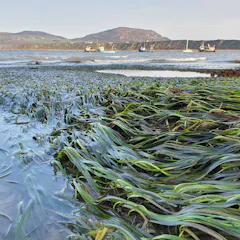
Seagrass meadows are a powerful ally in the effort to slow climate change and reverse wildlife losses.
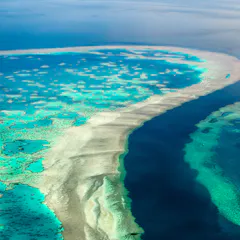
Australia needs to drop the deception that square kilometres say anything meaningful about conservation.

If you’re doing something (even if you know you probably shouldn’t), you’re more likely to think lots of other people do it too. You also likely overestimate how much other people think it’s OK.
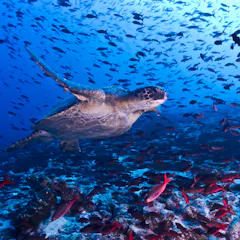
Marine protected areas will be important for achieving the ocean Sustainable Development Goals.
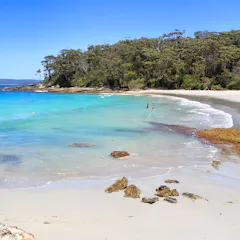
Partially protected areas don’t have more wildlife than unprotected areas. They consume conservation resources and occupy space that could otherwise be allocated to more effective protection.
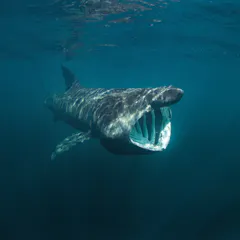
The latest research reveals basking sharks are not lone predators but rather family-minded creatures with a fancy for fine dining with their own folk.
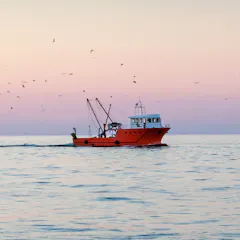
An international agreement has set an ambitious deadline for action on some of the biggest problems facing the world’s oceans.
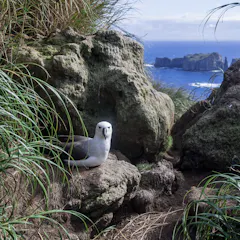
The Blue Belt is a network of marine protected areas 17 times larger than the UK.
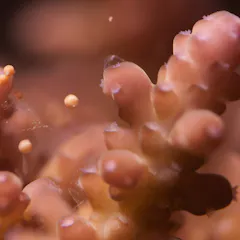
New research involving CRISPR technology has furthered our understanding of corals’ gene functions. Specifically, it has revealed a mechanism underpinning how corals withstand heat stress.
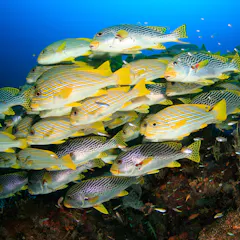
Most existing MPAs are in distant and largely empty waters. Expanding them where it counts will meet a lot of resistance.
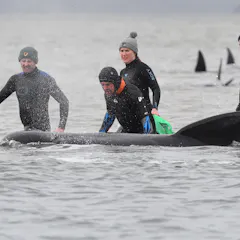
It’s time to listen to warnings from the people of the Pacific.

Multiple ocean industries are rapidly growing, but efforts to protect vulnerable habitats are stalling.
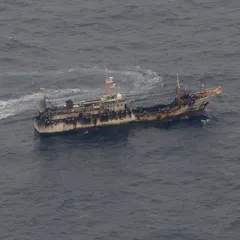
The latest incident highlights a mismatch between ocean law and marine ecosystems.
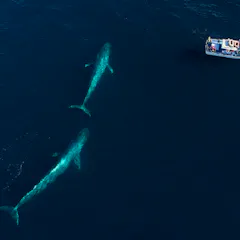
Some species, including blue whales, spend little time at the surface. So despite their overwhelming size, they can be hard to find and tough to study.
Top contributors
-

Wen Family Chair in Conservation, The University of Western Australia
-
Emeritus Professor of Environmental Governance, UCL
-
Professor of Marine Ecology, University of Technology Sydney
-
Professor, Conservation Biology, The University of Queensland
-
Principal Research Fellow, University of Wollongong
-
Associate Professor in Marine Biology, Swansea University
-
Professor of Marine Conservation, University of Exeter
-
Lead Conservation Scientist, Elasmobranch Institute Indonesia
-
Associate Professor in Ocean Stewardship, Stockholm University
-
Adjunct Professor, Institute for Marine and Antarctic Studies, University of Tasmania
-
Professor of Marine Science, Deakin University
-
Senior Lecturer in Marine Biology, University of Portsmouth
-
Associate Professor of Public Policy, University of Sydney
-
Doctoral Programmes Manager, Nottingham Trent University
-
Associate Professor, Marine Ecology and Fisheries Biology, University of Plymouth; Marine Biological Association