
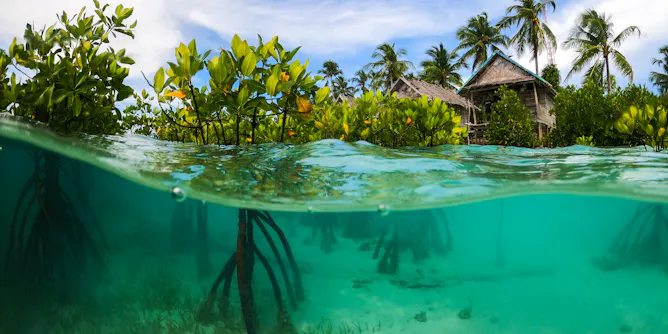
For decades, Indonesia’s mangroves have been degraded or turned into aquaculture. But there are signs of progress, with a new focus on restoration and income-generating alternatives.
Articles on Mangroves
Displaying 41 - 60 of 85 articles
Puerto Rico’s tourism industry is booming as nations lift COVID-19 travel restrictions, but development is displacing people who have lived along its coastlines for years.
Accra has become susceptible to floods due to encroachment on wetlands.
These crucial ecosystems are being battered by lots of different threats that are combining to make the matter worse.
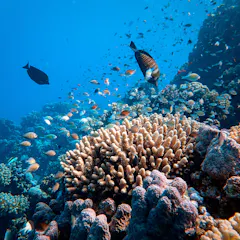
Work is still needed to collect more data on the carbon capture capacity of the country’s rich coastal ecosystems.

Detailed field notes can help researchers track down rare species.
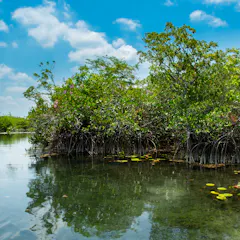
Mangroves grow in saltwater along tropical coastlines, but scientists have found them along a river in Mexico’s Yucatan, more than 100 miles from the sea. Climate change explains their shift.
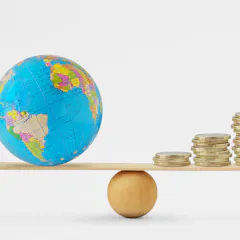
This is a transcript of part 1 of Climate Fight: the world’s biggest negotiation, a series from The Anthill podcast.

The Army Corps of Engineers is planning a sea wall 6 miles long and flood gates. The infrastructure might protect downtown from a hurricane storm surge, but most of the area will still be vulnerable.
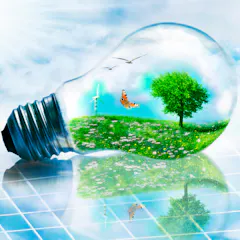
Solve the climate and extinction crises together, or solve neither.
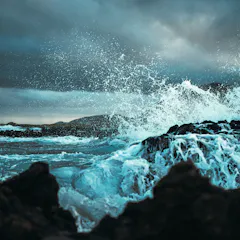
New research looked at wave conditions over the past 40 years, and found wave power has increased since at least the 1980s, mostly in the Southern Hemisphere.
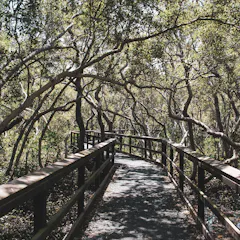
We used satellite images to study the life cycles of mangrove forests in the Northern Territory, Queensland, and New South Wales — and found a surprising degree of variation.
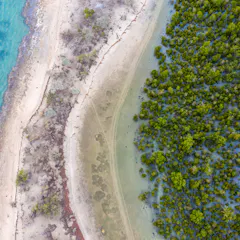
Despite their enormous value, mangroves are being removed at an alarming rate. A new tool aims to help communities reverse mangrove loss and tap into conservation programs and funding.
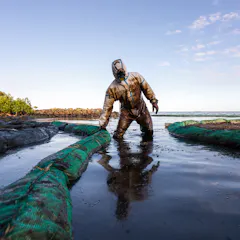
Marine wildlife rarely remain in one habitat. Most species rely on a healthy network of ecosystems to raise their young and catch their food.

A new study estimates that mangroves prevent over $65 billion in damage from coastal storms every year, and says mangrove protection should be funded in the same way as infrastructure like seawalls.
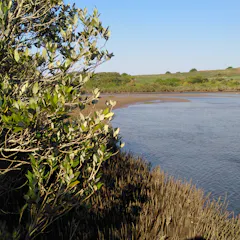
Scientists are building up a picture of how much carbon can be taken out of the atmosphere and stored in coastal ecosystems.
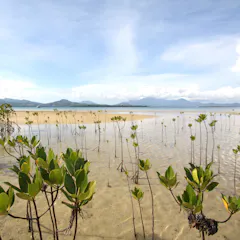
Promising to plant 100m trees a year is one thing; making them grow can be quite another.
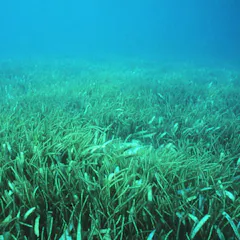
In a world-first, scientists have counted the greenhouse gas absorbed and emitted by Australia’s mangroves, seagrass and other ocean ecosystems.
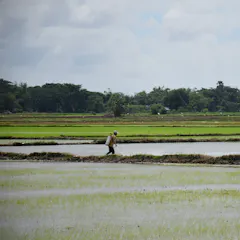
If nothing is done now, seas could rise a metre by 2100, and four metres by 2300.
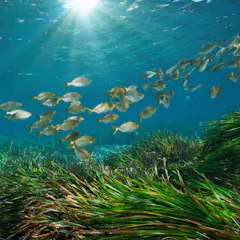
Oxygen produced by these plants helps animals boost their metabolism to match the heat.
Top contributors
-

Research Associate, Institute of Coastal and Marine Research, Nelson Mandela University
-
Professor of Biology, The University of Queensland
-
Professor, School of Natural Sciences, Macquarie University
-
Professor in the School of Geography and Sustainable Development, University of St Andrews
-
AXA Chair in Coastal Resilience & Research Professor, University of California, Santa Cruz
-
Postdoctoral research associate, Charles Darwin University
-
Assistant Professor, East Carolina University
-
Professor of Mangrove Ecology, James Cook University
-
Lecturer in coastal environmental sciences and sustainable development, Uppsala University
-
Honorary Adviser on Burma for the State of the Tropics, James Cook University
-
Senior Lecturer, Macquarie University
-
Assistant Professor of Bioscience at at Imam Abdulrahman bin Faisal University. With Ph.D from Kaust, King Abdullah University of Science and Technology
-
Associate Professor of Biology, Villanova University
-
Managing Director, Triple Helix Consulting; Honorary Professor, ANU Fenner School for the Environment and Society, Australian National University
-
Visiting Scholar, Global Development and Environment Institute, Tufts University