
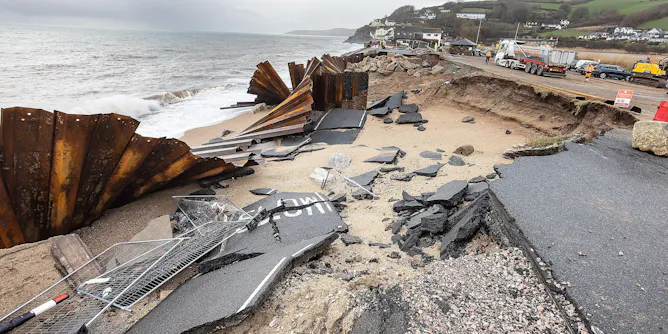
As sea levels rise and storms intensify, coastal defences simply cannot keep up.
Articles on Coasts
Displaying 1 - 20 of 62 articles

Better measuring the risks posed by rising sea levels and more intense storms requires rigorous, comparable and transparent assessment.
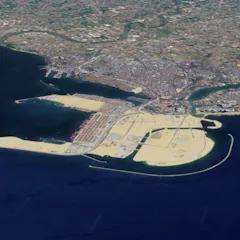
The lines of artificial coastal developments might be neat and straight but in reality, they are fragmenting ecosystems and disrupting hydrodynamics.

Storm surge is the No. 1 cause of deaths and damage during a hurricane, yet detailed storm surge forecasts are difficult to create. AI could turn that around.
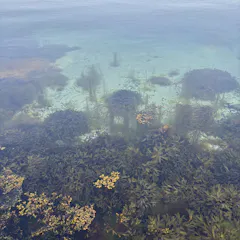
Restoring boulder reefs provides vital habitat for marine animals and helps reduce coastal erosion in the face of climate change.
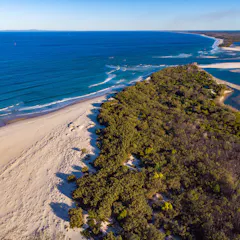
Stories of how the data was collected were fascinating. Some people camped on islands for weeks. Some scaled cliffs or jumped from helicopters onto remote islands.
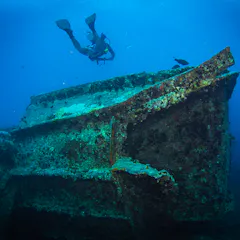
As their structures break down, the wrecks could release toxic substances into the environment.
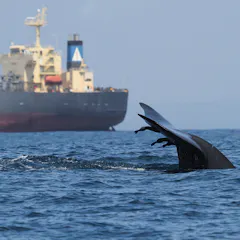
Colliding with ships is a top cause of whale deaths. A new study maps the areas of highest risk, showing where proven strategies such as speed limits and new shipping routes can reduce the toll.

Kids love digging and may not realize the dangers a hole in the sand can pose.
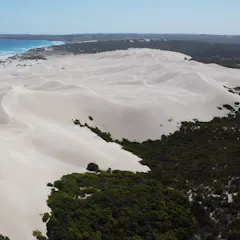
Some Aussie beaches are being reshaped and coastal dunes are marching inland. We used data from aerial photography, field surveys, laser mapping and drones to study incredible rates of change.
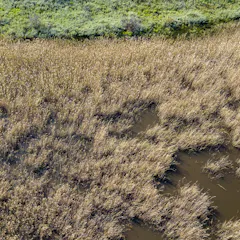
Wetlands can prevent flooding, trap carbon and support livelihoods, as long as they are protected and managed.
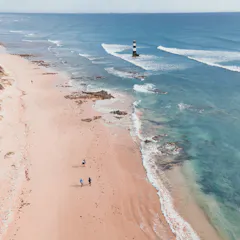
Increased interest in recreational fishing with drones has led to concern about its environmental and social impact.
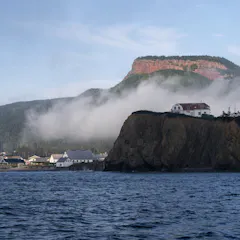
As seas rise, it is clear that traditional coastal defence approaches are unable to keep pace. Nature-based solutions offer considerable potential to protect coasts, people and biodiversity.
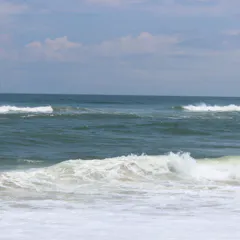
Rip currents are a leading cause of near-shore drownings, but there are effective ways to survive one. And these phenomena also play important ecological roles that are an emerging research area.
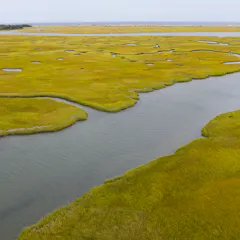
Mangroves and salt marshes pump out methane – but soak up carbon dioxide. Overall, the world’s coasts are a net greenhouse sink – and we must preserve them
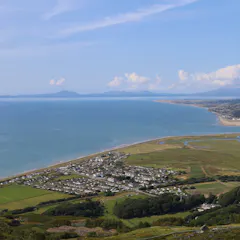
Fairbourne on the west coast of Wales is at risk from both rising sea levels and river flooding.

Moving entire communities threatened by rising seas isn’t as far-fetched as it sounds.
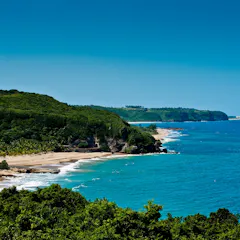
Puerto Rico’s tourism industry is booming as nations lift COVID-19 travel restrictions, but development is displacing people who have lived along its coastlines for years.
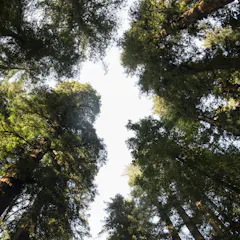
New research shows that coast redwood trees have a surprising adaptation that helps them thrive in both wet and dry environments.

All nations must ramp up efforts to preserve and restore their coastal regions – and the time to start is right now.
Top contributors
-

Professor, School of Natural Sciences, Macquarie University
-
Senior Lecturer in Coastal Dynamics, Bangor University
-
Professor in School of Earth, Atmospheric and Life Sciences; and Director of Environmental Futures Research Centre, University of Wollongong
-
Professor in Biodiversity and Conservation, The University of Queensland
-
Honorary Associate Professor, Australian National University
-
Director of the UWA Oceans Institute, The University of Western Australia
-
Associate Professor of Engineering, Auburn University
-
University of Sydney
-
Josephine A Lamprey Professor in Climate and Sustainability, University of New Hampshire
-
Associate Professor, Marine Ecology, School of Molecular and Life Sciences, Curtin University
-
Professor, TC Beirne School of Law, The University of Queensland
-
Postdoctoral Researcher, Ecosystem Sciences, CSIRO
-
Principal Research Scientist, CSIRO
-
ARC DECRA Research Fellow, Centre for Biodiversity & Conservation Science, The University of Queensland
-
Professor of Behavioural Genetics, University of Leicester