
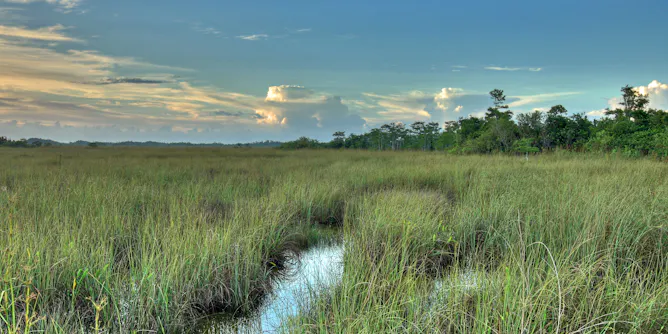
Federal and state agencies are carrying out a 35-year, multi-billion-dollar plan to restore Florida’s Everglades, but have not factored sea level rise or other climate change impacts into their plans.
Articles on Mangroves
Displaying 61 - 80 of 85 articles
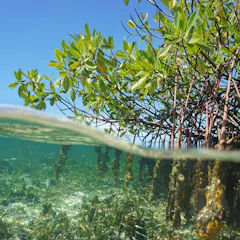
New research makes the economic case for mangroves.
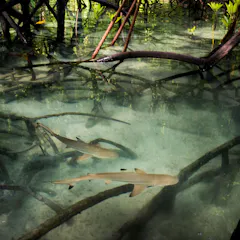
Far more megafauna species use coastal wetlands than we thought. And it affects the way we need to address the extinction crisis.
Thousands of hydropower dams are under construction around the world. New research shows that by cutting off sediment flow, these dams can have big ecological effects on far-off bays and deltas.

George Monbiot talks with an ecologist about natural solutions to the climate crisis.
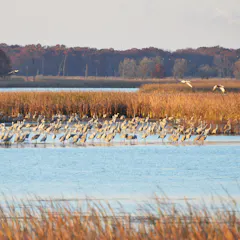
The Trump administration is sharply reducing environmental protection for wetlands and streams across the US. This roundup of stories spotlights the many benefits that such water bodies provide.
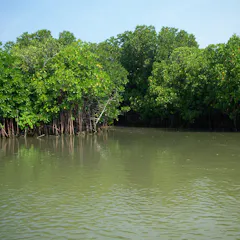
Mangrove forests along the world’s tropical and subtropical coasts store enormous quantities of ‘blue’ carbon – especially in river delta zones, where soil builds up quickly.
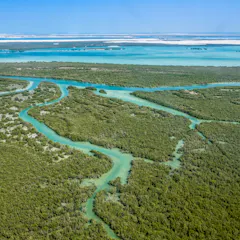
Mangrove forests grow in the tidal lagoons of tropical coastlines and they could actually benefit from climate change. Here’s what that means for us.
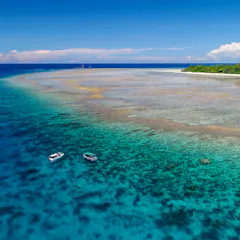
Coral reefs are in trouble, but other marine species are also feeling the strain but are off the conservation radar.
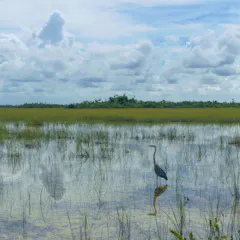
Coastal development is destroying marshes, mangroves and other wetlands that provide valuable protection from hurricanes and storms. Research shows these benefits can be worth millions of dollars.
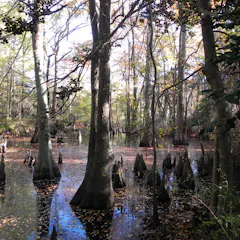
Wetlands are some of the world’s most undervalued weapons against climate change. They store huge quantities of carbon – but without better protection, many could soon be drained or paved over.
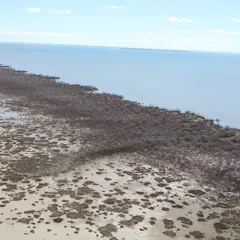
Australia has seen an unprecedented number of widespread, catastrophic transformations in response to extreme weather events.
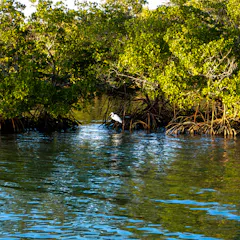
As Earth’s climate warms, mangroves are expanding north and south from tropical zones. Mangroves reinforce shorelines and store huge quantities of carbon, so protecting them is an effective climate strategy.
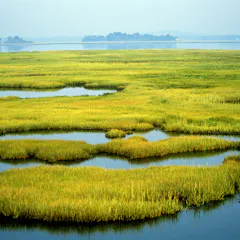
New research by scholars, conservationists and the insurance industry shows that coastal wetlands provide hundreds of millions of dollars’ worth of protection from flooding, boosting the case for protecting them.

In early 2016 reports appeared that vast swathes of mangroves had died in the Gulf of Carpentaria. It now appears heat and drought were to blame.

Mangroves are superheroes on both land and sea, storing carbon and providing protection for coasts.

Nearly 5m tonnes of coal will soon be shipped through the Sundarbans each year.

Mangrove forests aren’t very hospitable habitats, but these lemurs don’t mind.
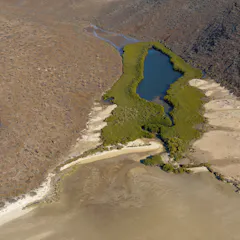
Study shows mangrove forests along desert coasts have potential to lock up large amounts of carbon and buffer against rising seas.

Mangroves - one of the most important trees - are threatened by rising seas. While these forests can adapt, human development is getting in the way.
Top contributors
-

Research Associate, Institute of Coastal and Marine Research, Nelson Mandela University
-
Professor of Biology, The University of Queensland
-
Professor, School of Natural Sciences, Macquarie University
-
Professor in the School of Geography and Sustainable Development, University of St Andrews
-
AXA Chair in Coastal Resilience & Research Professor, University of California, Santa Cruz
-
Postdoctoral research associate, Charles Darwin University
-
Assistant Professor, East Carolina University
-
Professor of Mangrove Ecology, James Cook University
-
Lecturer in coastal environmental sciences and sustainable development, Uppsala University
-
Honorary Adviser on Burma for the State of the Tropics, James Cook University
-
Senior Lecturer, Macquarie University
-
Assistant Professor of Bioscience at at Imam Abdulrahman bin Faisal University. With Ph.D from Kaust, King Abdullah University of Science and Technology
-
Associate Professor of Biology, Villanova University
-
Managing Director, Triple Helix Consulting; Honorary Professor, ANU Fenner School for the Environment and Society, Australian National University
-
Visiting Scholar, Global Development and Environment Institute, Tufts University