
Good science isn’t rooted in chance. It’s based on people with expertise being in the right place at the right time, equipped with enough knowledge to know what they’re looking at.
Articles on Mammals
Displaying 141 - 160 of 207 articles
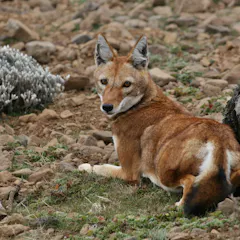
It is crucial to integrate paleoclimate data into ecological studies. This will increase understanding of how species respond to climate change.

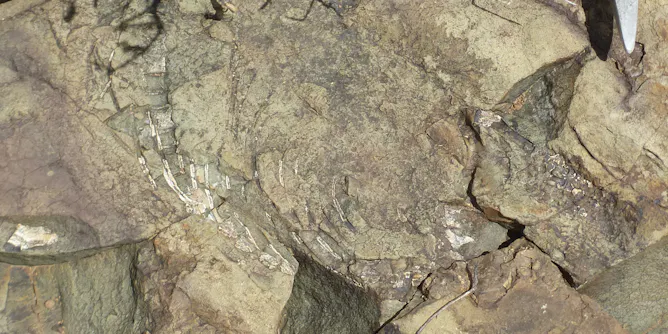
Mammals’ ancestors had a third eye and the fossil record of its disappearance tells us the story of the evolution of one of our most important features: warm blood.
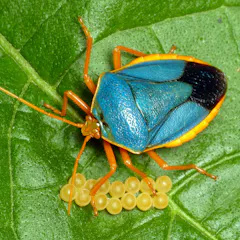
The perils of bug parenting.
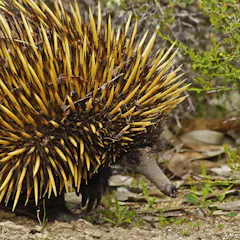
New technology reveals that digging echidnas play a crucial role in Australia’s ecosystems.

Half of Tasmania’s eastern quolls – Australia’s last population – have disappeared in the past 10 years.
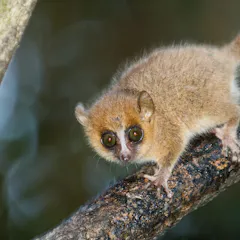
Climate change has an impact on small mammals and some battle to survive. But some others have developed intriguing coping mechanisms to survive.
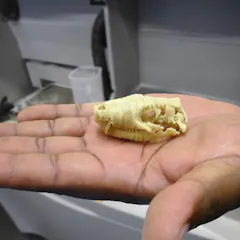
An old technique to explore the inside of fossils unfortunately ended up destroying some unique specimens. New technology has been used to reconstruct one such fossil.
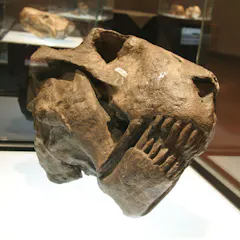
Modern sabre-tooth mammals have their canines constantly on display. This allows them to seduce mates. But was sexual selection also an important phenomenon among our pre-mammalian ancestors?
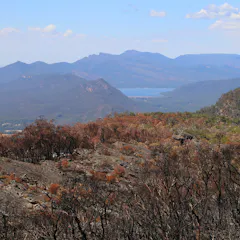
The Grampians, like much of Australia, has swung from Millennium Drought to Big Wet and back again, putting animal populations on a rollercoaster that could get worse as climate change bites.

African lions were initially thought to belong to a single subspecies but new research shows that there is more diversity on the African continent.

Sloths have been moving slowly for 64m years.

Islands are very special when it comes to quirks of evolution.
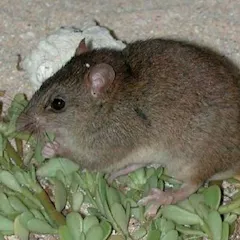
Australia’s conservation laws presume that we can preserve everything in its natural state. But in a changing world, we’ll have to be more flexible than that.
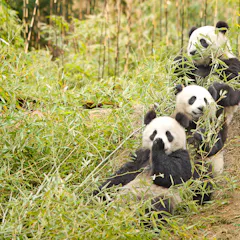
Pandas are bears – but two million years ago they stopped eating meat. Their digestive systems have not yet adapted, though. Do upset stomachs make panda pregnancy more difficult?
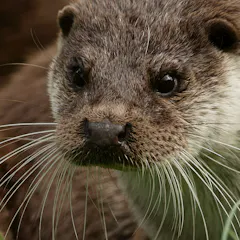
A tiny pit on mammal-like animals’ snouts has revealed a great deal about how mammalian hair originated.
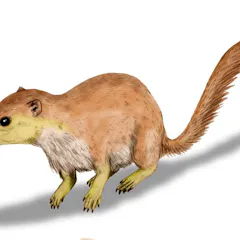
New research reveals that mammals didn’t wait for the dinosaurs to die out before starting their rapid spread.
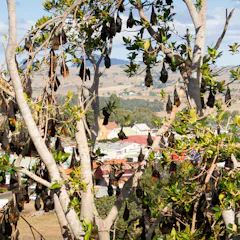
Flying-foxes can cause conflict - just ask the people of Batemans Bay, NSW. But plans to disperse them won’t necessarily work without understanding these highly mobile animals’ behaviour.
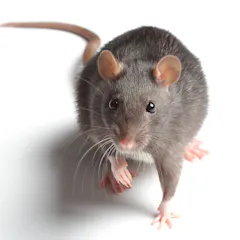
Rats have lived with us for thousands of years.
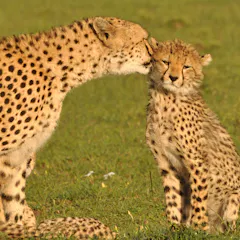
Accurately counting cheetah numbers is crucial to ensuring the survival of the species.
Top contributors
-

Associate professor in Vertebrate Palaeontology, University of the Witwatersrand
-
Professor, University of Sydney
-
Professor of Conservation Biology, Charles Darwin University
-
Honorary Research Fellow, University of Sydney
-
Distinguished Professor of Ecology, Fenner School of Environment and Society, Australian National University
-
Associate Professor in Ecology and Environmental Science, Queensland University of Technology
-
Professor in Ecology, Charles Sturt University
-
Professor, School of Biological Sciences, Monash University
-
Professor of Conservation Biology, UNSW
-
The University of Melbourne
-
Lecturer, Macquarie University
-
Adjunct Lecturer/ Ecologist, University of New England
-
Distinguished Research Professor and Australian Laureate, James Cook University
-
Research Associate in Palaeontology, University of Bristol
-
Professor of Comparative and Evolutionary Neurobiology, University of the Witwatersrand