

Australian Indigenous languages use a fascinating array of expressions drawing on body parts to describe emotions. Here is a guide to some of the most intriguing ones.
Articles on Linguistics
Displaying 221 - 240 of 457 articles
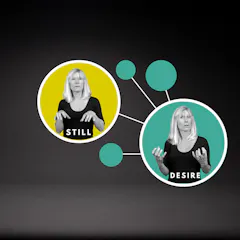
In American Sign Language, some words rhyme, some look like what they mean and some are used more often than others. A new database of these features paves a pathway for ASL research.

A young reader asks: How are languages formed?

Morrison is long-winded on questions he wants to answer; curt on the one’s he does not. But now, he is coming up against a rising tide of anger.

Psycholinguistic researchers analyzed more than 1 million Reddit posts a year before and a year after users posted about their breakup.

Because of context and history, some words and phrases carry a heavy burden with them. Their mere mention can bring back painful memories and problematic situations.
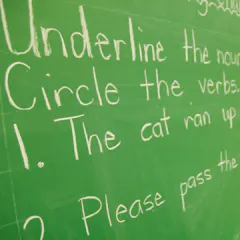
Grammar isn’t a way to bully people for making mistakes, says a longtime English instructor. It is a way to understand how our language operates, in all its many written and spoken varieties.

Barbara Windsor was the Cockney queen of EastEnders but you’re more likely to hear her famous accent in Essex now rather than London.

Medicine’s linguistic history in English is rich indeed, peppered with borrowings from French. But the Old English renderings retain a certain charm.

For decades, forensic linguists have helped crack cases involving false author attribution, masked voices, false confessions in criminal cases and copyright disputes.

Hashtags are infiltrating language well beyond their original use on Twitter — and linguists are struggling to define their role.

While some adults see implicit meaning in sentences, children can miss it. Two linguists explain how this can happen, and why it matters in communication.

Accusing a person or company of ‘virtue signalling’ has become a common putdown. But slurs like these are not new.

Updates to the Oxford English Dictionary provide a fascinating glimpse into how language changes in the face of rapid and unprecedented social and economic disruption.

In languages from Central Asia to the Amazon and New Guinea, stringing multiple ideas together is something children learn at an early age.

“Karen”, the name that has become code for boorish, entitled behaviour, joins a long history of names being appropriated for various purposes – often unkindly.
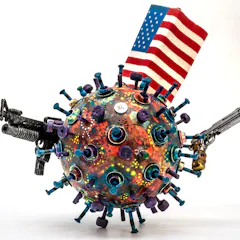
The use of military metaphors in some contexts can be helpful. In medicine? Not so much.

We want to be whitelisted and not blacklisted for jobs. White lies make stretching the truth okay, but you don’t want to receive a black mark on your record.

New linguistic research suggest early Germanic language and culture was strongly influenced by the Mediterranean superpower Carthage more than 2,000 years ago.

Because sarcasm is often difficult to discern and improperly used, it can operate as a linguistic mulligan. But deploy the excuse too much, and you might raise some eyebrows.
Top contributors
-

Professor of Linguistics, Monash University
-
Senior Lecturer in Linguistics, Monash University
-
Roger J. Kreuz is a Friend of The Conversation.
Associate Dean and Feinstone Interdisciplinary Research Professor, University of Memphis
-
Associate Professor in Linguistics, Macquarie University
-
Associate Professor in Sociolinguistics, University of Cambridge
-
Professor of Linguistics, University of York
-
Professor of Linguistics, University of Nevada, Reno
-
Senior Research Fellow of Linguistics, University of Colorado Boulder; Griffith University; University of New England
-
Professor of Linguistics and English, Florida International University
-
Associate Professor of Linguistics and Director of Language Lab, The University of Western Australia
-
Professor of English Language and Literature, University of Oxford
-
Francesco Perono Cacciafoco is a Friend of The Conversation.
Associate Professor in Linguistics, Xi'an Jiaotong-Liverpool University
-
Professor of Psychology, Cornell University
-
Maïa Ponsonnet is a Friend of The Conversation.
Researcher, Linguistics, Centre national de la recherche scientifique (CNRS)
-
Honorary Associate Professor in Writing, The University of Queensland